

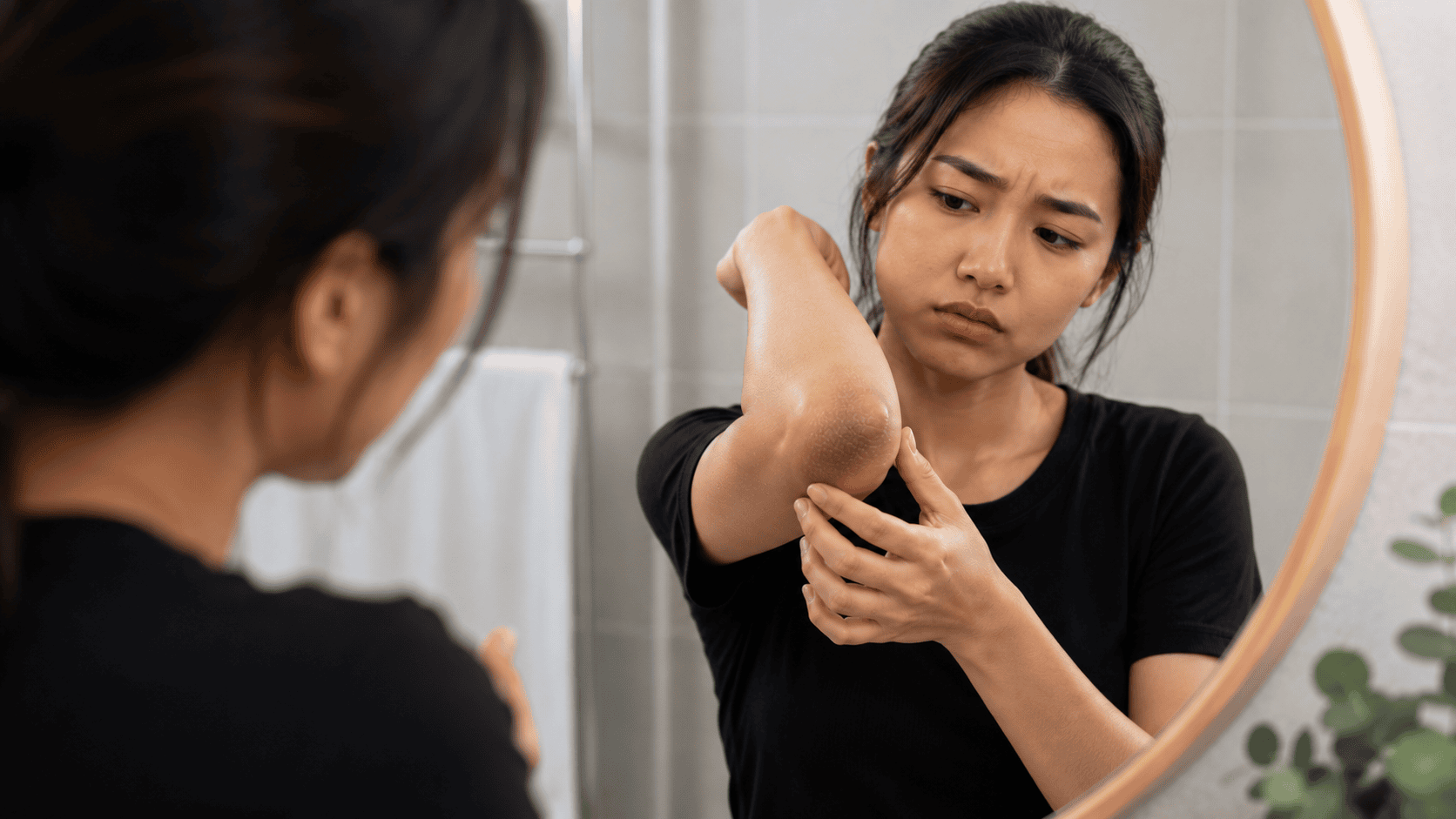
Have you ever looked at your arms and wondered why are my elbows dark? They may look brown, gray, or simply darker than the rest of your skin. The area may also feel rough, dry, or a little thick.
This is common. In many cases, the cause is simple: dryness, friction, pressure, irritation, or sun exposure. But darker, thicker skin can also point to a skin or health issue.
The good news is that many causes improve with gentle care. Before you use a strong lightening product or scrub the area again and again, it helps to know what is causing the dark color.
If you have been asking why my elbows are dark, the answer is often a mix of dry skin and friction.
Why Do Elbows Get Darker?
Your elbows take more daily wear than you might think. They bend often, touch hard surfaces, and lose moisture more easily than other areas. Over time, that can make the skin look darker and feel rough.
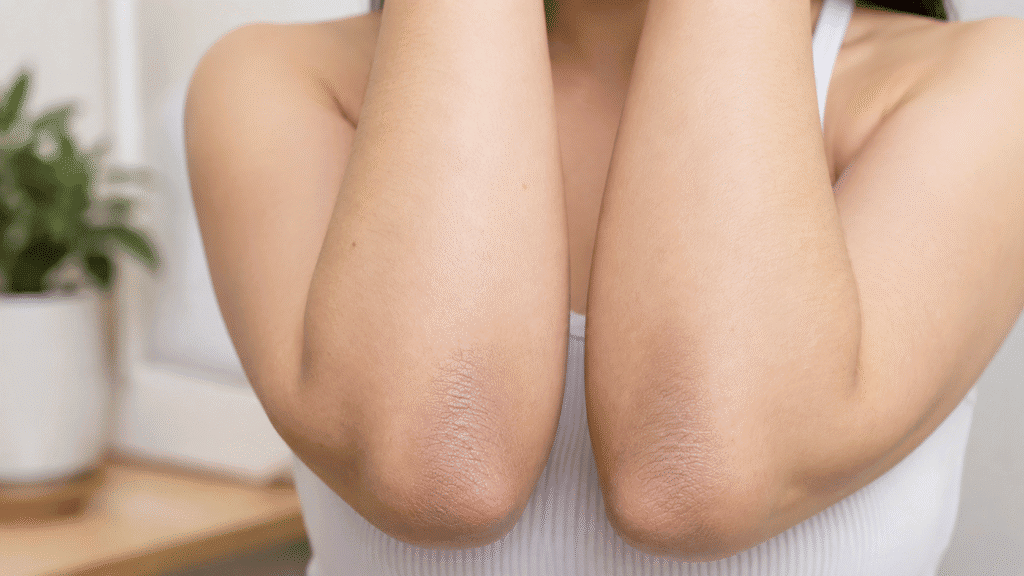
Common causes include:
- Frequent friction or pressure
- Dry or rough skin
- Repeated irritation
- Dead skin buildup
- Sun exposure
- Old inflammation or injury
- Certain skin conditions
- Insulin resistance in some cases
Because the same look can have more than one cause, it helps to watch for changes in texture, pain, itch, or spread.
1. Dry Skin Can Make Your Elbows Look Darker
Dry skin is one of the simplest reasons elbows look darker. The skin around the joints loses water more easily, especially after long showers, harsh soap, or cold, dry air.
According to the American Academy of Dermatology (AAD), dry skin can become rough, flaky, and cracked when it loses too much moisture, making regular moisturization an important part of restoring the skin’s surface.
When the surface is rough, flaky, or thick, it reflects light in a different way. That can make the elbows look dull or darker even if the skin color has not changed much.
If you are asking why are my elbows dark and dry, dryness may be part of the answer. Regular moisturizing can soften the skin and help it look more even.
2. Friction and Pressure Can Play a Role
Your elbows may rest on a desk, a table, or the arm of a chair many times a day. Small habits like that can add up.
Repeated rubbing or pressure can irritate the skin. When irritation keeps happening, the area can look darker after the skin calms down.
You do not need to stop resting your elbows completely. Just try to cut down on extra pressure when you can. Small changes can help over time.
3. Dead Skin Can Build Up
Your skin sheds dead cells on its own, but dry skin can make that process less smooth. Because elbow skin is already thick, buildup can make the area look rough and uneven.
That can turn into a cycle. You notice dark, rough elbows, so you scrub more. The skin feels smoother for a moment, but then it gets dry and irritated. So you scrub again.
A gentler approach works better. Keep the area moisturized and, if your skin can handle it, use a mild scrub instead of rubbing hard.
4. Your Skin Routine May Be Too Harsh
Sometimes the products meant to help are too strong for the elbows. This is more likely if you use several active ingredients at once.
Strong acids, retinoids, fragrances, and other strong products can irritate the skin. Once the skin is inflamed, dark color can linger even after the redness fades.
If your elbows got darker after a new product, simplify your routine for a while. Gentle cleansing, regular moisturizing, and less rubbing are often a better start.
5. Sun Can Make Darker Skin More Noticeable
Elbows are easy to miss when you put on sunscreen. But they still get UV light when you wear short sleeves or spend time outside.
Sun can deepen existing dark color. If your elbows are already darker from friction or dryness, sun exposure can make the contrast stand out more.
Try to include your elbows when you protect exposed skin.
6. Old Irritation Can Leave Dark Marks
Sometimes the original problem is gone, but the color stays.
A rash may have cleared. A scrape may have healed. Scratching or rubbing may have stopped. Even so, the skin can stay darker for a while.
This is often called post-inflammatory dark marks. It does not always mean anything is still wrong. It just means the skin is healing slowly.
7. Some Skin Conditions Can Affect the Elbows
Not every dark elbow is just dry skin. Some skin conditions can change color and texture.
Ask yourself whether the skin is also:
- Itchy
- Thickened
- Scaly
- Painful
- Cracked
- Red or inflamed
- Bumpy
- Spreading to other areas
If the area keeps changing or stays irritated, it is worth getting it checked.
8. Acanthosis Nigricans Is Another Possibility
One condition to know about is acanthosis nigricans. It can make skin darker, thicker, and more velvety.
It often appears on the neck, armpits, groin, elbows, knees, and knuckles. The texture matters because the skin can feel thick and velvety, not just look dark.
Acanthosis nigricans can be linked to insulin resistance, diabetes, some medicines, and other health issues. That does not mean dark elbows always point to a medical problem. But darker skin that is also thick or velvety should be checked.
AAD skin doctors recommend a checkup when darker, thicker skin appears because it can sometimes point to a health issue.
9. Genetics Can Affect Skin Color
Not everyone has the same skin tone across the body. Some people naturally have darker areas around the joints.
Genes affect how much melanin the skin makes and how it reacts to friction and sun. That means two people can have the same habits and still have very different-looking elbows.
There is no single shade your elbows are supposed to be. A little variation is normal.
10. Your Elbows May Just Be Naturally Darker
Sometimes there is no hidden problem.
Your elbows may simply be a little darker than the skin around them. Joints have different thickness, texture, movement, and sun exposure than other parts of the arm.
If your elbows have always looked this way and you do not have itch, pain, scale, or sudden change, the color may just be part of your natural look.
Why Scrubbing Your Elbows May Not Help
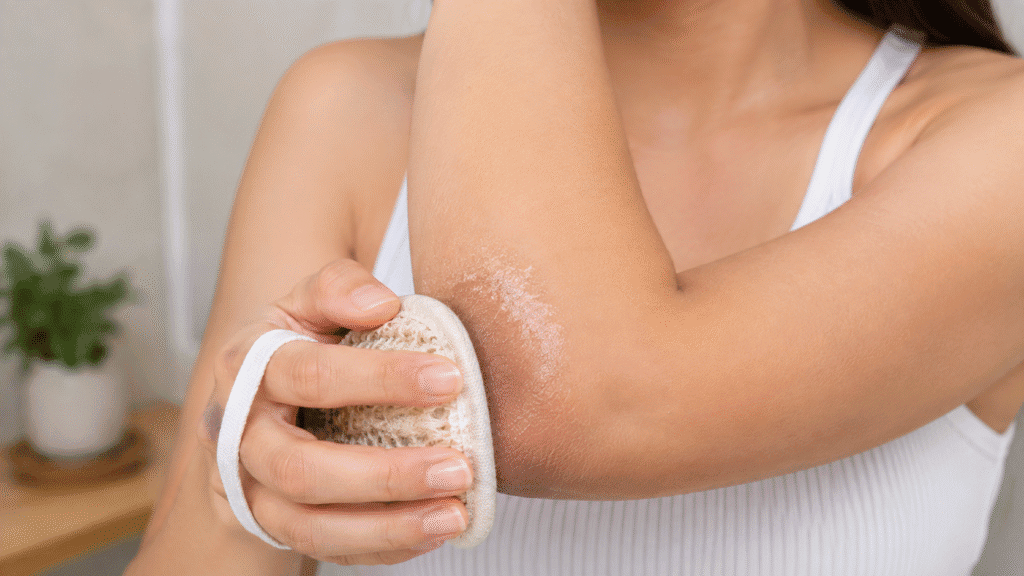
Dark elbows can be frustrating, and that often leads to hard scrubbing.
A scrub can make skin feel smoother for a short time. But if you keep scrubbing hard, the area may become dry, sore, or irritated.
That can create a loop of irritation. Hard scrubbing can also damage the skin barrier and make inflammation worse.
The AAD also says vigorous scrubbing will not remove acanthosis nigricans and is not the right choice when darker skin has an underlying cause.
You do not need to scrub until the skin feels raw for a mild scrub to help. Gentle care is usually the better choice.
What Can You Do About Dark Elbows?
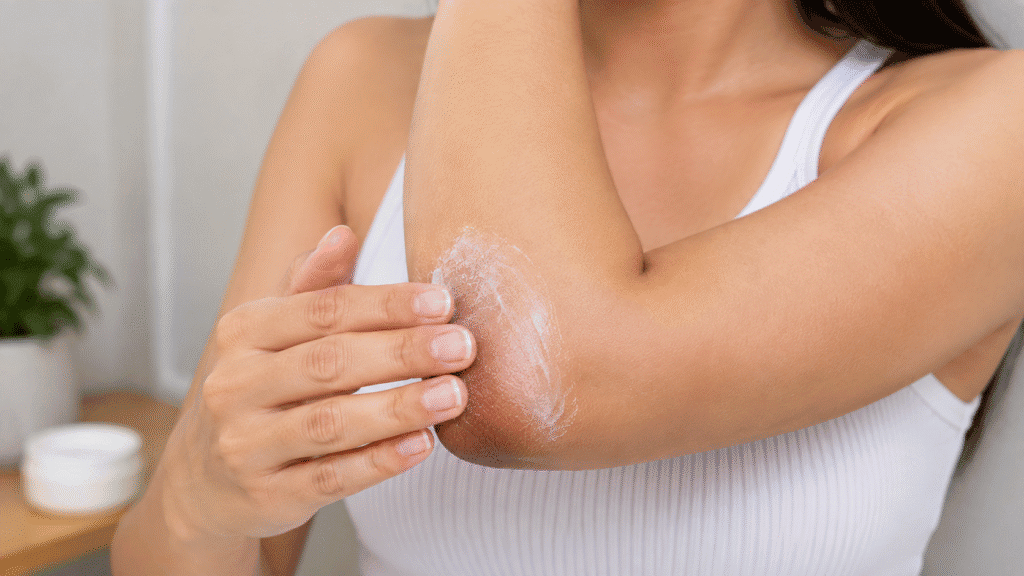
Start with the basics.
Moisturize regularly, especially after bathing. Choose a thick body cream if the skin is very dry. Keep the skin soft and conditioned.
Next, lower friction when you can. Change your arm position at a desk. Avoid leaning on hard surfaces for long periods. Use sunscreen on exposed elbows.
Most of all, give it time. Skin color changes slowly, especially when the cause is dryness, friction, or old irritation.
What Ingredients Can Help With Rough or Dark Elbows?
If dryness and rough texture are the main issues, a few skin care ingredients may help.
- Urea: Softens and moisturizes rough, dry skin.
- Lactic acid: Gently smooths skin while helping it hold moisture.
- Salicylic acid: Helps loosen dead skin on rough areas.
- Glycolic acid: Acts like a chemical peel, but it can irritate if overused.
- Ceramides: Support the skin barrier.
- Glycerin: Pulls moisture into the skin.
- Petrolatum: Helps keep water in and is useful for very dry skin.
Do not use several strong scrubs at once. Pick one gentle step, start slowly, and watch how your skin reacts.
A Simple Elbow-Care Routine
You do not need a big routine.
After showering, pat the skin dry instead of rubbing it hard. Put moisturizer on while the skin is still slightly damp.
During the day, protect exposed elbows from the sun and avoid long pressure on hard surfaces.
At night, add another layer of moisturizer if the skin feels dry. If you use a scrub or peel, follow the directions and do not stack several strong products.
Can You Use Your Facial Moisturizer on Dark Elbows?
Yes. If your facial moisturizer is gentle and your skin tolerates it well, you can also apply it to your elbows. Regular moisturizing can help soften dry, rough skin and support the skin barrier, especially when applied after showering.
If you’re looking for a moisturizer to try, you might consider Mosheko Enhance Moisturizer, which can be used as a moisturizing step for skin that needs added hydration and softness.

Keep in mind that moisturizer can improve dryness and texture, but it may not remove the underlying pigmentation. If the skin on your elbows seems particularly thick, rough, or flaky, you may benefit more from a richer body cream formulated for thicker, dry skin.
How Long Does It Take to Improve Dark Elbows?
It depends on the cause.
Dryness and roughness may improve in days or weeks with steady moisturizing. Dark marks from old irritation can take much longer.
Look for small wins:
- Softer skin
- Less dryness
- Less roughness
- More comfort
- A more even look
If the dark color does not improve with gentle care, or if it spreads or changes, see a skin doctor.
When Should You See a Skin Doctor?
Most darker elbows are not an emergency. But some changes should not be ignored.
Get checked if the darkening starts suddenly, the skin becomes thick or velvety, or the area spreads. You should also get help if it itches, hurts, cracks, or shows up in more than one place.
A skin doctor can tell the difference between dry skin, old irritation, dermatitis, acanthosis nigricans, and other causes.
What Not to Do
When you are frustrated, it is tempting to try too much at once. That can make things worse.
Do not scrub until the skin hurts. Do not mix several strong acids. Do not use home bleach or other untested products. Do not pick or scratch irritated skin.
Gentle care is not doing nothing. It is often the safest way to start.
Frequently Asked Questions
Look at both color and texture. Dryness usually comes with rough, flaky skin that softens with regular moisturizing and less friction. Acanthosis nigricans tends to look darker and feel thicker or velvety and may show up on the neck, armpits, groin, knees, and knuckles too. If the area is getting thicker, more widespread, or not improving with gentle care, see a skin doctor.
Keep it simple and gentle. After bathing, pat dry and apply a thick moisturizer while skin is damp. Reduce pressure and friction, avoid leaning on hard surfaces, include your elbows when using sunscreen, and consider one mild smoothing ingredient like urea or lactic acid. Avoid stacking multiple strong acids or harsh scrubs.
Start with barrier-supporting and gently smoothing options: urea or lactic acid for softening, ceramides and glycerin for hydration, and petrolatum to seal in moisture on very dry skin. Introduce just one at a time, go slow, and watch for irritation. Salicylic or glycolic acid can help but may irritate if overused.
Give gentle care at least a few weeks. Dryness and roughness can improve in days to weeks, but darker marks from old irritation often fade more slowly. Track small wins like a softer feel and less roughness. If there is no improvement over time, or if darkening spreads or the skin feels thick, itchy, or painful, see a skin doctor.
Stop scrubbing if your elbows sting, feel tight, turn red, or get sore, because those are irritation signals that can worsen darkening. Seek care if the skin becomes thick or velvety, if darkening is sudden or spreading, or if there is itch, pain, cracking, or involvement of multiple areas
Final Thoughts
So, why are my elbows dark?
It could be as simple as dry skin or repeated friction. It could also come from old irritation, sun, your natural skin tone, or a skin condition like acanthosis nigricans.
The key is not to assume you need a harsh lightening treatment.
Start with moisture, less rubbing, and sun protection. Give your skin time to respond. If the skin becomes thick, velvety, itchy, painful, or suddenly darker, see a skin doctor.
Your elbows do not have to match the rest of your arms to be healthy. The goal is skin that feels comfortable, looks healthy, and is cared for in a way that works with your body.