

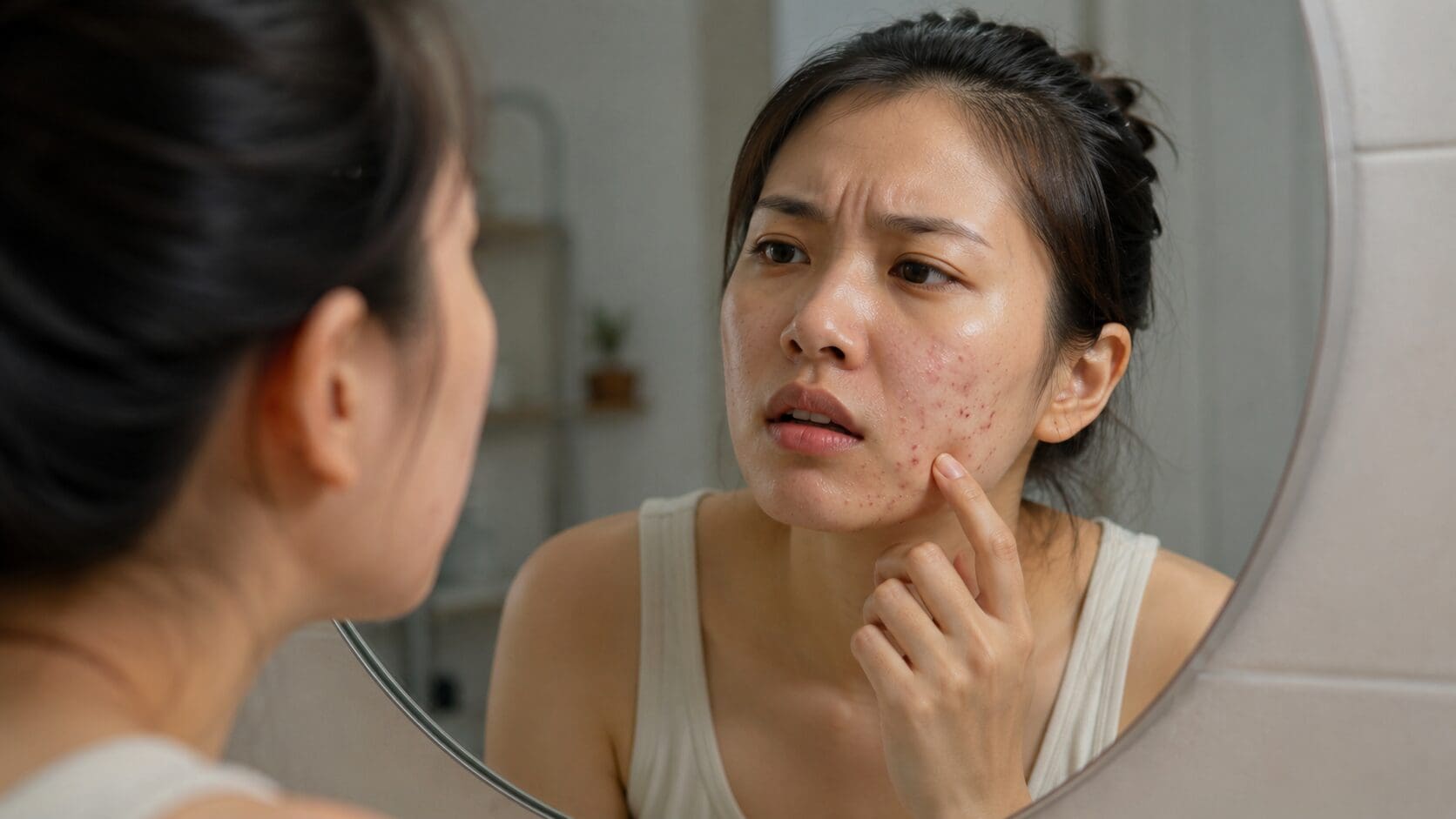
Not every breakout is regular acne. Some small, itchy bumps that look like pimples may actually be Malassezia folliculitis, often called fungal acne. If you are comparing fungal acne vs regular acne, the main clue is how the breakout behaves. The difference between fungal acne and regular acne matters because the wrong routine can waste time and make skin worse.
Regular acne can cause blackheads, whiteheads, papules, pustules, and deeper pimples. Malassezia folliculitis usually causes small, similar bumps that itch and come in groups.
The cause is different too. Regular acne is linked to clogged follicles, oil, dead skin, swelling, and the skin germ Cutibacterium acnes. Malassezia folliculitis happens when normal Malassezia yeast grows too much in hair follicles.
This guide explains fungal acne and regular acne, what each one looks like, why they happen, how to spot warning signs, and what to do when a breakout does not improve with your usual acne routine. Fungal acne is a common skin term, not the medical name. Healthcare pros usually call it Malassezia folliculitis or Pityrosporum folliculitis.
What Is Fungal Acne?
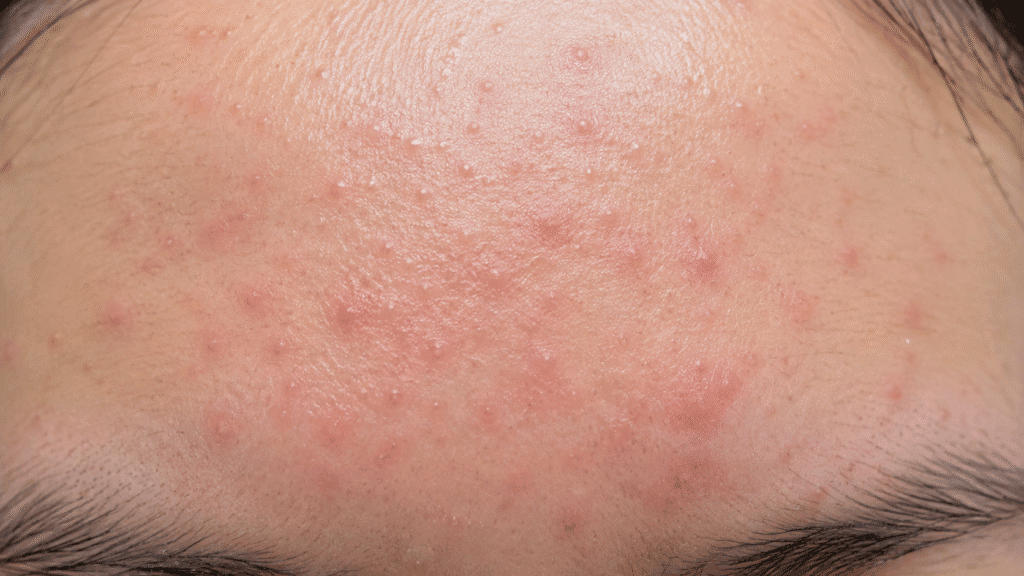
When people say fungal acne, they usually mean Malassezia folliculitis.
Malassezia is a type of yeast that normally lives on skin. In some cases, it grows too much and causes swelling inside hair follicles. The result can look a lot like acne.
It can show up on the face, forehead, chest, shoulders, and back. It can cause small red bumps and pus bumps. But it is not acne vulgaris.
One of the most useful things to know about fungal acne vs regular acne is that Malassezia itself does not always need to be fully removed from your skin. It is part of the skin’s normal mix. Problems start when conditions let it grow too much or trigger follicle swelling.
What Is Regular Acne?
Regular acne, or acne vulgaris, develops when hair follicles get clogged with oil and dead skin cells. Swelling and the activity of Cutibacterium acnes also play a role.
Unlike Malassezia folliculitis, regular acne often has many kinds of lesions.
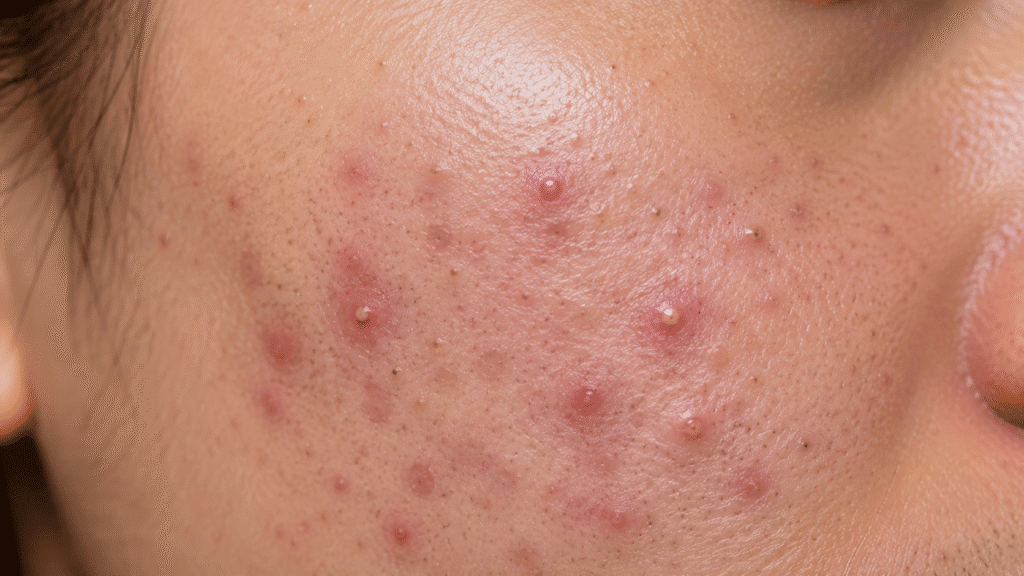
You might see:
- Blackheads
- Whiteheads
- Small red bumps
- Pus-filled pimples
- Deep, painful nodules
- Cysts
- Acne marks
Because regular acne can show many types of lesions, this is one useful clue in the regular acne vs fungal acne comparison.
A person with acne vulgaris might have a blackhead, a whitehead, a red pimple, and a deeper sore bump in the same area. Malassezia folliculitis tends to look more even.
Main Visual Difference
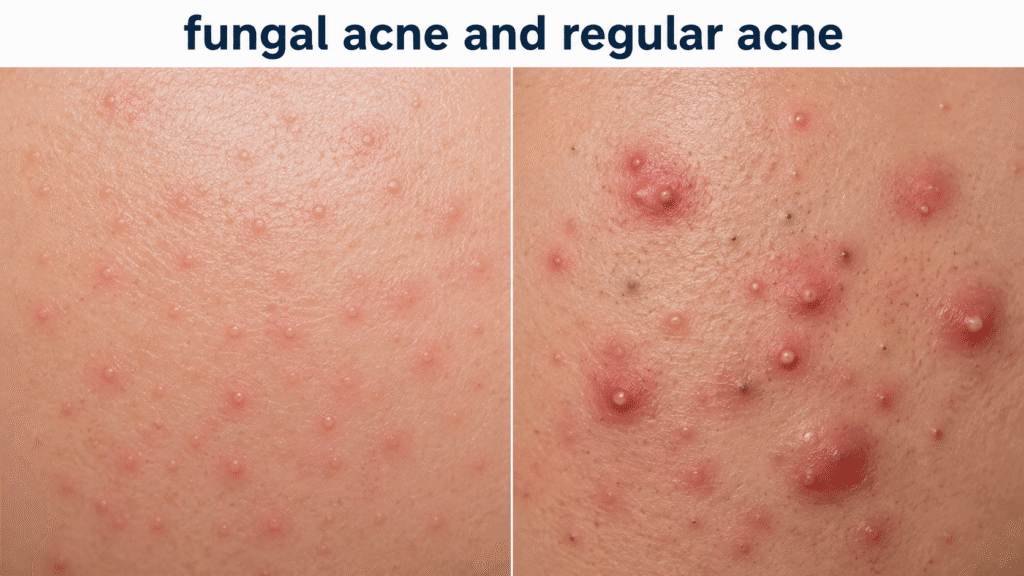
One easy way to understand fungal acne vs regular acne is to look at how similar the bumps are.
Malassezia folliculitis often causes monomorphic lesions. In plain language, many bumps look about the same size and shape. DermNet describes them as small, even, itchy papules and pustules, and blackheads are usually absent.
Regular acne is more mixed.
You might have:
- One large pimple
- Several tiny bumps
- Blackheads
- Whiteheads
- Inflamed pustules
- Deeper nodules
That mix is more typical of acne vulgaris.
Still, looks alone are not enough to diagnose. Skin problems can overlap, and some people have both acne vulgaris and Malassezia folliculitis at the same time.
Is It Itchy?
Itchiness is one clue that makes fungal acne vs regular acne easier to tell apart.
Malassezia folliculitis is often itchy. Cleveland Clinic describes clusters of small, itchy red bumps as a common sign.
Regular acne can be sore, painful, swollen, or irritated, especially when swelling is strong. But ongoing itching is less common with regular acne.
If you suddenly get many small, alike bumps that itch a lot, especially after sweating or time in heat, it may be worth talking with a skin doctor about Malassezia folliculitis.
That does not prove you have fungal acne. It only means the pattern needs a closer look.
Where Does It Appear?
Malassezia folliculitis often shows up where there is oil, sweat, and many hair follicles.
Common spots include:
- Forehead
- Hairline
- Chin
- Neck
- Chest
- Shoulders
- Upper back
- Upper arms
Regular acne can appear in many of the same places. That is another reason fungal acne and regular acne cannot be told apart by location alone.
Instead, look at the whole pattern.
- Where is it?
- Are the bumps similar?
- Are there blackheads?
- Does it itch?
- Did it start after more sweating?
- Have regular acne treatments helped?
Those clues are more useful than location by itself.
Why Does Fungal Acne Happen?

Malassezia yeast normally lives on skin, so having it does not always mean you need treatment.
Some conditions can help Malassezia folliculitis start or worsen. Hot and humid weather is one. Sweating is another.
This is why the problem is more common in warm, damp places or after long workouts.
If you are studying fungal acne vs regular acne because your breakouts get worse in hot weather, that pattern is worth telling a healthcare pro.
Can Sweat Cause It?
Sweat alone does not mean you will get Malassezia folliculitis.
But hot, damp skin can give the yeast a better place to grow.
Cleveland Clinic says Malassezia can grow fast on hot, damp, sweaty skin.
That is why some people notice acne-like bumps after:
- Intense workouts
- Long time outdoors
- Hot weather
- Tight clothes
- Leaving sweaty clothes on too long
- Activities that keep skin warm and moist
If this happens often, washing the skin and changing out of sweaty clothes fast may help lower the triggers.
Why Does Regular Acne Happen?
Regular acne starts in a different way.
Follicles can clog with oil and dead skin. Swelling and changes inside the follicle then lead to acne lesions.
Hormones, genes, oil flow, medicines, and other factors can also play a role.
The result can be several types of lesions. This mix is one of the strongest clues in the fungal acne vs regular acne comparison.
For example, if your face has blackheads, whiteheads, a few inflamed pimples, and smaller bumps, regular acne may be more likely.
Still, that is not a diagnosis. A skin doctor may be needed when the look is unclear or treatment is not working.
Fungal Acne vs Regular Acne: Quick Comparison
| Feature | Malassezia Folliculitis | Regular Acne |
|---|---|---|
| Common look | Small, similar-looking bumps | Mixed types of lesions |
| Itching | Often present | Less common |
| Blackheads | Usually absent | Common |
| Whiteheads | Not typical | Common |
| Uniform bumps | Common | Less common |
| Chest and back | Common | Also possible |
| Heat and sweat | Can trigger | Can worsen acne, but not specific |
| Main treatment | Antifungal treatment | Acne treatment |
| Can happen together? | Yes | Yes |
This chart helps explain fungal acne vs regular acne, but it should not be used to diagnose yourself.
Why Acne Treatment May Not Work
One of the most frustrating things is treating a breakout for weeks and seeing no change.
If you think every bump is regular acne, you may use products meant to unclog pores or lower swelling.
But if the bumps are really linked to Malassezia folliculitis, an acne-only routine may not help the main problem.
That does not mean acne products caused it. It only means the treatment should match the cause.
Cleveland Clinic says Malassezia folliculitis is often confused with common acne and that the two need different treatment.
There is also another option: you may have both.
That is why adding product after product without knowing what you are treating can make skincare extra complicated.
How Is It Diagnosed?
If you are unsure about fungal acne vs regular acne, the safest move is to have a healthcare pro look at it.
A skin doctor can check where the bumps are, how they look, and what other signs are present.
Sometimes more testing is used. DermNet says skin scraping, tape stripping, swabs, or biopsy can help confirm Malassezia yeast when needed. Cleveland Clinic also says a provider may look at skin samples under a microscope or use a Wood’s lamp.
Not every case needs a lot of testing. Often, the diagnosis comes from the clinical picture.
But if a breakout keeps going despite good acne care, getting a pro opinion can save you from trying products that will not help.
How Is It Treated?
Treatment for Malassezia folliculitis usually focuses on antifungal medicine.
A provider may suggest topical antifungal care, and oral antifungal drugs may be used in some cases. Examples include ketoconazole, econazole, selenium sulfide, fluconazole, and itraconazole, based on the case and plan.
The best choice depends on:
- How large the problem is
- Where it appears
- How long it has been there
- Past treatment
- Other health issues
- Medicines you take
- Whether it keeps coming back
Do not assume an oral antifungal is right just because the breakout looks like acne.
These drugs can have side effects and should be used with medical guidance. Cleveland Clinic notes that oral antifungal drugs can cause stomach side effects and, in some cases, liver problems.
What About Anti-Dandruff Shampoo?
You may have heard that anti-dandruff shampoo can help with so-called fungal acne.
There is some medical support for antifungal shampoos in Malassezia-related care. DermNet lists selenium sulfide and topical ketoconazole as treatments for Malassezia folliculitis.
But that does not mean every anti-dandruff shampoo should go on your face.
Different products have different active ingredients and strengths.
Your skin may also get irritated by products not made for facial use.
If you think you have Malassezia folliculitis, ask a skin doctor or other healthcare pro whether a specific antifungal product is right for you.
What Should You Avoid?
When comparing fungal acne and regular acne, it is tempting to make a long list of things to avoid.
Be careful with that.
Online fungal-acne-safe lists can be too simple. They may push people to drop many products without a firm diagnosis.
Instead, focus on symptoms and the full pattern.
If a product keeps irritating your skin, stop using it.
If a heavy product seems to make congestion worse, consider swapping it.
If your breakout gets worse in heat and sweat, notice that pattern.
And if your skin is always itchy or the acne-like rash does not respond to standard care, get checked.
Can You Have Both at Once?
Yes.
That is one reason fungal acne vs regular acne is not always an either-or choice.
A person can have acne vulgaris in some areas and Malassezia folliculitis in others.
For example, you might have blackheads and a few inflamed pimples on your face, while also getting small, itchy, even bumps on your forehead or upper back.
Trying to force every breakout into one box can lead to confusion.
A skin doctor can help tell whether you have one problem, the other, or both.
What About Facial Products?
Skincare products can matter when you are dealing with Malassezia folliculitis.
DermNet lists blocked pores from emollients and sunscreens as one possible factor.
That does not mean moisturizer or sunscreen is bad for everyone with suspected fungal acne.
Healthy skin still needs moisture and sun care.
Instead of removing every moisturizer or sunscreen, choose products that feel good on your skin and do not keep making symptoms worse.
If your skin breaks out easily, non-comedogenic products may help too.
The goal is not a zero-product routine. The goal is a routine that helps your skin without adding more trouble.
Does It Leave Scars?
Malassezia folliculitis and regular acne can act in different ways, and long-term effects vary from person to person.
Ongoing swelling, scratching, or picking can cause short-term marks or skin changes.
If you keep scratching itchy bumps, try not to pick at them.
The more you handle inflamed skin, the higher the chance of irritation and post-inflammatory marks.
If you are seeing lasting marks or scars, a skin doctor can help decide on the best care.
How to Help Keep It From Coming Back
Malassezia folliculitis can return, even after it clears. DermNet notes that repeat flare-ups are common and that maintenance care may sometimes help.
Shower after heavy sweating
Do not let sweat sit on your skin for hours after exercise if you can avoid it.
Change out of sweaty clothes
This is especially useful after workouts or time outdoors.
Keep skin cool and dry
Hot, humid settings can help the yeast grow.
Avoid too much skin cover
Very heavy products may not work well for everyone, especially on areas that get folliculitis.
Follow your treatment plan
If a healthcare pro gives you antifungal treatment, use it for the full time and at the right pace.
Stopping too soon may make it come back.
What Should You Do First?
If you’re trying to figure out fungal acne vs regular acne, don’t start by replacing all your skincare.
First, watch the breakout.
Ask yourself:
- Are the bumps very similar in size?
- Do they itch more than they hurt?
- Are there blackheads or whiteheads?
- Did it start after more sweat or heat?
- Does it mainly affect the forehead, hairline, chest, shoulders, or upper back?
- Has regular acne care failed to help?
These questions can help you explain your symptoms more clearly to a skin doctor.
If you’re wondering why acne keeps coming back in the same spot and how to help prevent recurring breakouts, read our guide, “Why Do I Keep Getting Acne in the Same Spot? Here’s What Your Skin Might Be Trying to Tell You.”
Common Mistakes People Make
Mistake 1: Calling every small bump fungal acne
Not every small bump is Malassezia folliculitis.
Acne, bacterial folliculitis, irritation, contact dermatitis, rosacea, and other problems can all look like acne-like bumps. The AAD notes that folliculitis can look like a sudden acne breakout, while DermNet lists several conditions that can look like Malassezia folliculitis.
Mistake 2: Stopping every skincare product
You do not need to throw away your moisturizer, sunscreen, or cleanser.
Make changes based on your symptoms and pro advice, not internet lists.
Mistake 3: Treating it with the wrong medicine on your own
Malassezia folliculitis is linked to yeast, so germ-killing care is not the same as antifungal care.
In fact, antibiotic use is one factor linked to Malassezia folliculitis in some people.
Never start or stop prescription medicine without talking with your healthcare provider.
Mistake 4: Scrubbing the bumps away
Heavy scrubbing cannot remove a follicular yeast problem.
It can just irritate already inflamed skin.
Mistake 5: Expecting a fast fix
Whether it is acne vulgaris or Malassezia folliculitis, skin takes time to heal.
Give the right treatment time to work, and ask for help if the problem stays.
When Should You See a Skin Doctor?
Consider seeing a skin doctor if:
- Your breakout is very itchy.
- Small bumps keep showing up in groups.
- Regular acne treatments are not helping.
- Your skin becomes painful or more swollen.
- The problem keeps coming back.
- You are getting scars or lasting marks.
- You are not sure if the bumps are acne, folliculitis, or something else.
A pro check is especially helpful when comparing fungal acne vs regular acne because many skin problems can look very much alike.
Instead of switching products over and over, you can get a better idea of what you are really treating.
Frequently Asked Questions About Fungal Acne vs Regular Acne
Not exactly. Fungal acne is a common term for Malassezia folliculitis, an acne-like problem that involves Malassezia yeast in hair follicles. It is different from acne vulgaris.
One helpful clue is itchy, even bumps without clear comedones. Regular acne is more likely to have blackheads, whiteheads, and bumps of different sizes. Still, only a healthcare pro can tell for sure.
Yes. Malassezia folliculitis can affect the face, especially the forehead and hairline, though the chest, shoulders, and upper back are also common spots.
Malassezia normally lives on human skin, and Malassezia folliculitis is usually talked about as an overgrowth problem rather than something you simply catch like a common contagious infection. Cleveland Clinic notes that spread through shared razors or hot tubs is possible, while skin-to-skin spread is less likely.
It depends on the person and the treatment. Cleveland Clinic notes that symptoms can clear within a few weeks after treatment starts, though flare-ups can return.
Final Thoughts
Knowing the difference between fungal acne and regular acne can save you from treating every breakout the same way.
Regular acne and Malassezia folliculitis may look alike, but they are different problems with different causes and treatment plans.
If your skin has blackheads, whiteheads, and pimples of different sizes, regular acne may be more likely. If you have groups of small, even, itchy bumps—especially after heat, sweating, or in places like the forehead, chest, shoulders, or upper back—Malassezia folliculitis may be worth thinking about.
Still, looks alone cannot confirm the cause.
The main lesson from fungal acne vs regular acne is that lasting breakouts deserve the right diagnosis, not endless product tests.
Keep your routine gentle, avoid hard scrubbing and picking, watch for heat and sweat patterns, and get pro help when a breakout does not respond to your usual approach.
And remember: having acne-like bumps does not mean your skin care failed. Sometimes the first step to clearer skin is simply figuring out what kind of breakout you are really dealing with.