

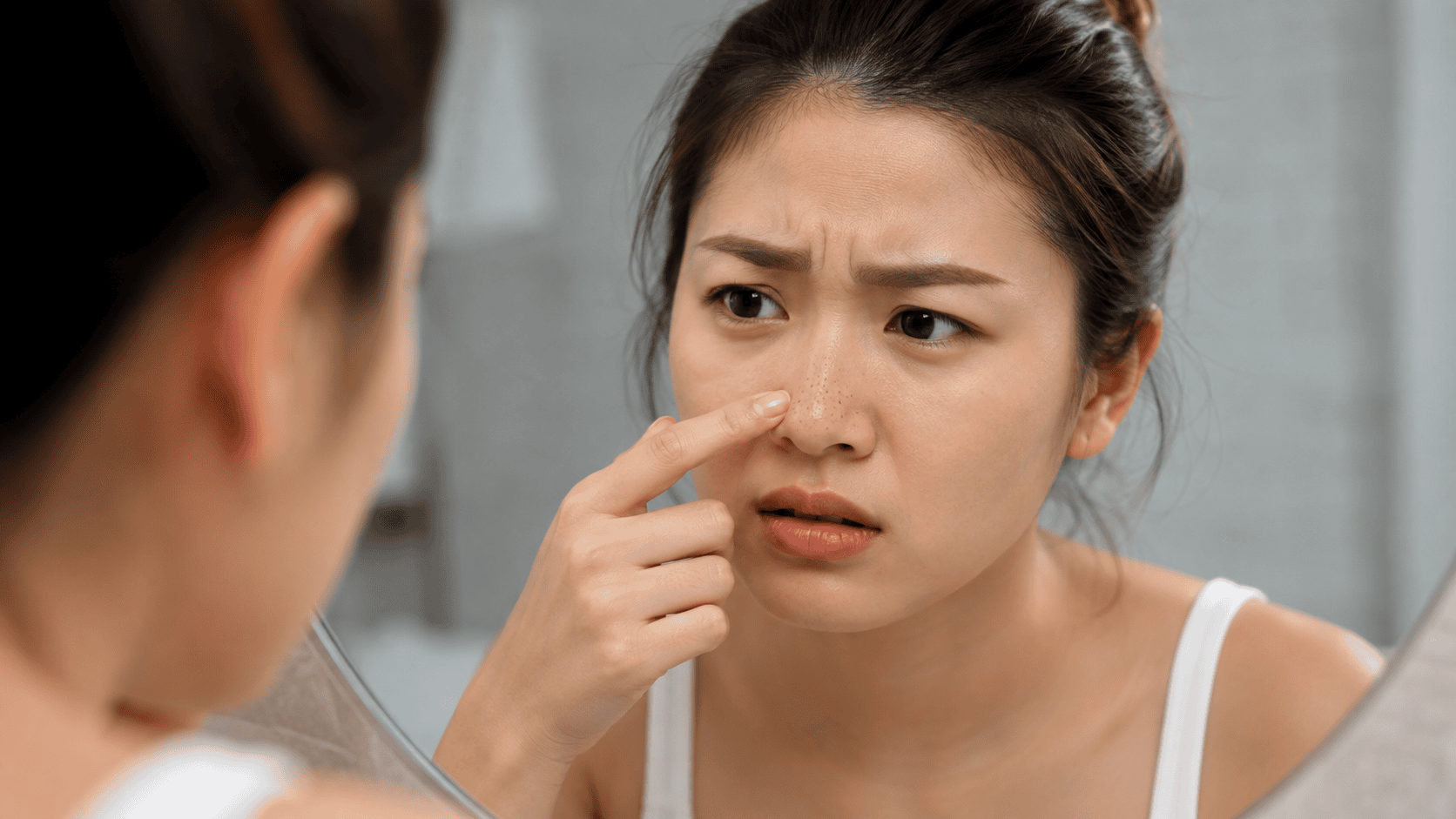
Have you ever looked in the mirror and seen tiny dark dots on your nose? Many people call them blackheads, but that is not always true. A common skincare mix-up is sebaceous filament vs blackhead.
They can look alike at first, but they are different skin concerns and need different care.
Knowing the difference can keep you from using harsh scrubs or needless extractions. If the dots keep coming back after you remove them, you may be dealing with sebaceous filaments instead of blackheads.
Learning the difference is the first step to a routine that actually helps.
Why People Often Confuse Sebaceous Filaments and Blackheads
Both show up as tiny dots, mostly on the nose, chin, forehead, and around the nostrils. These areas make more oil, so clogged-looking pores stand out more. Without context, it is easy to mix them up.
Sebaceous filaments are normal. Blackheads are a mild form of acne. That difference changes the products and treatments you should use.
What Are Sebaceous Filaments?
Sebaceous filaments are tiny tube-like structures that line your pores. Their job is to move sebum, your skin’s natural oil, from the sebaceous gland to the skin’s surface.
Without them, oil would not spread evenly. Skin could feel dry, and the barrier could get weaker.
Unlike acne, sebaceous filaments are not caused by bacteria or inflammation. They only become more visible when your pores make more oil.
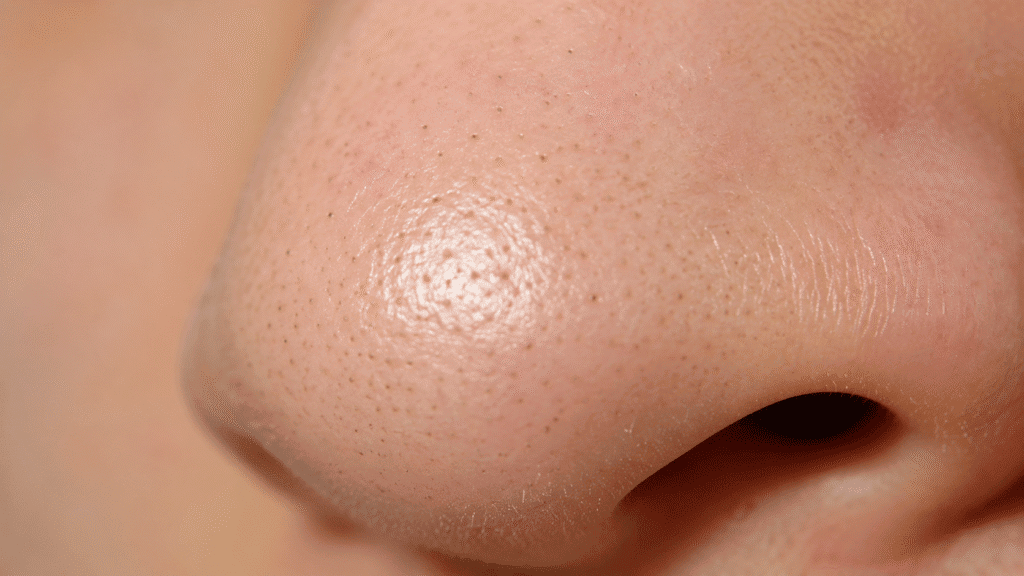
Traits of Sebaceous Filaments
You may have sebaceous filaments if you notice:
- Tiny gray, yellow, or light brown dots
- Even spacing across the nose
- Flat or slightly raised look
- Smooth texture
- They return within days after extraction
- No redness or swelling
Because they refill with oil, trying to squeeze them again and again usually causes irritation instead of a lasting fix.
Why Do Sebaceous Filaments Become Visible?
According to the American Academy of Dermatology (AAD), people with oily skin or naturally larger pores may notice sebaceous filaments more easily because increased oil production makes them more visible.
A few things can make them easier to see:
- Oily skin
- Larger pores
- Genetics
- Hormone changes
- Puberty
- Pregnancy
- Menstrual cycles
- Stress
- Warm, humid weather
- Aging
These filaments are not a hygiene problem. Even people with a good skincare routine still have them.
What Are Blackheads?
Blackheads, also called open comedones, are clogged pores filled with excess oil, dead skin cells, and debris. The pore opening stays open. Air then reacts with the plug on top, and that reaction darkens it.
The dark color is not dirt. It is oxidation.
Understanding that helps explain why hard scrubbing rarely removes blackheads for good.
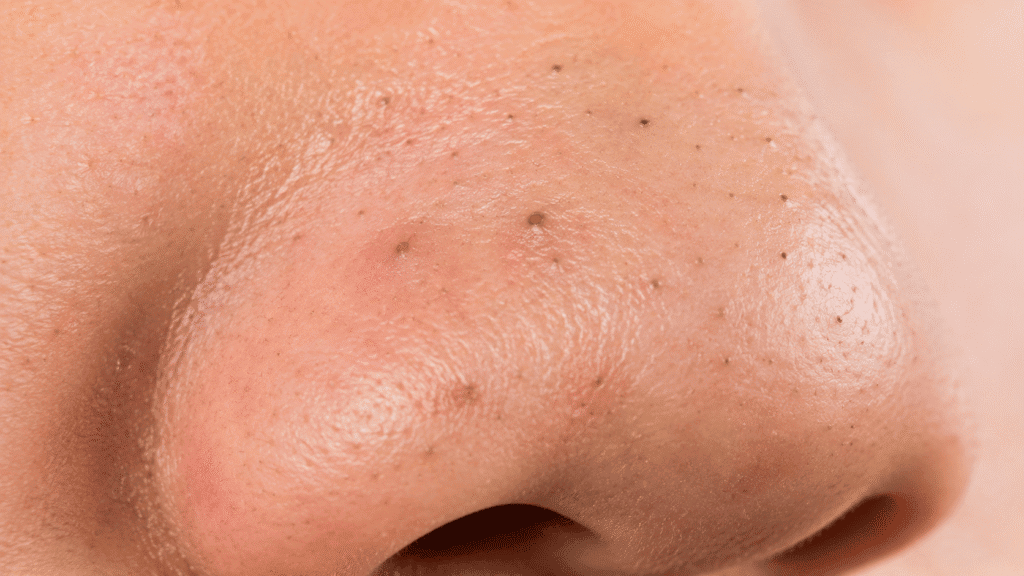
Traits of Blackheads
Blackheads usually have these traits:
- Dark brown or black center
- Larger than sebaceous filaments
- Random placement
- Slightly raised
- Firm plug inside the pore
- May turn into inflamed acne
Unlike sebaceous filaments, blackheads do not show up evenly across every pore. They appear where a clog forms.
What Causes Blackheads?
Several things can lead to blackheads:
- Too much oil
- Dead skin buildup
- Acne-prone skin
- Heavy cosmetic products
- Not cleansing well
- Hormone changes
- Certain medicines
- High humidity
- Wearing makeup for long periods
- Touching your face often
Blackheads are non-inflammatory acne lesions. They often show up with whiteheads, pimples, papules, and pustules.
Also, If you’d like to learn more about why blackheads return, what causes them, and the best ways to prevent them, be sure to read our detailed guide on Why Do My Blackheads Keep Coming Back?
Sebaceous Filament vs Blackhead: The Biggest Differences
The sebaceous filament vs blackhead question comes up a lot, but the clues are simple once you know what to look for.
Purpose
Sebaceous filaments help move oil to the skin’s surface.
Blackheads are clogs caused by oil and dead skin.
Appearance
Sebaceous filaments usually look:
- Light gray
- Yellow
- Light brown
- Uniform
- Small
Blackheads tend to be:
- Dark black
- Brown
- Larger
- More visible
- Randomly placed
Texture
Sebaceous filaments usually feel smooth because they are filled with oil.
Blackheads often feel rough because of the hard plug inside the pore.
Location
Sebaceous filaments mostly appear on:
- Nose
- Chin
- Forehead
Blackheads can develop almost anywhere, including:
- Face
- Chest
- Shoulders
- Back
Can They Be Removed Permanently?
Sebaceous filaments: no. They are normal and refill after extraction.
Blackheads: they can often be reduced with steady care and may stay away longer, but only if the root causes are managed.
This is one of the biggest points in the sebaceous filament vs blackhead comparison.
Why Squeezing Isn’t Always the Answer
Many people use pore strips or extraction tools because they give quick results. You may see tiny yellow or white strands come out of your pores and think the problem is solved.
If the extracted material is soft, pale, and comes from many pores, it is probably a sebaceous filament.
Since sebaceous filaments are part of your skin’s oil system, they refill within days.
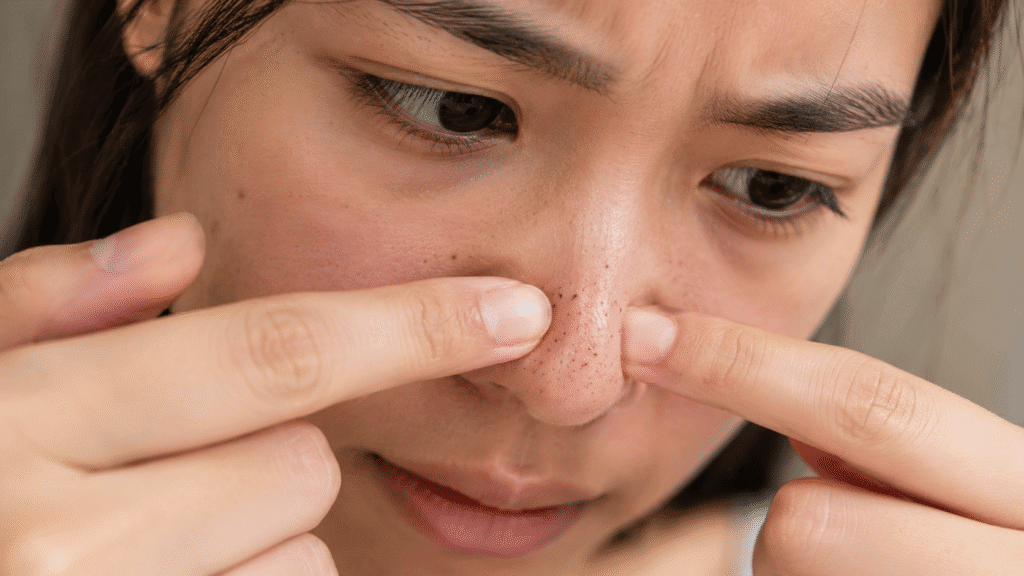
Repeated squeezing can lead to:
- Enlarged pores
- Broken capillaries
- Skin irritation
- More redness
- Barrier damage
- Dark marks
For blackheads, gentle extraction may help. But too much squeezing can still lead to irritation and scars.
How to Tell Which One You Have
If you are still not sure whether you have sebaceous filaments or blackheads, ask yourself these questions:
Is it mostly on your nose?
If yes, it may be sebaceous filaments.
Are the dots evenly spaced?
Uniform dots usually point to sebaceous filaments.
Do they come back within a few days after extraction?
Sebaceous filaments refill on their own.
Are they dark, raised, and isolated?
Those are more likely to be blackheads.
Are they linked with acne?
If you also have pimples and whiteheads, blackheads are more likely part of the picture.
Many people have both conditions at the same time. That is why the blackhead vs sebaceous filament debate matters. Treating every visible pore as a blackhead can lead to too much peeling, needless extractions, and skin irritation. Knowing the difference helps you choose better products and habits.
What Causes Sebaceous Filaments and Blackheads?
Although they can look alike, the causes are very different.
Causes of Sebaceous Filaments
Sebaceous filaments are naturally present in every person’s skin. They become more visible when:
- You have oily skin
- Your pores are larger
- Your sebum production rises
- Hormones shift
- The weather is warm and humid
- Genetics play a role
- Aging makes pores look larger
People often notice them more during puberty because oil output goes up. Adults with combination or oily skin may also see them more in hot weather or during stress.
Sebaceous filaments are not caused by poor hygiene. Even a solid skincare routine will not remove them for good.
Causes of Blackheads
Blackheads form when excess oil and dead skin cells block a pore opening. Once the clog meets air, it darkens.
Things that raise the chance of blackheads include:
- Too much oil
- Dead skin buildup
- Inconsistent cleansing
- Heavy or pore-clogging cosmetics
- Hormone changes
- Certain medicines
- High humidity
- Wearing makeup too long
- Touching your face often
Unlike sebaceous filaments, blackheads are one of the early forms of acne and can turn into inflamed pimples if left alone.
Common Myths About Sebaceous Filaments and Blackheads
There is a lot of bad info online, so the sebaceous filament vs blackhead topic can be confusing. Here are the most common myths.
Myth 1: Blackheads Are Filled With Dirt
This is not true.
The dark color is caused by oxidation when trapped oil and dead skin cells meet air.
Myth 2: Sebaceous Filaments Should Be Removed
Many social media videos tell you to extract every visible filament.
But they serve a useful purpose in healthy skin. You can remove them for a short time, but they refill because your skin keeps making oil.
Myth 3: Scrubbing Hard Removes Blackheads
Over-scrubbing can damage the skin barrier.
Instead of clearing pores, harsh scrubbing may make irritation worse and can even trigger more oil.
Myth 4: Pore Strips Solve the Problem
Pore strips can be satisfying, but they only work for a short time.
They remove the surface contents of pores without fixing why the clog formed. For sebaceous filaments, they return fast. For blackheads, new clogs can still form if the root causes stay the same.
The Best Ingredients for Sebaceous Filaments
If your goal is to make sebaceous filaments less visible, consistency matters more than harsh treatment.

Salicylic Acid (BHA)
This oil-soluble exfoliant moves into pores and helps dissolve extra sebum.
Benefits include:
- Removing excess oil
- Clearing pore buildup
- Reducing congestion
- Helping pores look smaller
Vitamin B3
Vitamin B3, also called niacinamide, helps balance oil and support the skin barrier.
It may also improve the look of enlarged pores over time.
Clay Masks
Clay absorbs extra oil on the skin’s surface.
Used once a week, it may reduce shine and make sebaceous filaments look less visible.
Gentle Cleansers
A gentle cleanser used twice a day helps remove extra oil without stripping the skin.
Avoid harsh soaps that leave your skin tight or dry.
The Best Ingredients for Blackheads
Treating blackheads means keeping pores from clogging in the first place.

Retinoids
Retinoids speed up skin cell turnover.
That helps stop dead skin cells from building up in pores.
Salicylic Acid
Salicylic acid is one of the best options because it works inside the pore, not just on the surface.
Benzoyl Peroxide
Benzoyl peroxide is more common for inflamed acne, but it may help lower acne-causing bacteria that add to breakouts.
Gentle Chemical Exfoliants
AHAs and BHAs help remove dead skin cells without the roughness of physical scrubs.
Used regularly, they may improve skin texture and reduce repeat blackheads.
A Simple Skincare Routine for Both Concerns
Whether you deal with sebaceous filaments, blackheads, or both, the best routine is balanced. Do not over-treat the skin.
Morning Routine
- Gentle cleanser
- Vitamin B3 serum
- Lightweight moisturizer
- Broad-spectrum sunscreen SPF 30 or higher
Keeping the skin hydrated helps protect the skin barrier, which can reduce excess oil over time.
Evening Routine
- Remove makeup and sunscreen fully.
- Cleanse with a gentle facial cleanser.
- Use a salicylic acid treatment two to three times per week.
- Add a retinoid on alternate nights if your skin can handle it.
- Finish with a moisturizer to support hydration.
Do not start several active ingredients at once. Begin slowly and watch how your skin reacts before you raise the frequency.
Habits That Can Make Both Conditions Worse
Daily habits matter more than many people think. Products help, but some habits can cause clogged pores and irritation.

Try to avoid:
- Picking or squeezing your pores often
- Sleeping with makeup on
- Skipping sunscreen
- Using harsh facial scrubs
- Overwashing your face
- Using too many active ingredients at once
- Using dirty makeup brushes
- Touching your face during the day
Small changes often lead to clear results over time.
When Should You See a Skin Doctor?
Most sebaceous filaments and mild blackheads can be managed with steady skincare. But sometimes you need help.
See a skin doctor if you have:
- Blackheads that do not improve after several months
- Painful or inflamed acne
- Frequent cystic breakouts
- Scars or dark marks from acne
- Uncertainty about whether you have sebaceous filaments or acne
A skin doctor can suggest prescription retinoids, professional chemical peels, or safe extractions.
Understanding the Difference Leads to Better Skin
At first glance, sebaceous filaments and blackheads can look almost the same. But they have different causes, behaviors, and treatment plans.
When you compare sebaceous filament vs blackhead, remember this: sebaceous filaments are a normal part of healthy skin and cannot be removed for good, while blackheads are clogged pores that often improve with steady skincare.
Instead of chasing perfectly invisible pores, focus on healthy skin with gentle cleansing, regular exfoliation, hydration, and sun protection. Over time, that can improve your complexion and help pores look cleaner.
Frequently Asked Questions
No. Sebaceous filaments are normal structures inside your pores that help move oil to the skin’s surface. Blackheads are clogged pores made of oil and dead skin cells.
No. They refill because they are part of normal skin function. You can make them less visible, but you cannot remove them for good.
Your sebaceous glands always make oil. Since filaments help move that oil, they refill within a few days after extraction.
Yes. Salicylic acid is oil-soluble, so it can move into pores and break down excess sebum and debris. It can make sebaceous filaments less visible and help prevent blackheads.
Yes. Many people have sebaceous filaments on the nose and blackheads on the nose, chin, forehead, or other oily parts of the face.
Final Thoughts
If you have spent years trying to remove every tiny dot on your nose, learning the difference between sebaceous filaments and blackheads can change your routine. They may look alike, but they are not the same and should not be treated the same way.
Sebaceous filaments are part of healthy skin and help move sebum to the surface. They may look more noticeable if you have oily skin or larger pores, but they do not mean your skin is dirty or unhealthy. Blackheads, on the other hand, form when oil and dead skin clog a pore and darken after contact with air.
Rather than relying on pore strips or constant squeezing, use a steady routine with gentle cleansing, chemical exfoliation, moisturizer, and daily sun protection. Healthy skin does not happen overnight, but the right routine can reduce congestion, improve texture, and support a clearer look.
Do not aim for perfectly invisible pores. Aim for healthy, balanced skin. Knowing what is normal and what needs care is one of the best ways to build a strong skincare routine and avoid needless irritation.