
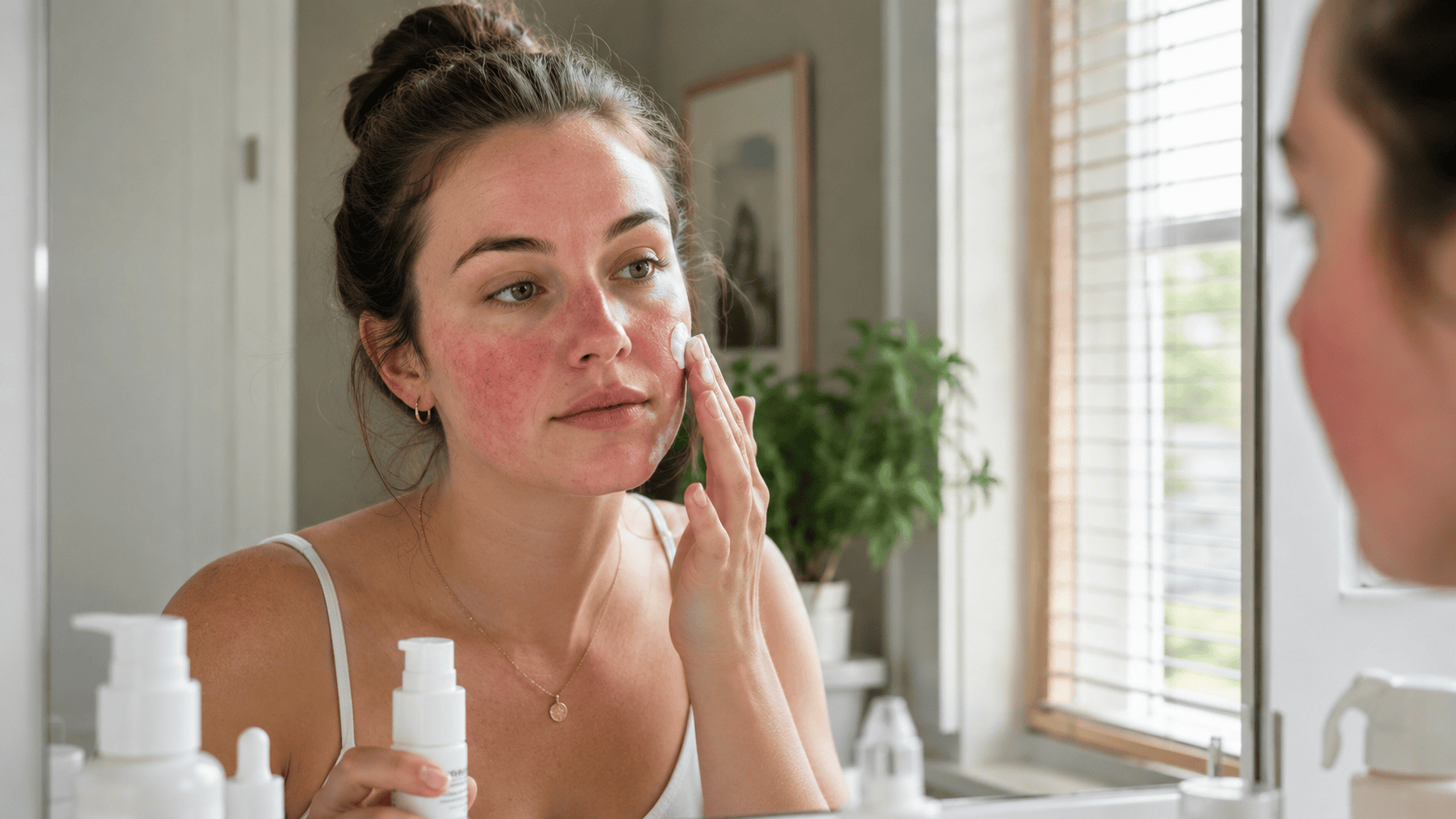
If you have rosacea, even a basic skin care product can make your face hot, sore, or very sensitive. Redness, visible veins, and small bumps can make shopping hard.
This guide shows the best skin care routine for rosacea-prone skin. It focuses on calm care, a strong skin barrier, and less irritation over time.
Rosacea is a long-term skin condition. There is no cure, but a gentle rosacea skin care routine can help lower flare-ups and make your skin feel better.
What Is Rosacea?
Rosacea is a lasting skin condition that mainly affects the center of the face.
According to the American Academy of Dermatology (AAD), rosacea is a chronic inflammatory skin condition that commonly causes persistent facial redness, visible blood vessels, and acne-like bumps, most often affecting the cheeks, nose, chin, and forehead.
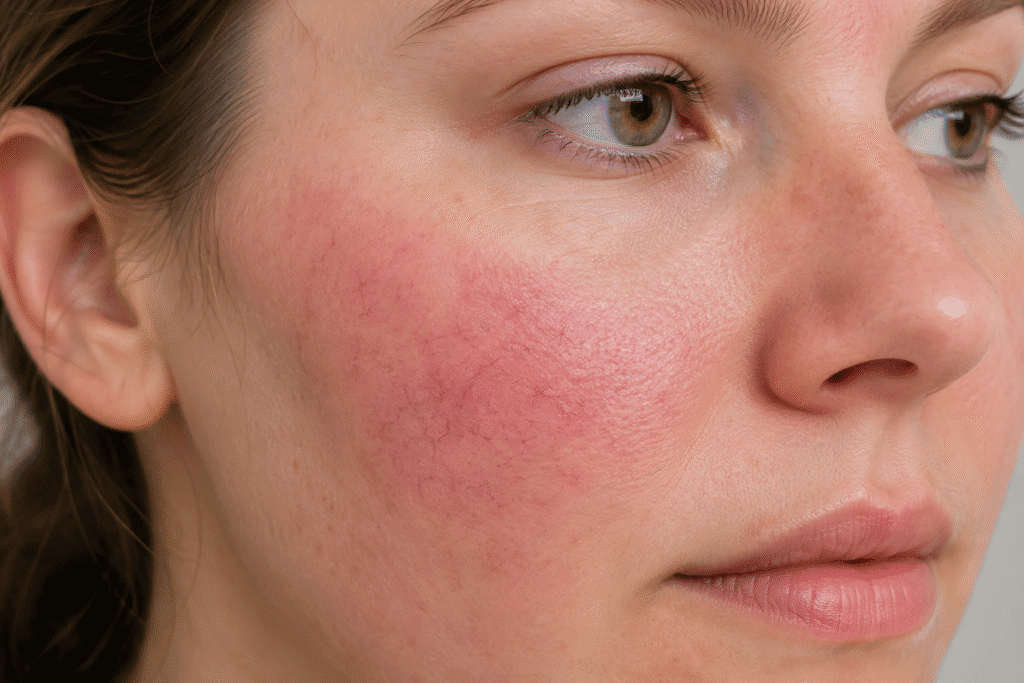
It often shows up on the:
- Cheeks
- Nose
- Chin
- Forehead
Common signs include:
- Red skin that stays or comes and goes
- Frequent flushing
- Visible blood vessels
- Sensitive skin
- Burning or stinging
- Dry patches
- Acne-like bumps and pimples
- Swelling during flare-ups
Symptoms vary from person to person. One person may mainly see redness. Another may have bumps, irritation, or both.
Because rosacea affects each skin type in a different way, there is no single fix. Still, a gentle skin care routine for rosacea is one of the best ways to manage it.
Why Your Routine Matters
Healthy skin starts with a strong skin barrier.
With rosacea, that barrier is often weak and easy to upset. Things that do not bother other people can cause redness, burning, or pain.
A careful rosacea skin care routine can help:
- Support the barrier
- Cut irritation
- Keep skin moist
- Reduce water loss
- Lower flare-up risk
- Improve comfort
Consistency matters more than trendy products.
Common Rosacea Triggers
Skin care is only part of rosacea care. Daily habits and the world around you can also spark flare-ups.
Weather
Sudden weather changes can increase redness.
Common examples:
- Hot weather
- Cold wind
- Dry air
- Strong sun
Stress
Stress does not cause rosacea on its own, but it can trigger flare-ups in many people.
Simple habits that lower stress may also lower symptom spikes.
Hot Drinks
Many people notice more flushing after:
- Hot coffee
- Tea
- Hot chocolate
The heat itself may be the problem, not the drink.
Spicy Food
Hot peppers and spicy seasonings can trigger flushing for some people.
Every person has different triggers, so a simple symptom log can help you spot your own patterns.
Alcohol
Some alcohol, especially red wine, is often linked to rosacea flare-ups.
Harsh Skin Care Products
Some products can weaken a skin barrier that is already sensitive.
These often include:
- Alcohol-based toners
- Strong peel acids
- Rough scrubs
- Fragrance
- Strong plant oils
Knowing your triggers matters just as much as following a rosacea skin care routine.
The Foundation of Every Routine
The goal is not to use more products. The goal is to use fewer products that work well and feel gentle.
A good rosacea skin care routine rests on three basics:
- Gentle cleansing
- Daily hydration
- Sun protection
Everything else should support those three steps.
Morning Rosacea Skin Care Routine
A simple morning routine helps your skin start the day with less irritation.
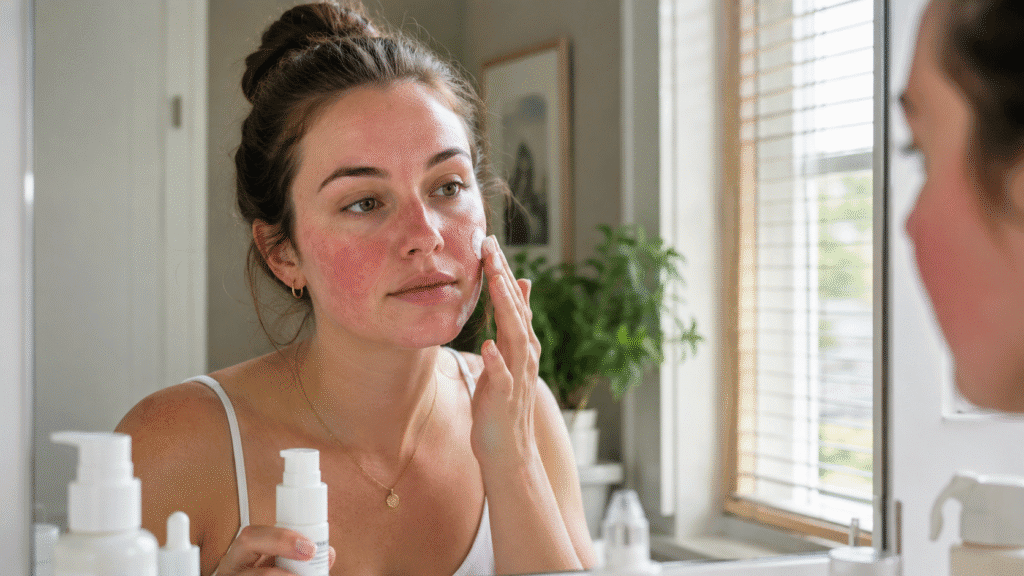
Step 1: Cleanse Gently
Wash your face with a mild, non-stripping cleanser.
Look for products that are:
- Fragrance-free
- Creamy or lotion-like
- Able to remove overnight oil without making skin tight
- Supportive of the skin barrier
When you cleanse:
- Use lukewarm water.
- Avoid hot water.
- Massage with your fingertips.
- Pat your face dry with a soft towel instead of rubbing.
Hard washing can make redness worse.
Step 2: Use a Hydrating Serum, If Needed
Not everyone with rosacea needs a serum, but a gentle hydrating serum can add moisture.
Helpful ingredients include:
- Glycerin
- Panthenol
- Beta-glucan
- HA
These ingredients help draw water into the skin without feeling heavy.
Step 3: Moisturize
Moisturizer is one of the most important parts of any rosacea skin care routine.
A good moisturizer can:
- Lock in water
- Strengthen the barrier
- Reduce dryness
- Improve comfort
Choose soothing, fragrance-free products instead of strongly scented ones.
Step 4: Wear Sunscreen Every Day
Sun is one of the most common rosacea triggers.
Even on cloudy days, UV rays can cause flare-ups and lasting redness.
Choose a broad-spectrum sunscreen with SPF 30 or higher.
Many people with rosacea prefer mineral sunscreen because it often feels less irritating.
Make sunscreen part of your routine all year.
Ingredients That Can Support Rosacea-Prone Skin
Not every ingredient works well for sensitive skin, but some are often helpful.
Ceramides
Ceramides are found in the skin and help support the barrier.
They may help:
- Hold in moisture
- Strengthen the barrier
- Reduce dryness
Niacin
In the right amount, niacin may help:
- Support the barrier
- Reduce water loss
- Improve skin strength
If your skin is very sensitive, patch test first.
Colloidal Oatmeal
This gentle ingredient is often used in products for sensitive skin.
It may help with:
- Dryness
- Itching
- Short-term irritation
Aloe Vera
Pure, fragrance-free aloe vera can feel cool and may bring short-term relief.
Since plant ingredients can affect people in different ways, patch testing is still a good idea.
Green Tea Extract
Green tea has skin-friendly compounds and is often added to products made for sensitive-looking skin.
It may help calm skin and ease the look of short-term redness.
Ingredients to Use With Extra Caution
Some ingredients may be too strong for reactive skin, especially during flare-ups.
Depending on your skin, limit or avoid:
- High glycolic acid
- Strong salicylic acid treatments
- Rough scrubs
- Alcohol-heavy formulas
- Artificial fragrance
- Menthol
- Peppermint oil
- Eucalyptus oil
- Witch hazel, for some people
If you want to try an active product, add one new item at a time and watch how your skin reacts for several days.
The most effective rosacea skin care routine is often the simplest one.
Evening Rosacea Skin Care Routine
Your skin repairs itself while you sleep, so nighttime care matters too.
A calm evening rosacea skin care routine should remove dirt, replace moisture, and support the barrier without extra irritation.
People with rosacea often do better with a simple, steady plan than with a long routine full of actives.
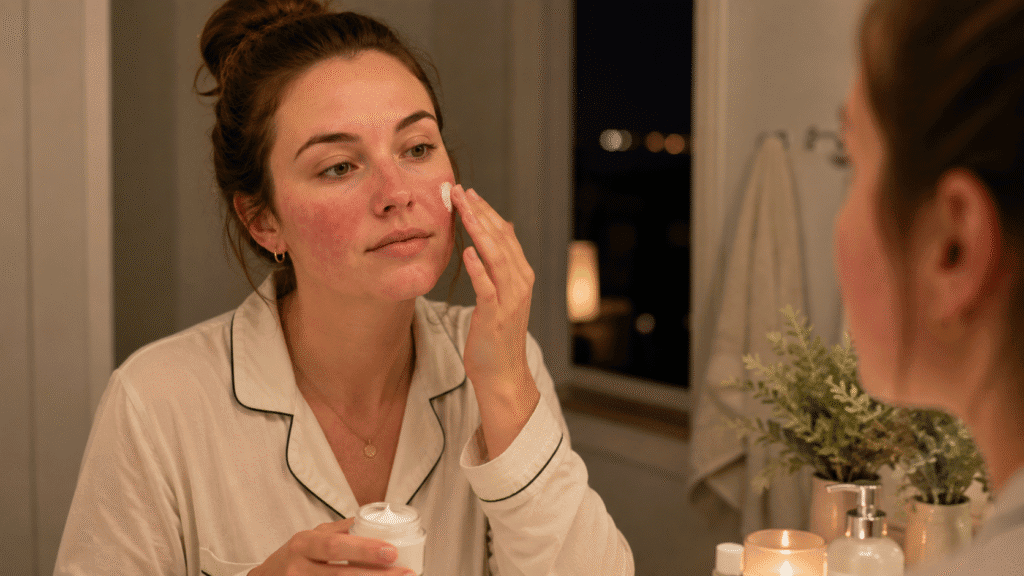
Step 1: Remove Makeup Gently
If you wear makeup or sunscreen, take it off before cleansing.
Choose a gentle remover that is:
- Fragrance-free
- Alcohol-free
- Made for sensitive skin
- Easy to rinse away
Do not rub hard with cotton pads or wipes, since friction can trigger redness.
If you wear waterproof makeup, let the remover sit for a moment before wiping.
Step 2: Cleanse Again
Even after makeup removal, a gentle cleanser helps wash away leftover product, oil, and pollution.
When you cleanse:
- Use lukewarm water.
- Massage for 30 to 60 seconds.
- Avoid cleansing brushes during flare-ups.
- Pat dry with a clean, soft towel.
A mild cleanser is one of the most useful products in any rosacea skin care routine.
Step 3: Apply Soothing Treatments
Once your skin is clean, you may use calming products that help with moisture and barrier support.
Look for ingredients such as:
- Ceramides
- Panthenol
- Beta-glucan
- Glycerin
- HA
If you use prescription medicine for rosacea, follow your provider’s directions on when to apply it.
Step 4: Moisturize Before Bed
Night moisturizer helps lower overnight water loss and keeps skin comfortable by morning.
Choose a product that is:
- Rich enough for your skin
- Won’t clog pores
- Fragrance-free
- Made for sensitive skin
Using moisturizer every night is one of the easiest ways to support a long-term rosacea skin care routine.
How to Choose the Right Cleanser
Not every facial cleanser works for rosacea-prone skin.
Look for:
- Cream cleansers
- Lotion cleansers
- Soap-free formulas
- pH-balanced products
- Fragrance-free labels
Avoid:
- Foaming cleansers with harsh surfactants
- Strong peel acids
- Cleansers with lots of alcohol
- Rough scrubs
The right cleanser should leave your skin clean, not tight, dry, or sore.
Choosing the Best Moisturizer
Moisturizer does more than add hydration—it also helps strengthen and protect the skin barrier from everyday triggers that can lead to rosacea flare-ups.
Look for a moisturizer that provides:
- Long-lasting hydration
- Barrier-supporting ingredients
- A lightweight or richer texture based on your skin type
- A simple ingredient list suitable for sensitive skin
For those looking for a moisturizer formulated to nourish and support the skin barrier, Mosheko Enhance Moisturizer is an excellent option. Its hydrating formula helps replenish moisture, leaving skin feeling soft, comfortable, and better protected against dryness—an important part of a consistent rosacea skin care routine.
If a moisturizer causes persistent burning or stinging that doesn’t quickly subside, discontinue use and consult a dermatologist if needed.
Sunscreen: A Daily Essential
Sun is one of the most often reported rosacea triggers.
Even if you stay indoors much of the day, sunlight through windows or brief trips outside can affect sensitive skin.
A sunscreen for a rosacea skin care routine should be:
- Broad-spectrum SPF 30 or higher
- Fragrance-free
- Gentle on sensitive skin
- Easy to reapply
Many people find mineral sunscreens with zinc oxide or titanium dioxide more comfortable than some chemical filters.
Lifestyle Habits That Support Healthy Skin
Skin care products are only part of the picture. Daily habits also affect flare-ups.

Stay Hydrated
Drinking enough water supports overall skin health.
Water will not cure rosacea, but well-hydrated skin often feels better.
Manage Stress
Stress is a common trigger.
Helpful habits include:
- Regular exercise
- Meditation
- Deep breathing
- Yoga
- Time outdoors
- Enough sleep
Protect Your Skin From Weather
Extreme weather can make symptoms worse.
In winter:
- Wear a scarf outside.
- Use richer moisturizers if needed.
- Avoid long exposure to cold wind.
In summer:
- Wear a wide-brimmed hat.
- Stay in shade.
- Reapply sunscreen often.
- Avoid strong midday sun.
Keep Showers Warm, Not Hot
Hot water can trigger flushing in some people.
Use lukewarm water when you shower or wash your face.
Be Gentle With Towels
Instead of rubbing your face dry:
- Pat gently.
- Use a clean towel.
- Replace towels often.
Small changes like these support a steady rosacea skin care routine.
Common Mistakes That Can Make Rosacea Worse
Many people hurt their skin without meaning to by trying too many products at once.
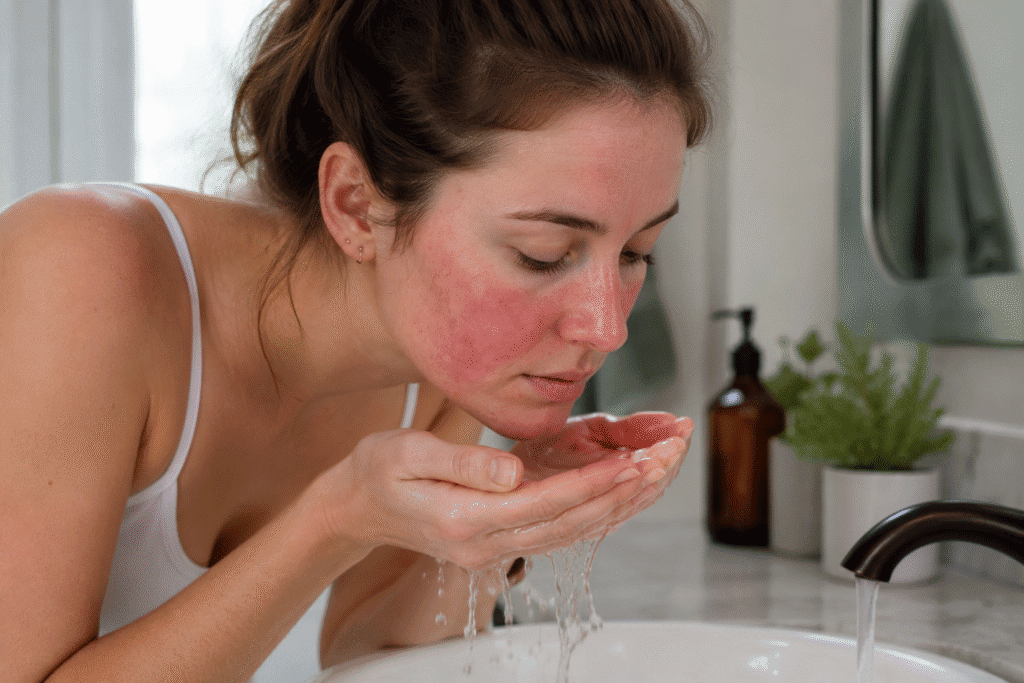
Over-Scrubbing
Frequent scrubbing can weaken a skin barrier that is already stressed.
Only scrub if your skin doctor says it is okay, and choose gentle products.
Trying Too Many New Products
When you start several products at once, it is hard to know what caused irritation.
Instead:
- Add one new product.
- Wait one to two weeks.
- Watch how your skin reacts.
Ignoring Patch Testing
Even products made for sensitive skin can bother some people.
Patch testing before full use can help you spot a bad reaction early.
Washing Too Often
Over-cleansing can strip natural oils.
Most people only need to wash their face:
- In the morning
- At night
- After heavy sweating
Forgetting Sunscreen
Skipping sunscreen can let UV exposure trigger redness and flare-ups.
Daily sun care should stay at the center of your rosacea skin care routine.
Helpful Ingredients vs. Ingredients to Limit
Here is a simple guide.
Often Well-Tolerated
- Ceramides
- Glycerin
- HA
- Panthenol
- Beta-glucan
- Colloidal oatmeal
- Zinc oxide sunscreen
- Green tea extract
Use With Caution or Avoid
- Alcohol-heavy toners
- Artificial fragrance
- Rough facial scrubs
- Menthol
- Peppermint oil
- High-strength peel acids
- Strong essential oils
- Harsh foaming cleansers
Building a Routine That Works for You
There is no perfect routine for everyone with rosacea. Skin type, triggers, lifestyle, and product tolerance all matter.
Instead of chasing trends, build a rosacea skin care routine that is gentle, steady, and easy to keep up.
Small changes, like a mild cleanser, regular moisturizer, and daily sunscreen, can make a real difference.
A simple plan usually works better than a complex one filled with harsh actives.
Professional Tips for Managing Rosacea
While products matter, skin doctors often say that consistency matters more than using many items. The best skin care routine for rosacea is one that protects the barrier and limits known triggers.
Keep Your Routine Simple
Using too many products raises the risk of irritation.
Stick to a few products that your skin accepts. Do not switch often. Give new products a few weeks before you decide.
Introduce New Products Slowly
Even gentle products can bother skin that is not used to them.
Add only one new product at a time. Patch test it. Wait at least one to two weeks before adding another.
Watch for Seasonal Changes
Your skin may need different care in different seasons.
In cold months, you may need richer moisturizer, less cleansing, and more wind protection.
In warm months, focus on light hydration, daily sunscreen, and staying cool.
Be Gentle With Your Skin
People with rosacea often do not realize how much rubbing can affect their skin.
Avoid scrubbing, towel rubbing, rough cleansing brushes, and picking at bumps.
Myths vs. Facts
Myth: Rosacea Is Just Adult Acne
Fact: Rosacea is a different long-term skin condition and needs its own care plan.
Myth: More Scrubbing Removes Redness
Fact: Too much scrubbing can hurt the barrier and make irritation worse.
Myth: Rosacea Only Affects Fair Skin
Fact: Rosacea can affect all skin tones.
Myth: If Skin Looks Better, You Can Stop Your Routine
Fact: Rosacea tends to last, so a steady routine helps keep results.
Myth: Natural Products Are Always Safer
Fact: Natural ingredients can still irritate skin or cause allergy.
Frequently Asked Questions
Keep a simple daily log for a few weeks. Note weather, stress level, hot drinks, spicy foods, alcohol, and any new or harsh skin care products. Record symptoms like flushing, stinging, bumps, or more redness. Over time, patterns usually stand out, and you can cut one trigger at a time.
Keep your routine very basic and be extra gentle. Use a mild, fragrance-free cleanser with lukewarm water. Moisturize to support the barrier. Wear a broad-spectrum SPF 30+; many people find mineral filters more comfortable.
Put a small amount on a hidden spot, like along the jawline or behind the ear. Do this once a day for a few days. Watch for lasting burning, stinging, or redness.
If your skin stays calm, try it on your face. Add only one new product at a time, and wait 1–2 weeks before adding another so you can spot a reaction.
Choose a broad-spectrum SPF 30 or higher that is fragrance-free and gentle on sensitive skin. Many people with rosacea prefer mineral sunscreens with zinc oxide or titanium dioxide because they often feel less irritating. Wear it every day, even on cloudy days, and reapply as needed.
For most people, cleansing in the morning, at night, and after heavy sweating is enough. Use a creamy, soap-free, pH-balanced, fragrance-free cleanser with lukewarm water. Massage gently, then pat dry. If your skin feels tight, dry, or sore after washing, your cleanser may be too harsh.
Daily Rosacea Skin Care Checklist
Morning
- Wash with a gentle cleanser.
- Apply a hydrating serum if needed.
- Moisturize.
- Apply broad-spectrum SPF 30+ sunscreen.
- Avoid known triggers when you can.
Evening
- Remove makeup gently.
- Cleanse with lukewarm water.
- Apply prescription treatments if you use them.
- Moisturize well.
- Avoid harsh overnight treatments unless a skin doctor recommends them.
Building Long-Term Healthy Skin Habits
A good rosacea skin care routine is about more than single products. It is about habits that protect your skin every day.
Long-term habits include drinking enough water, getting enough sleep, wearing sunscreen all year, managing stress, avoiding needless product testing, and keeping your routine steady.
Small steps done often can support healthier-looking skin over time.
Final Thoughts
Living with rosacea can be frustrating, but the right plan can make daily care much easier. Instead of trying every new product, focus on a gentle rosacea skin care routine built around cleansing, hydration, and sun protection.
Learn your triggers. Introduce changes slowly. Pay attention to how your skin reacts.
A good rosacea skin care routine does not need to be complex. With steady care and the right products, you can calm flare-ups and help your skin feel better for the long run.