

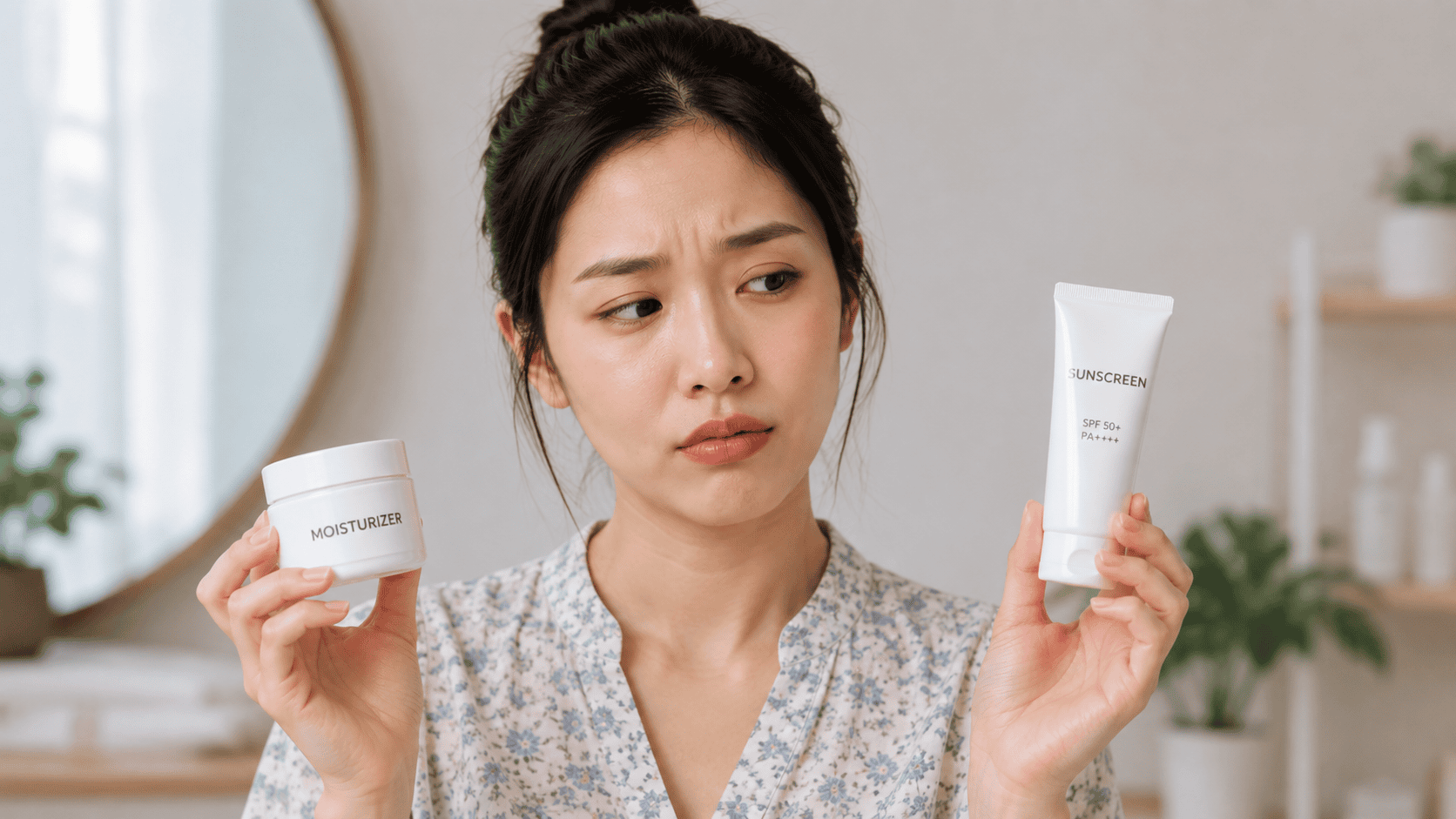
If you have ever looked at your shelf and asked about moisturizer before or after sunscreen, you are not alone. If you keep wondering, ‘does sunscreen go on before or after moisturizer,’ the short answer is simple: moisturizer first.
The order of your morning skincare can affect how products feel, how well they layer, and how easy it is to keep up sun protection.
For most routines, moisturizer before sunscreen is the easiest choice. Moisturizer is the hydrating step. Sunscreen is the last skin-care step before makeup.
Still, the best order can depend on dry skin, oily skin, makeup, and reapplication. Understanding the reason behind the order can help you build a routine that is comfortable and easy to repeat.
Why Skincare Order Matters
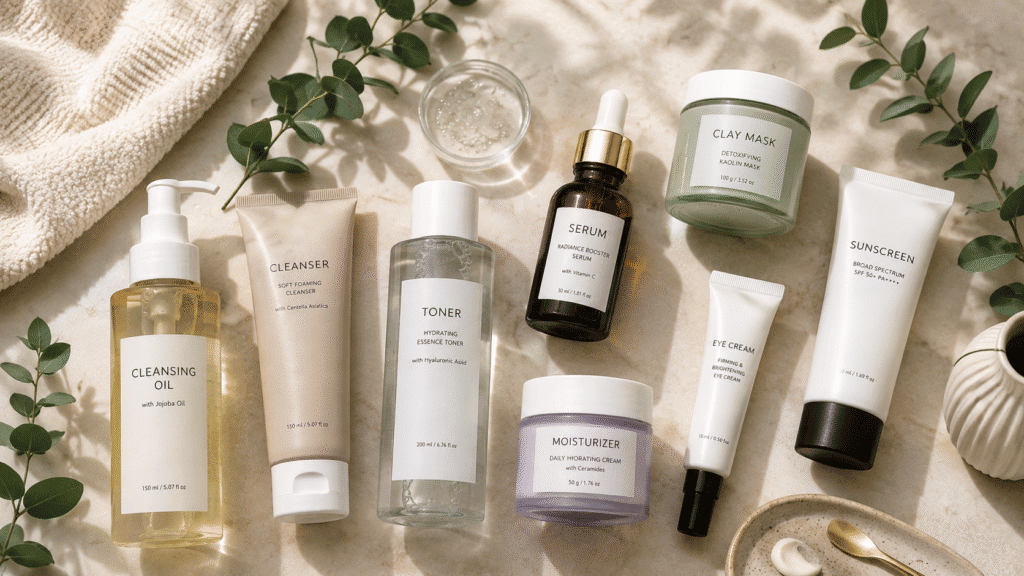
Skincare products have different jobs. Cleansers remove buildup. Serums deliver active ingredients. Moisturizers support hydration. Sunscreen helps protect the skin from UV rays.
When you layer products, order affects how they spread and settle.
In general, skincare goes from lighter products to thicker ones, with sunscreen near the end. That gives each step room to do its job without needlessly disturbing the layer below.
That is why this order usually works best: moisturizer first, sunscreen second.
Think of moisturizer as prep and sunscreen as the final shield. It is not a solid shield that can never be touched, though. Sunscreen still needs enough product and regular reapplication. The main point is to avoid putting moisturizer over it as a daily habit.
The Basic Rule
If you want a simple routine, use this order:
Cleanser → Serum or treatment → Moisturizer → Sunscreen → Makeup
This works well because moisturizer helps with hydration before sunscreen goes on.
After cleansing, use any light treatment products you like. Once they settle, apply moisturizer based on your skin needs. Then finish with a broad-spectrum sunscreen.
You do not need a long wait between every step. But if your products pill, slide, or mix poorly, give each layer a little more time.
According to the American Academy of Dermatology (AAD), skincare products should generally be applied in a specific order, with moisturizer and/or sunscreen applied after treatments and before makeup.
Why Sunscreen Usually Goes Last
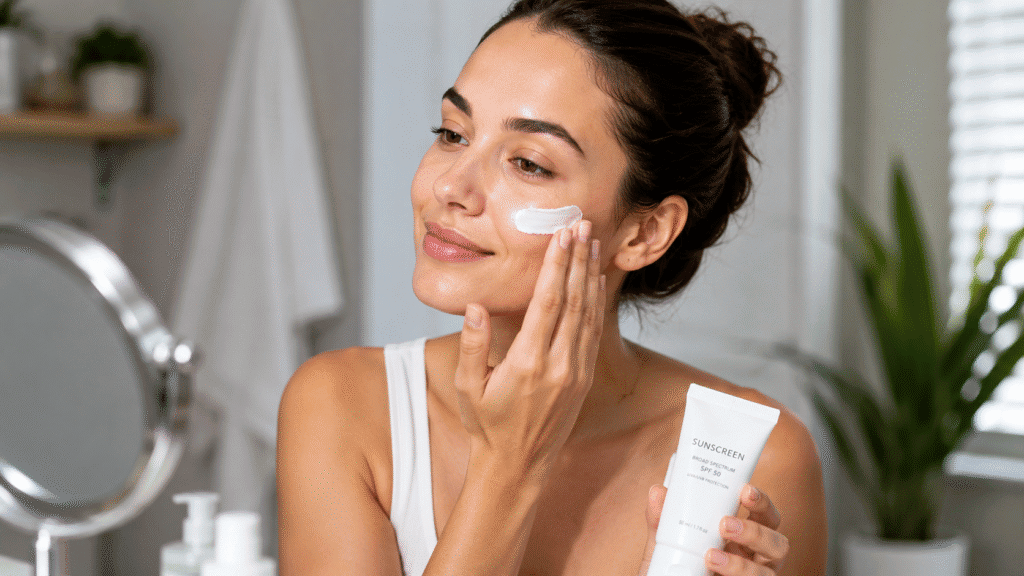
Sunscreen should usually go after moisturizer for a practical reason.
It needs to cover the exposed skin evenly. If you rub another product over it, you can break up the sunscreen film.
That matters most with classic sunscreen formulas made to stay on the skin.
Moisturizer first lets you hydrate the skin, then sunscreen can sit in place. This is why people often ask about sunscreen after or before moisturizer and get the same answer every time: moisturizer first.
What Happens If You Put Moisturizer Over Sunscreen?
There is a key difference between putting moisturizer over sunscreen by mistake once and doing it on purpose as part of your daily routine.
If you already used sunscreen and then notice dry skin, you may want to add moisturizer. But rubbing it on top can disturb the layer you just made.
If your skin often feels dry after sunscreen, the better fix is to change the moisturizer, the sunscreen, the amount you use, or all three.
Instead of dropping moisturizer completely, try a richer moisturizer before sunscreen or a sunscreen with a more hydrating finish.
Should You Wait Between Moisturizer and Sunscreen?
You do not need to wait a set number of minutes.
What matters is giving moisturizer enough time to settle so sunscreen can spread well.
If your moisturizer dries fast and your sunscreen glides on smoothly, you can move right on.
If your sunscreen rolls, feels too slippery, or leaves uneven spots, the products may not match well. In that case, wait a bit longer.
Want to understand how long to wait between all your skincare products? Read our guide, How Long to Wait Between Skincare Steps (And Why It Matters), for a closer look at the ideal timing between each step of your routine.
How Much Moisturizer Should You Use?
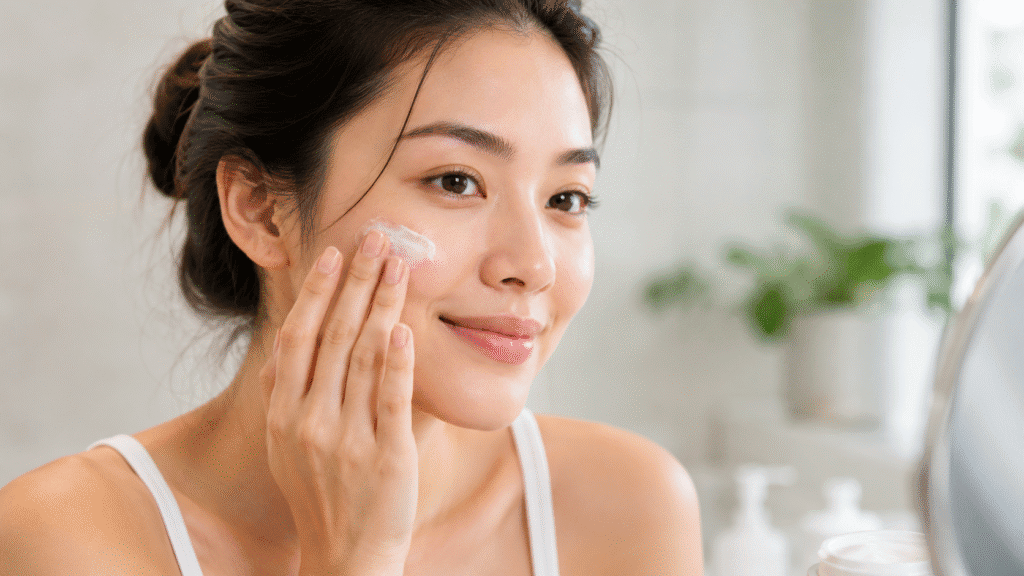
There is no single amount that works for everyone.
The right amount depends on skin type, climate, texture, and the rest of your routine.
Too little may leave skin dry. Too much can make sunscreen hard to spread and can lead to pilling.
Use enough to cover the face and neck without leaving a heavy, greasy layer.
Dry skin may need more hydration. Oily skin may do better with a light lotion or gel.
That is another reason the order question is only part of the picture. Product choice matters too.
Moisturizer Before or After Sunscreen for Dry Skin
Dry skin often does best with moisturizer before sunscreen.
A hydrating moisturizer can reduce the tight feeling that often shows up after cleansing. It can also make sunscreen feel smoother later in the day.
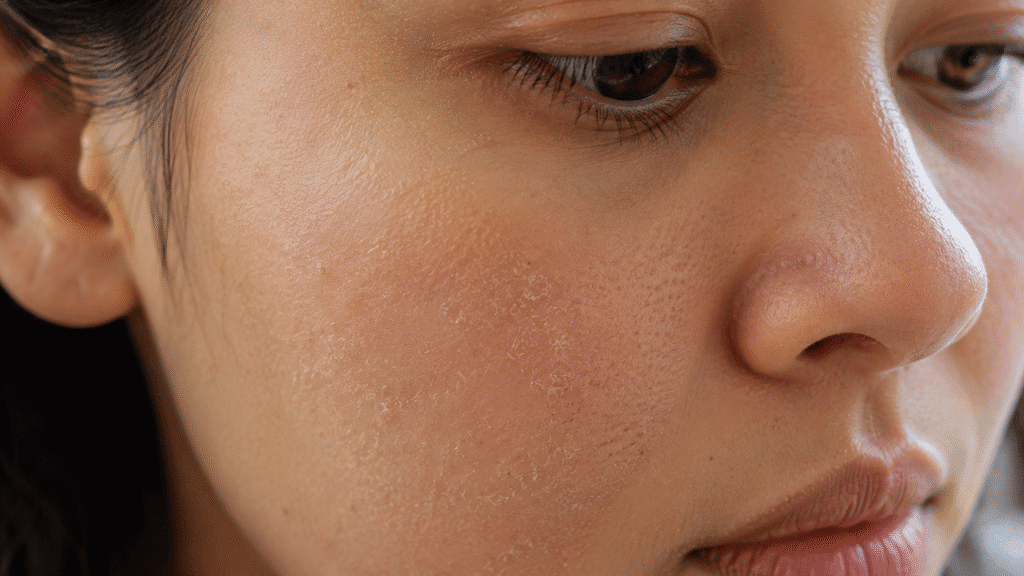
A simple dry-skin routine may look like this:
Gentle cleanser → Hydrating serum → Moisturizer → Sunscreen
Hydrating products often include humectants, emollients, and occlusives. These help pull in water, soften skin, or slow water loss.
For dry skin, moisturizer first usually makes the most sense. If your sunscreen already feels rich and comfortable, you may not need a heavy layer underneath.
Moisturizer Before or After Sunscreen for Oily Skin
People with oily skin often skip moisturizer because they worry about shine.
But oily skin can still need hydration.
Instead of dropping moisturizer fully, choose a light gel or lotion. Fast-absorbing formulas often feel better.
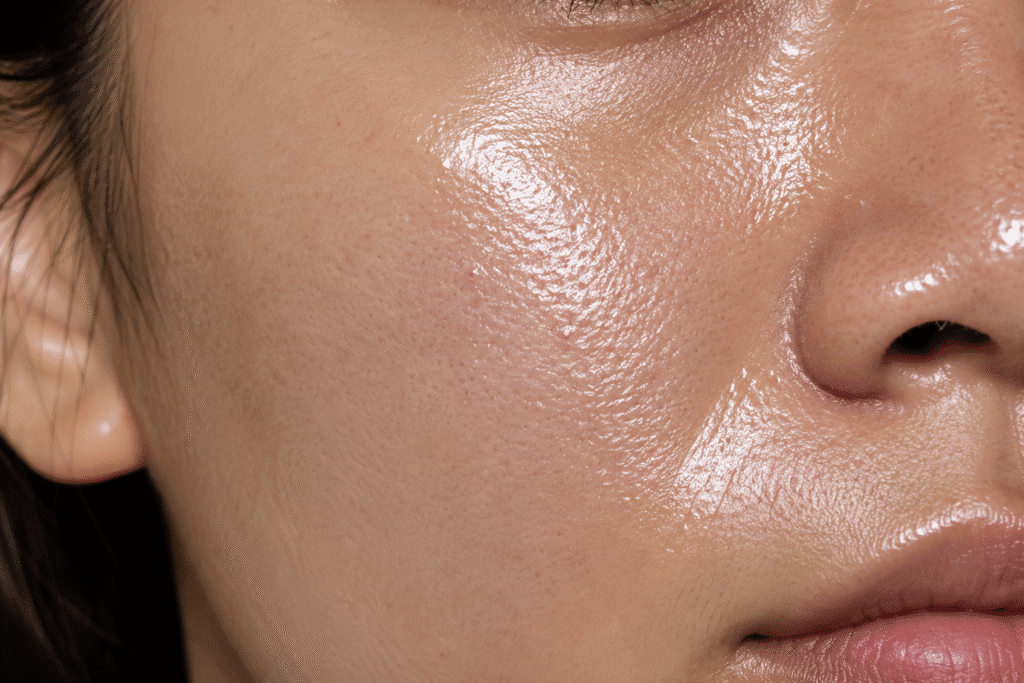
A simple routine may be:
Cleanser → Lightweight serum → Gel moisturizer → Sunscreen
The goal is to keep skin comfortable without adding extra shine.
For oily skin, if you are asking about sunscreen after or before moisturizer, the rule is still the same: moisturizer first. Only the type and amount change.
What About Combination Skin?
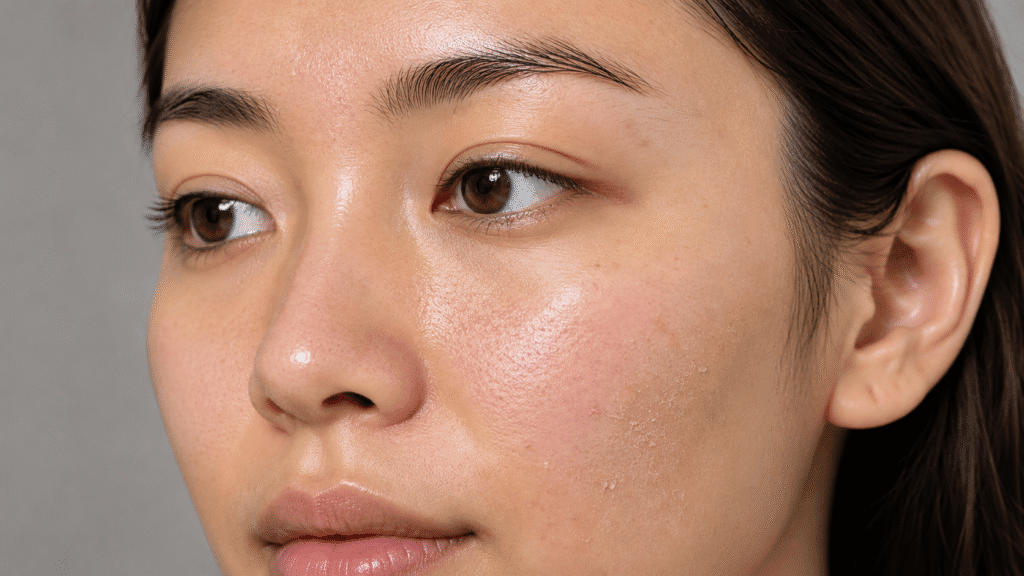
Combination skin can be tricky because the face has different needs in different spots.
Your forehead, nose, and chin may be oily while your cheeks feel dry.
You do not need the same amount everywhere.
Use a light layer across the face, then add a little more where skin feels dry.
After that, apply sunscreen evenly over all exposed skin.
For combination skin, the order stays the same even if the amount changes.
What If Your Sunscreen Is Moisturizing?
Some sunscreens also add hydration.
If your sunscreen already leaves your skin comfortable, you may not need a separate moisturizer every morning.
This does not change the order question. It only changes whether you need moisturizer at all.
A simple routine could be:
Cleanser → Treatment serum → Moisturizing sunscreen
If your skin feels good all day, you may not need another layer.
If it feels tight or flaky, add a separate moisturizer first.
Can Sunscreen Replace Moisturizer?
Sometimes, yes.
A moisturizing sunscreen can act as both a hydrator and a sun shield.
Whether that works for you depends on your skin and the product.
Oily skin may get enough hydration from one product. Very dry skin may still need a separate moisturizer.
So moisturizer before or after sunscreen is not a rule that says you must use both. It only matters when you do use both.
When Wearing Makeup

If you wear makeup, the order matters even more because you want a smooth base.
A simple routine may look like this:
Cleanser → Serum → Moisturizer → Sunscreen → Primer → Foundation or makeup
Moisturizer first helps prep the skin. Sunscreen then becomes the last skin-care layer before cosmetics.
Makeup can go over sunscreen if the products are a good match.
If your foundation separates or your sunscreen pills, the issue may be the formulas, not the order.
Using fewer layers can sometimes help.
Why Sunscreen Should Not Be Mixed With Moisturizer
You may see advice to mix sunscreen with moisturizer.
That is usually not the best idea if you want the full protection listed on the label.
Mixing can change how sunscreen spreads and can make it harder to apply enough of it.
It is better to apply moisturizer first, let it settle, and then apply sunscreen as its own step.
Does Moisturizer Affect Sunscreen?
A moisturizer can change how sunscreen feels and moves on the skin.
That does not mean moisturizer is bad under sunscreen.
The key is how well the products match.
If your moisturizer leaves a very oily or slippery surface, the sunscreen may move too much. If it pills, it can block a smooth finish.
A well-chosen moisturizer can also make sunscreen easier to apply.
When you think about the order, focus on how the pair works together.
What Causes Sunscreen to Pill?
Pilling happens when products roll into tiny flakes or balls on the skin.
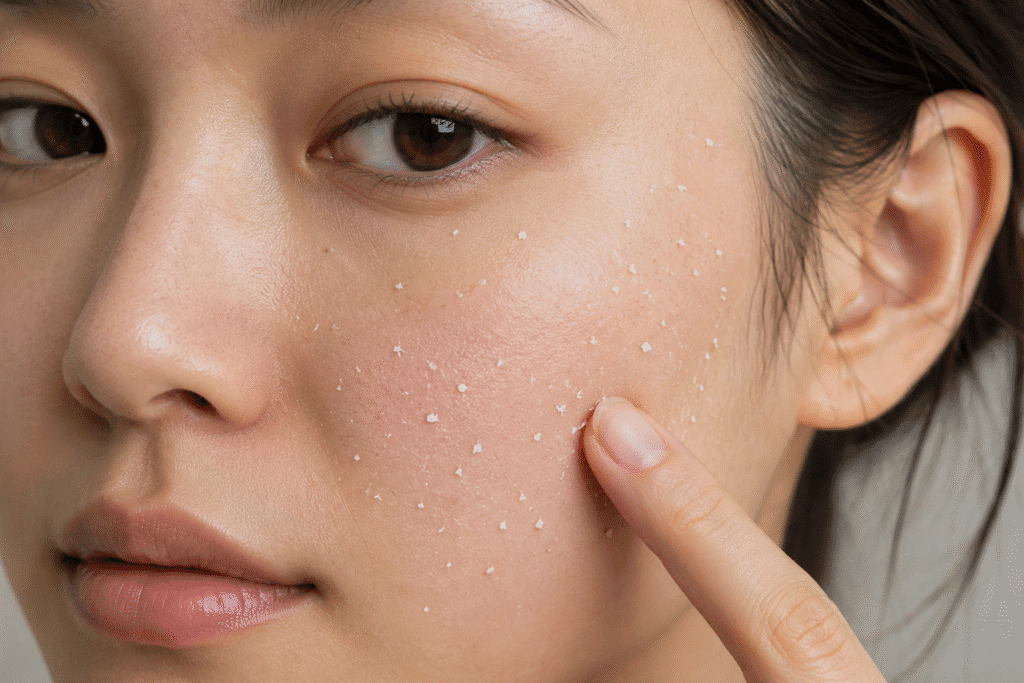
Common causes include:
- Using too many products
- Using too much of one product
- Not letting layers settle
- Rubbing too hard
- Using mismatched textures or formulas
- Applying products too fast one after another
If your sunscreen pills over moisturizer, do not assume you picked the wrong order.
Try less product, fewer layers, gentler motion, or a better product match.
Pressing or smoothing products on can help too.
Moisturizer Before or After Sunscreen During Winter
Cold, dry weather often makes skin thirstier.
In winter, you may need a richer moisturizer under sunscreen.
A winter routine may look like this:
Hydrating cleanser → Serum → Rich moisturizer → Sunscreen
Sunscreen should still be your last skin-care step.
The order usually stays the same in every season. What changes is the texture and amount of moisturizer.
What About Hot and Humid Weather?
Hot, humid weather can make heavy layers feel uncomfortable.
You may do better with a light moisturizer or no separate moisturizer at all if your sunscreen already feels hydrating.
For some people, this is enough:
Cleanser → Lightweight serum → Sunscreen
If you do want moisturizer, use a thin layer before sunscreen.
Again, the order is the main question. Your skin needs decide whether you need moisturizer.
Can You Apply Moisturizer After Sunscreen During the Day?
This matters when you reapply sunscreen.
If you need a fresh sunscreen layer, avoid routinely putting moisturizer under the old layer unless you are on purpose rebuilding your routine.
Use a reapplication method that fits your product.
If your skin feels dry during the day, look at your morning moisturizer or sunscreen formula instead of stacking more moisturizer on top.
Rubbing moisturizer over sunscreen can disturb the protective layer.
What If You Forget Moisturizer?
If you put sunscreen on first by mistake, do not panic.
You do not need to restart the whole routine.
If you usually use both products, moisturizer before sunscreen is still the more practical plan.
If your skin feels fine, leave the sunscreen in place.
If your skin feels dry, change the order next time rather than rubbing more products over the top.
What About the Neck?
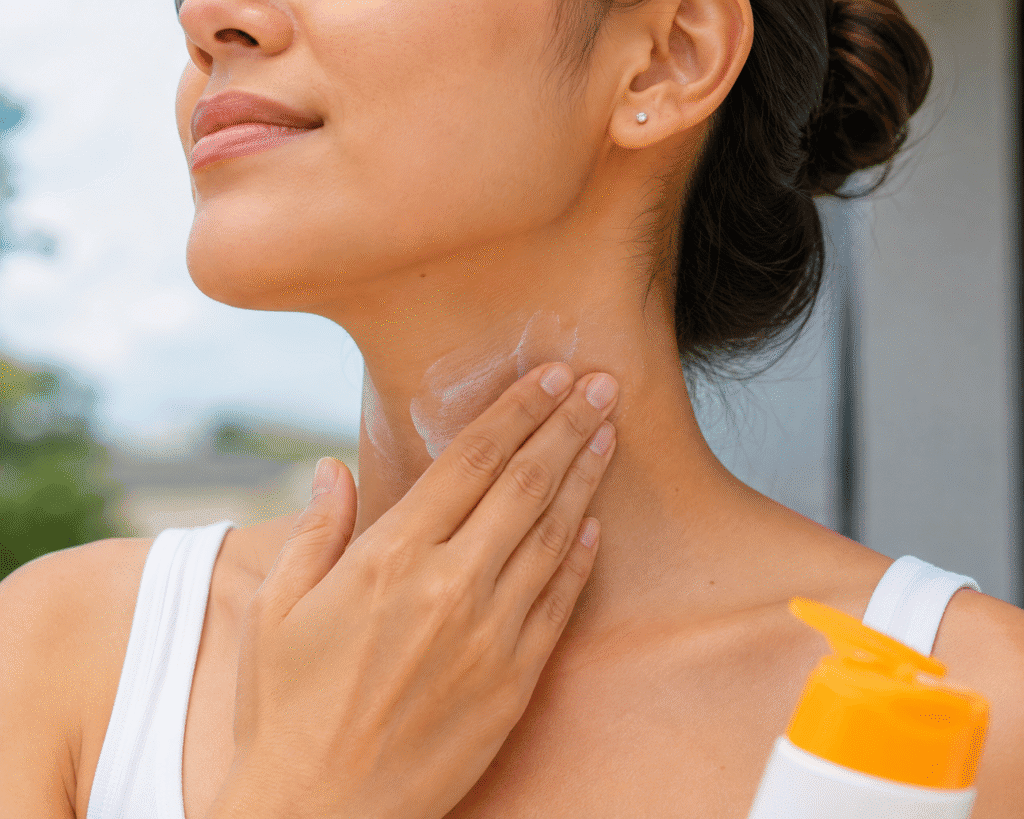
Your face is not the only area that needs care.
The neck also gets sun and often belongs in the morning routine.
If you moisturize your neck, use moisturizer first and sunscreen after.
Moisturizer → Sunscreen
Do not stop at the jawline if the neck is exposed.
Should You Apply Sunscreen Before Eye Cream?
Eye products can make the question a little more complex.
A simple plan is to use lightweight eye products before moisturizer and sunscreen.
Sunscreen should still be applied carefully around the face, following the label and avoiding direct eye contact.
If the sunscreen irritates your eyes, you may need a different formula or method.
A Simple Morning Routine That Makes Sense
Think of your routine as a list of jobs, not a pile of products.
First, clean the skin.
Second, use targeted treatments.
Third, hydrate with moisturizer if you need it.
Last, protect exposed skin with sunscreen.
That gives you a simple order:
Step 1: Cleanse
Remove overnight buildup and get the skin ready.
Step 2: Apply Serums or Treatments
Use light products that target specific concerns.
Step 3: Moisturize
Apply moisturizer based on your skin’s hydration needs.
Step 4: Apply Sunscreen
Use sunscreen as the final skin-care step before makeup.
Step 5: Apply Makeup
After skincare settles, use primer and cosmetics if you want.
This keeps the routine simple and easy to follow.
Common Mistakes to Avoid
Even with the right order, a few habits can hurt your routine.
Using Too Little Sunscreen
You need enough product to get the protection on the label.
Treating SPF Makeup as Your Only Protection
Makeup with SPF can help, but most people do not use enough of it to get full labeled protection. A separate sunscreen is usually the better main step.
Skipping Sunscreen Because It Is Cloudy
UV rays still reach your skin on cloudy days.
Applying Too Many Layers
More products do not always mean better skin. Too many layers can increase pilling, irritation, and product clashes.
Rubbing the Face Too Much
Hard rubbing can disturb products you already applied. Gentle motion often works better.
The Quick Answer
If you want the simple answer to moisturizer before or after sunscreen, remember this:
Moisturizer goes before sunscreen.
Moisturizer hydrates and conditions the skin. Sunscreen then becomes the last protective skin-care layer before makeup.
If your sunscreen is hydrating enough, you may not need a separate moisturizer. But when you use both, moisturizer usually comes first.
This works for dry, oily, combination, and normal skin. The type and amount of moisturizer may change, but the order stays the same.
Frequently Asked Questions
Yes. That is the standard order when you use both in the morning.
For most routines, moisturizer should go first. That lets you hydrate the skin before your sun-protection step.
There is no set wait time. Let the moisturizer settle enough for sunscreen to spread evenly.
Yes, if your sunscreen gives your skin enough comfort and hydration.
Not by itself. But rubbing products over sunscreen or mixing them can make the layer less even.
The Bottom Line
When it comes to moisturizer before or after sunscreen, the easiest rule is simple: moisturizer first, sunscreen second.
You do not need a long routine with many products. A short routine can work very well when each step has a job.
Cleanse, use treatments if you like, moisturize if your skin needs it, and finish with sunscreen. If you wear makeup, add it after skincare settles.
The main goal is consistency. A simple routine is only useful if you can do it every day.
So the next time you ask moisturizer before or after sunscreen, remember the order: moisturizer first, sunscreen second. Adjust the texture and amount of moisturizer for your skin, but keep sunscreen as the last skin-care step when you use both.
That small change can make your morning routine easier to follow and easier to keep.