

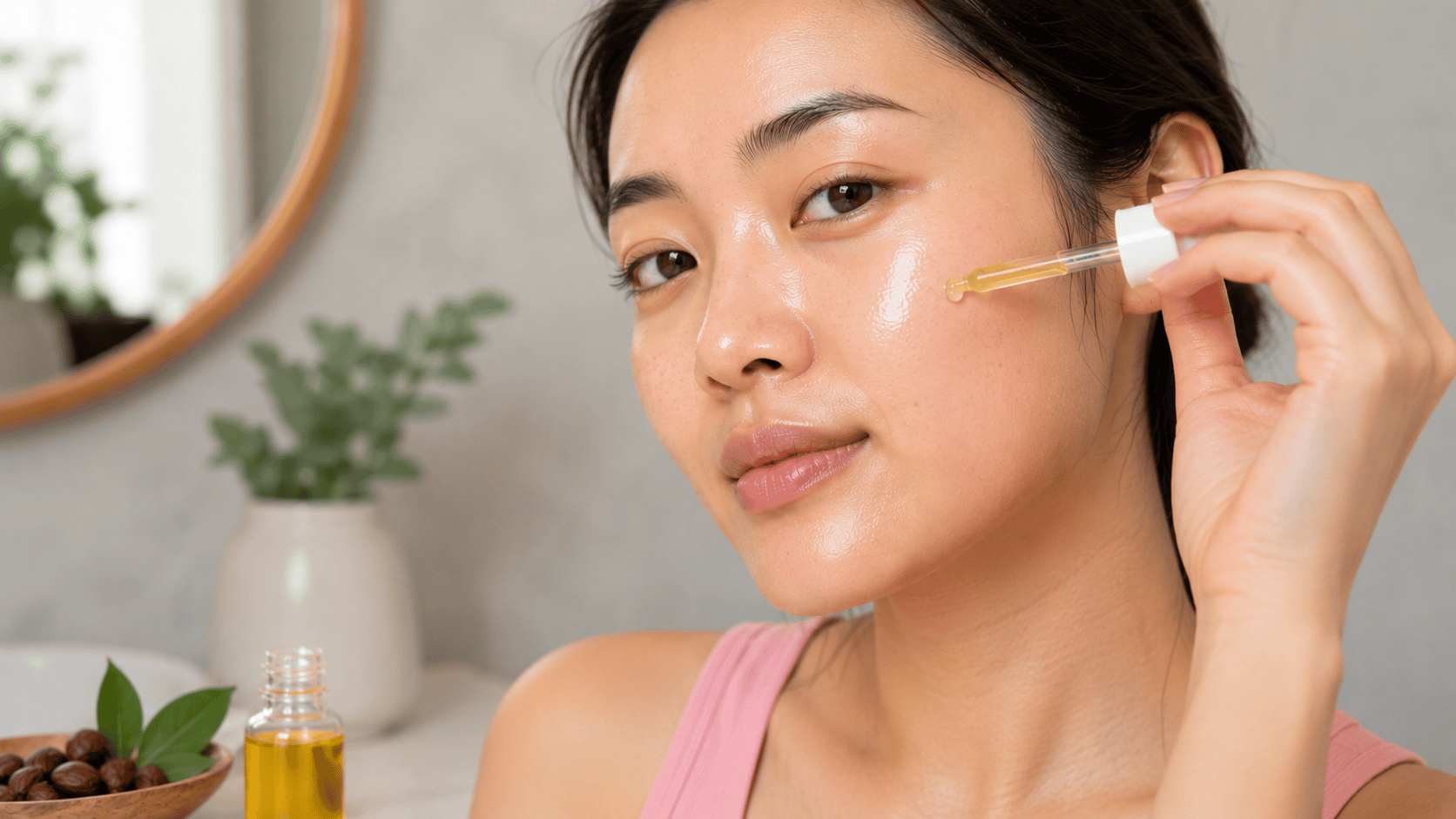
If you have oily skin, adding an oil to your routine may feel like the last thing you should do. Your forehead may already shine by midday, and your pores may look more visible than you want. So the idea of putting more oil on your face can seem backward.
Yet jojoba oil is popular in skincare for a reason. It is light, smooth, and often used as an emollient to soften and condition the skin. That can help people who want moisture without a heavy finish.
But is jojoba oil for oily skin a good idea? Not always. Jojoba does not switch off sebaceous glands or cure acne. It mainly helps skin feel soft and comfortable inside a balanced routine.
Understanding that difference makes it easier to decide whether it belongs in your skincare routine.
Why Put Oil on Oily Skin?
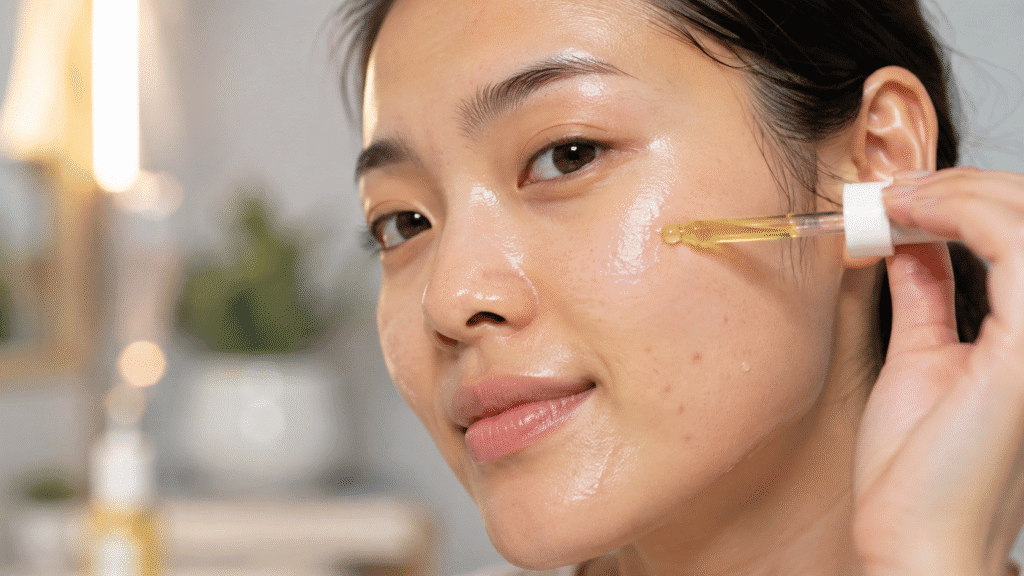
The first question is simple: why use oil if the skin already makes enough?
Oily skin and hydrated skin are not the same. A person can have plenty of sebum and still feel tight, rough, or dry after cleansing. This often happens when a cleanser is too harsh or when several drying products are used together.
Skincare is not just about removing oil. Skin needs water and lipids in balance.
A light moisturizer can add water. Jojoba can soften the surface and help skin feel smoother.
That can matter for combination or oily skin, especially on dry cheeks or tight spots.
Oily skin can still have:
- Tightness after cleansing
- Dry or flaky patches
- Rough cheeks
- Dehydrated-feeling skin
- Sensitivity after actives
- Discomfort from over-cleansing
So the question is not only whether your skin is oily. It is whether it also needs conditioning.
What Makes Jojoba Oil Different?
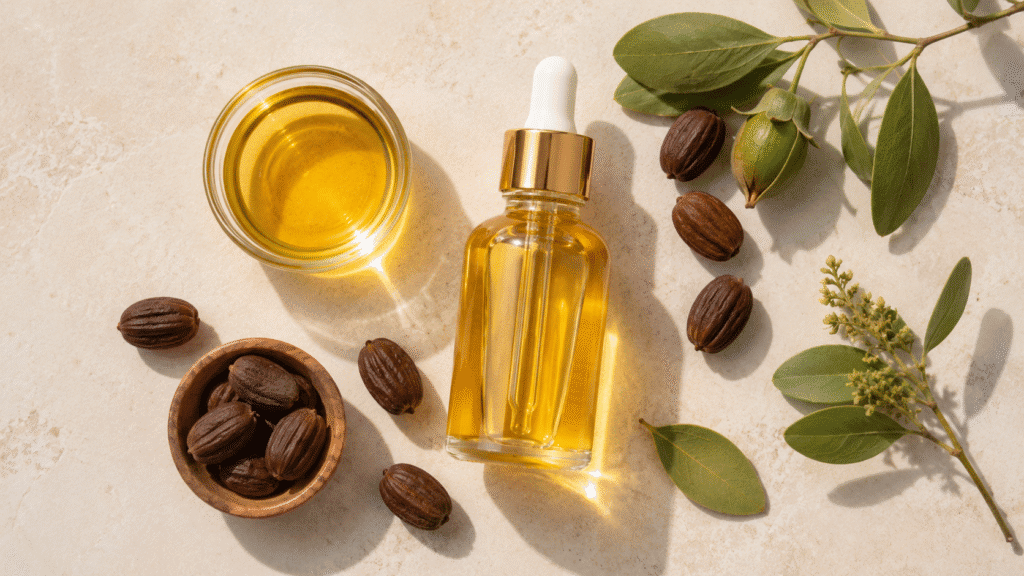
Jojoba comes from the seeds of the jojoba plant, Simmondsia chinensis. It is called an oil, but it behaves differently from many plant oils. Jojoba is mostly made of wax esters, which give it a light feel and strong stability.
That is why it is common in cosmetic products. It can add slip and softness without the rich feel that some other oils bring.
Jojoba is used in facial moisturizers, cleansing oils, serums, body lotions, lip products, hair care, and makeup.
Its value is not that it is magical. It is that it is versatile and can make a formula feel smoother and more conditioning. According to a review indexed by PubMed, jojoba oil is composed primarily of wax esters and has been investigated for several cosmetic and dermatological applications, including its emollient and skin-conditioning properties.
That makes jojoba oil for oily skin worth considering when the goal is comfort, not oil removal.
Jojoba Oil Does Not Stop Sebum
One common myth is that a facial oil will tell your skin to make less oil. There is no strong evidence for that with jojoba.
Sebum is shaped by hormones, genetics, age, and other body processes. Putting jojoba on the surface does not turn those glands off.
That matters because it changes what you should expect.
If shine is your main concern, jojoba is not an oil-control treatment. It can still fit into a routine with a gentle cleanser, a lightweight moisturizer, acne treatment if needed, sunscreen, and a small amount of jojoba when extra conditioning helps.
This is more realistic than expecting one ingredient to solve everything.
The Problem With Over-Cleansing Oily Skin
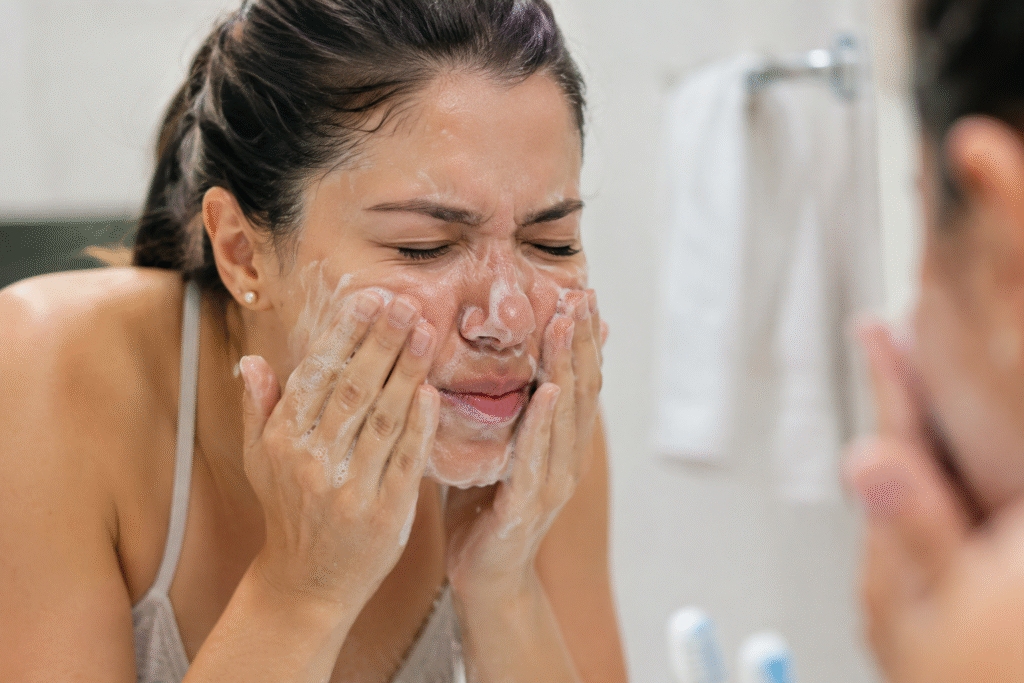
Many people fall into the same loop. The face looks shiny, so they use a stronger cleanser. The skin feels very clean, but also tight. Then they reach for more oil-control products or more exfoliation because they fear the shine will return.
The result is a routine that tries to strip away every trace of sebum.
But ‘squeaky clean’ is not the same as healthy.
Your skin naturally has lipids that support the outer layer. If you keep stripping them away, skin can become dry, irritated, or more reactive. That is one reason jojoba oil for oily skin can make sense. Instead of fighting oil at every step, you can keep the skin comfortable while still managing shine.
What Does Jojoba Actually Do for the Skin?
Jojoba works mainly as an emollient. Emollients soften and smooth the surface of the skin.
That can help oily skin that also feels rough or dehydrated.
It helps to separate three jobs:
- Humectants add water to the skin.
- Emollients like jojoba soften and smooth.
- Occlusives help slow water loss.
And a few more roles:
- Acne treatments target breakouts.
- Sunscreen protects from UV damage.
Jojoba belongs in the softening and conditioning group. That is a better way to think about it than calling it an oil for oily skin.
Can Jojoba Oil Cause Breakouts?
This is the biggest concern for many acne-prone people.
The answer is not simple. Skin reacts differently from person to person. The whole formula matters too. A jojoba product may include other oils, plant extracts, fragrance, silicones, or other ingredients that change how it feels on your skin.
How much you use also matters. One or two drops is very different from a thick layer every night.
If you are prone to clogged pores, start slowly. Give your skin time before you change several things at once.

Watch for:
- New or persistent clogged pores
- More congestion around the nose or chin
- More inflamed blemishes
- A heavier skin feel
- More grease that does not improve when you use less
If a product clearly makes skin worse, stop using it.
Is Jojoba Oil Good for Acne-Prone Skin?
This is where expectations need to stay realistic.
Jojoba may work for some acne-prone people as a cosmetic conditioning step. It is not an acne treatment. Acne comes from a mix of sebum, clogged follicles, inflammation, and microbes.
Evidence-based acne care usually relies on ingredients such as topical retinoids, benzoyl peroxide, salicylic acid, and azelaic acid, depending on a person’s skin and the type of acne being treated.
If you have ongoing acne, do not replace treatment just because a facial oil is marketed as natural or balancing.
Instead, think of where jojoba oil for oily skin can support the rest of the routine.
For example, if acne treatment leaves your cheeks dry, a small amount of a suitable emollient may help with comfort. It is still not treating the acne itself.
Jojoba Oil and Blackheads: Will It Unclog Your Pores?
Blackheads, or open comedones, form when a pore clogs with sebum and dead skin cells. The dark top is not dirt; it comes from changes at the surface.
Jojoba may soften skin, but it is not a proven blackhead treatment.
If blackheads are the main issue, use products made for clogged pores. Salicylic acid or a topical retinoid may be more useful, depending on your skin.
Jojoba can support the routine, but it should not be the star.
How to Use Jojoba Oil for Oily Skin
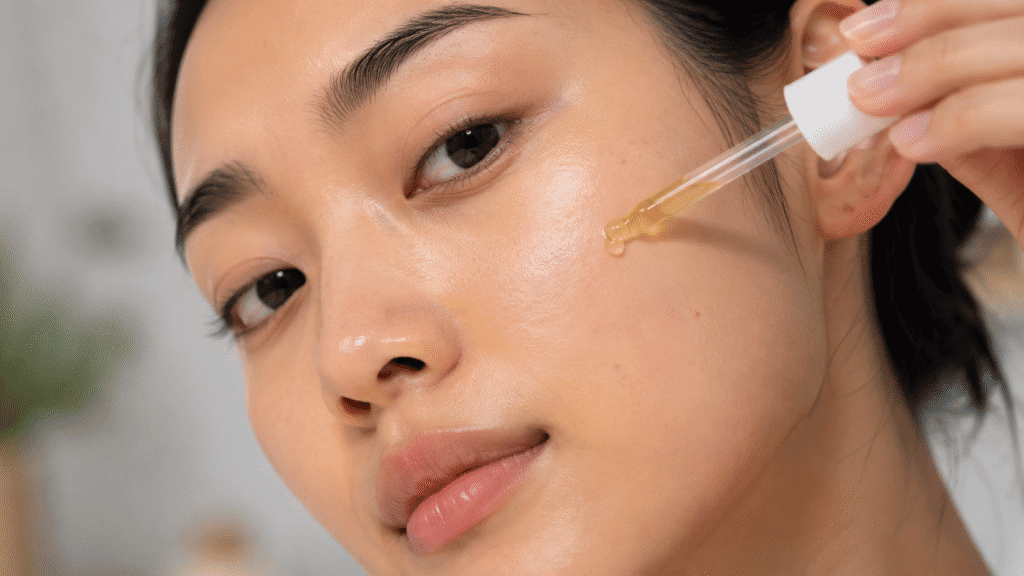
This is one area where restraint helps.
Start with one or two drops for the whole face. Warm the oil between your fingertips, then press or spread it gently over the skin.
If the skin feels comfortable, stop there. If it looks greasy or feels heavy, use less next time.
You can also use it only where you need it.
For example, if your forehead and nose are oily but your cheeks get dry, do not apply the same amount everywhere.
A simple way to adjust use
- Oily T-zone: use little or none
- Dry cheeks: use a small amount
- Combination skin: focus on drier areas
- Very oily skin: try it only at night
- Comfortable skin: you may not need it at all
The goal is not to use a fixed number of drops. The goal is to use enough to keep skin comfortable.
When Is the Best Time to Use Jojoba?
There is no rule that says morning or night is best. Night can be easier for oily skin because you do not have to worry about shine or makeup.
A simple evening routine can look like this:
Cleanser → Treatment → Moisturizer → Jojoba
If that feels too heavy, use less or skip it. If your moisturizer already gives enough comfort, jojoba may not be needed.
Can You Use Jojoba Oil in the Morning?
Yes, but texture matters more.
Too much oil before makeup can make foundation slippery or shinier than you want. If that happens, save jojoba for night.
If you want to use it in the morning, keep the layer very light and let the skincare settle before sunscreen.
A simple morning routine:
- Gentle cleanser
- Lightweight hydrating product, if needed
- Moisturizer
- A tiny amount of jojoba, if your skin likes it
- Broad-spectrum sunscreen
Jojoba is never a replacement for sunscreen.
What About Jojoba Oil in Hot and Humid Weather?
Climate changes how skincare feels.
In cool or dry weather, a few drops may feel good. In hot and humid weather, the same amount can feel heavy.
If you live in a warm climate, adjust the amount instead of deciding the ingredient does not work.
Try these changes:
- Use fewer drops
- Apply it only at night
- Skip it on very humid days
- Use it only on dry areas
- Put a light moisturizer underneath
Your skin changes through the year, and your routine can change with it.
Jojoba Oil vs. a Lightweight Moisturizer
Before buying facial oil, ask whether you need one.
A good lightweight moisturizer may already give oily skin what it needs. It may include humectants for water, emollients for softness, and barrier-supporting ingredients in a formula made for oily skin.
If your moisturizer already leaves skin balanced, jojoba may just add another step.
On the other hand, if your skin still feels tight or rough, a small amount of jojoba could help with comfort.
That is why there is no single best routine. The right routine solves a real problem.
A Simple Routine Using Jojoba Oil
If you want to try jojoba oil for oily skin, keep the base routine simple.
Morning
Start with a gentle cleanser that removes excess oil without stripping the skin. Follow with a lightweight hydrating product if you need one, then use a moisturizer that fits your skin type. Finish with broad-spectrum sunscreen.
Evening
Cleanse your skin, especially if you wore sunscreen or makeup. Use your usual treatment product, then moisturizer. If your skin still needs extra softness, apply a very small amount of jojoba.
This keeps jojoba in its proper role. It is an optional conditioning step, not the core of the routine.
What If Your Skin Feels Oily but Tight?
This can be confusing. You may see shine in the mirror and still feel discomfort when you touch your skin.
Instead of reaching for a stronger oil-control product, look closer at the routine.
Ask yourself:
- Is my cleanser too harsh?
- Am I washing my face too often?
- Am I scrubbing too often?
- Am I using several drying acne products together?
- Does my moisturizer add enough water?
- Does my skin feel better when I simplify?
Sometimes the answer is not another oil-control product. Sometimes the answer is removing something that is needlessly stripping your skin.
That is one situation where jojoba oil for oily skin may help. It does not remove sebum. It adds conditioning to a routine that may be too harsh.
How to Introduce Jojoba Without Complicating Your Routine
Whenever you try a new skincare product, change one thing at a time. That matters even more if you break out easily.
If you add a cleanser, serum, exfoliant, moisturizer, and facial oil at once, you will not know what caused a reaction.
Start with the jojoba product alone. Use a small amount. Then watch your skin over time.
Watch for four signs
Texture: Does skin feel smoother?
Comfort: Does it feel less tight?
Shine: Does it make your face too greasy?
Congestion: Are clogged pores increasing?
This gives you useful feedback without complicating your routine.
Signs You May Be Using Too Much
Even when jojoba works well, too much can feel unpleasant.
You may notice that:
- Your face looks too shiny
- Makeup slides around more easily
- Your skin feels coated
- Products start to pill
- Your T-zone feels heavier
- Your pores look more visible because of the extra shine
The fix is simple: use less. One drop may work better than three. You may also find that two or three nights a week is enough.
Who May Benefit Most From Jojoba?
The best fit is not always the most oily face.
Jojoba may work well for people with combination or oily skin who also get dryness or tightness.
It can make sense if you:
- Have an oily T-zone but dry cheeks
- Feel tight after cleansing
- Want softness without a rich cream
- Prefer simple, oil-based skincare
- Know your skin tolerates jojoba
- Need extra conditioning in dry weather
If your skin already feels comfortable and balanced, you do not need jojoba just because it is popular.
Mosheko Skincare Products With Jojoba Oil
If you’re interested in jojoba oil for oily skin, you might also consider skincare products that already include jojoba oil as part of their formulation. MOSHEKO offers several options that incorporate this ingredient alongside other skincare ingredients, so you can enjoy its conditioning properties without necessarily applying pure jojoba oil directly to your face.
Some MOSHEKO products that contain jojoba oil include Enrich Cleansing Toner Milk, Energize Cleansing Toner Gel, Enlighten Eye and Face Cream, Elevate Eye and Face Serum, Enhance Moisturizer, Exfoliate Facial Peel, and Immortal Primer. With options ranging from cleansing and hydration to targeted skincare and makeup preparation, you can choose a product based on what your skin needs rather than adding another separate step to your routine.
If you’re looking for jojoba oil for oily skin, incorporating it through a well-formulated skincare product can be a simple way to add conditioning and nourishment while keeping your overall routine practical.
Common Mistakes to Avoid
Using jojoba is simple, but a few mistakes can make it less pleasant.
1. Applying Too Much
A facial oil does not need to be used like a cream. Start small and add more only if needed.
2. Expecting It to Control Sebum
Jojoba can condition skin, but it is not a proven treatment for excess oil.
3. Replacing Acne Treatments
If you have ongoing acne, do not rely on jojoba instead of evidence-based care.
4. Forgetting Sunscreen
Jojoba does not give the sun protection you need from a real sunscreen.
5. Adding Too Many Products
Adding several new products at once makes it hard to know what is helping or causing irritation.
6. Thinking Natural Means Risk-Free
Natural ingredients can still irritate skin or simply not suit you.
Frequently Asked Questions
Yes, for some people. Jojoba oil for oily skin is mainly a conditioning ingredient that can soften and smooth the skin. It is not an oil-control or acne medicine.
Not directly. There is no strong proof that jojoba lowers sebum production. If excess oil is your main concern, focus on your full routine and on ingredients made for oily or acne-prone skin.
Some acne-prone people tolerate it well, while others prefer to skip facial oils. Add it slowly and watch your skin. If acne is moderate or severe, evidence-based acne treatment should stay first.
Yes, if your skin likes it. Still, daily use is not required. Night use or a few times per week may be enough.
Yes, but use very little and let your skincare settle first. If makeup becomes greasy or slides, move jojoba to nighttime.
Final Thoughts
The idea of using oil on oily skin sounds strange at first.
But once you separate sebum control, hydration, and skin conditioning, it makes more sense.
Jojoba will not turn off sebaceous glands. It is not an acne treatment, and it will not make pores vanish.
What it can do is give a light layer of conditioning that may help some oily or combination skin types feel softer and more comfortable.
That is the real value of jojoba oil for oily skin.
Think of it as support for the rest of your routine, not as a fight against your natural oil.
Use a small amount. Watch how your skin reacts. Do not add it just because your routine feels incomplete.
If your current moisturizer already keeps your skin comfortable, you may not need it. But if your skin is oily and still feels tight, rough, or dry, it may be worth trying.
Ultimately, jojoba oil for oily skin is less about removing oil and more about finding the right balance. Healthy-looking skin does not need to be perfectly matte. It needs the right mix of hydration, conditioning, protection, and targeted care.
Sometimes that balance means giving the skin a little less of everything, not piling on more products.