
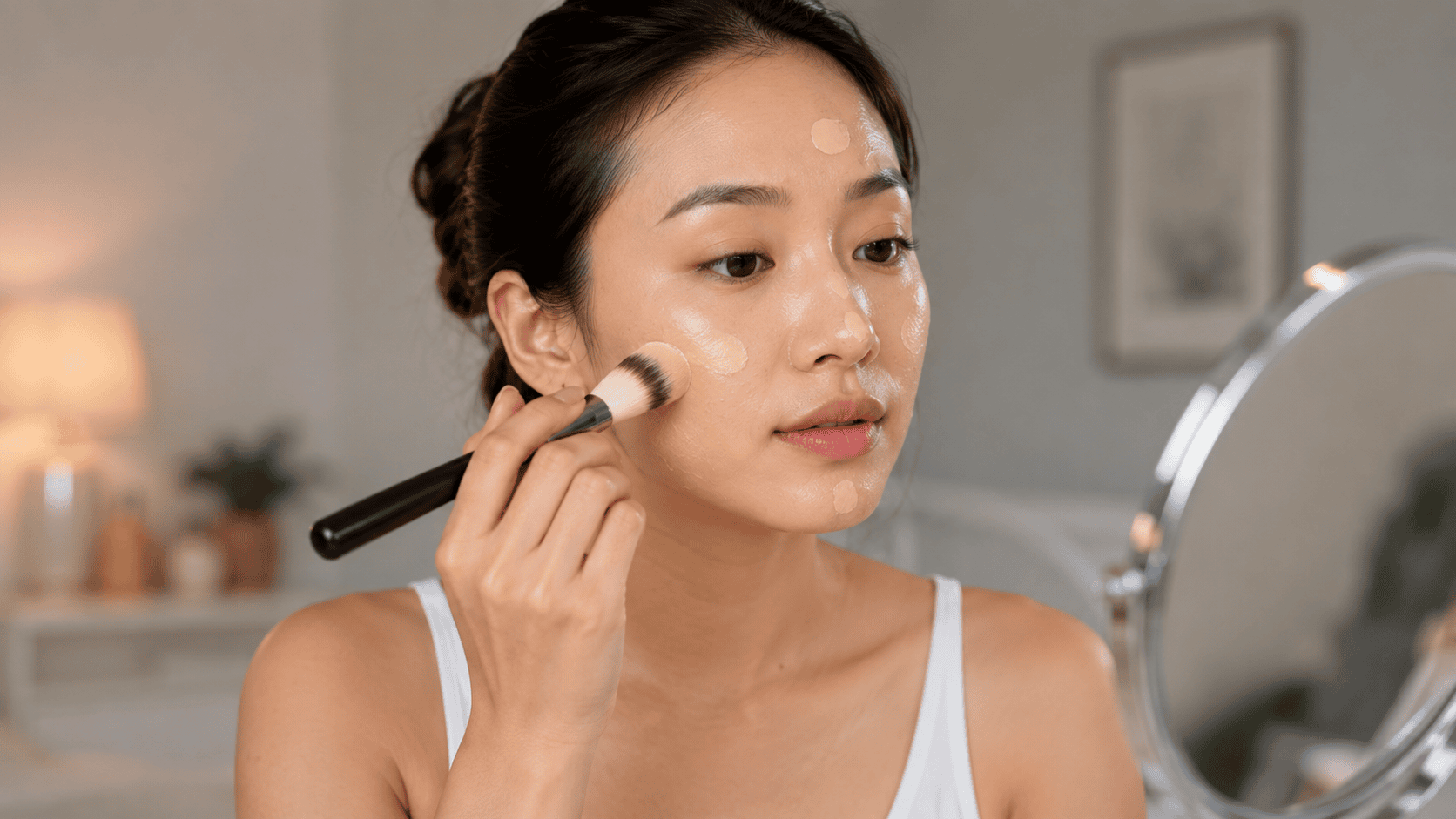
One of the most common makeup questions is foundation or concealer on first. The order you use can change coverage, finish, and how long your makeup lasts.
Many people also ask, do you put on foundation or concealer first, or do you put concealer or foundation on first? The short answer is that there is no single rule for every face.
If you want a simple guide, this article shows when foundation should come first, when concealer should come first, and how to make both products work together.
Why Makeup Order Matters
Every makeup product has a job.
Foundation evens out skin tone. Concealer covers small spots and adds extra brightness. When you use them in the right order, you can use less product and get a smoother finish.
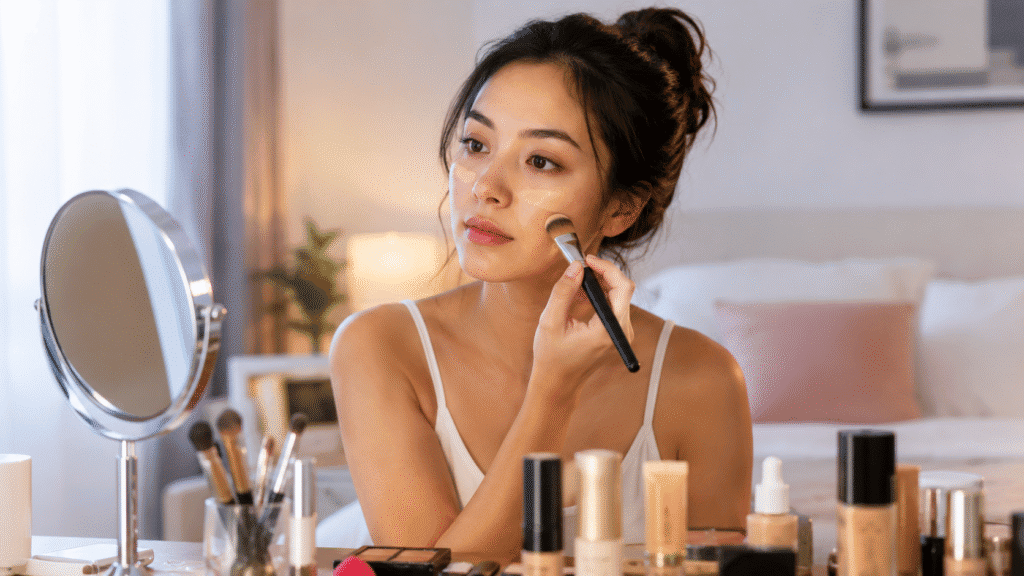
Choosing the right order can help:
- Cut down on how much concealer you need.
- Keep makeup from looking heavy.
- Make blending easier.
- Help makeup last longer.
- Create a more natural look.
That is why foundation or concealer on first can make a real difference in your routine.
What Does Foundation Do?
Foundation gives the face an even base.
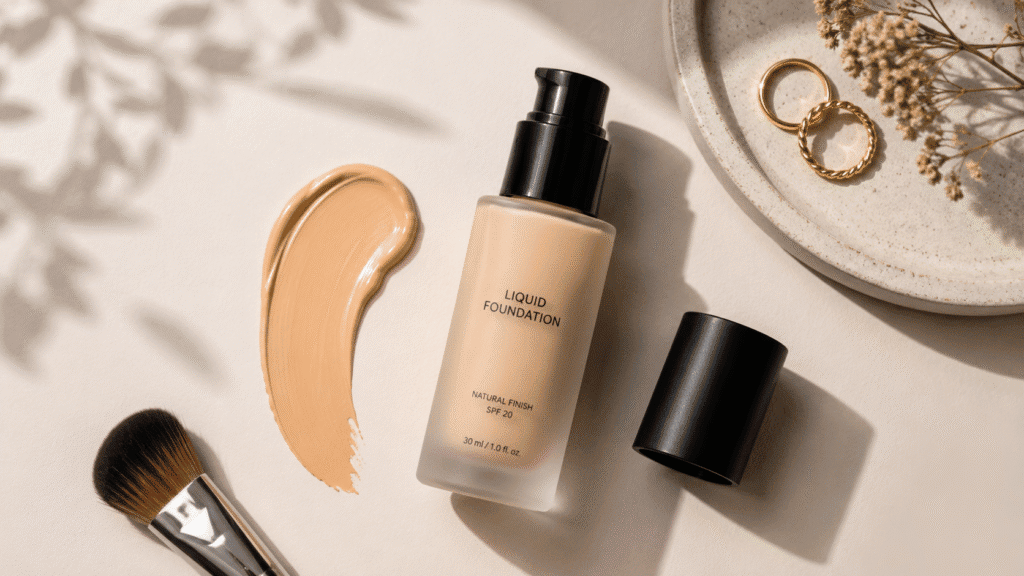
It can help hide the look of:
- Uneven skin tone
- Mild redness
- Dark spots
- Small blemishes
- Dull skin
Foundations come in many finishes:
- Matte
- Natural
- Satin
- Dewy
- Radiant
Coverage levels also vary:
- Sheer
- Light
- Medium
- Full coverage
Foundation does not have to hide every flaw. Its main job is to create a smooth base so the rest of your makeup blends well.
What Does Concealer Do?
Concealer has more pigment than foundation. It is made to cover small areas that need extra help.
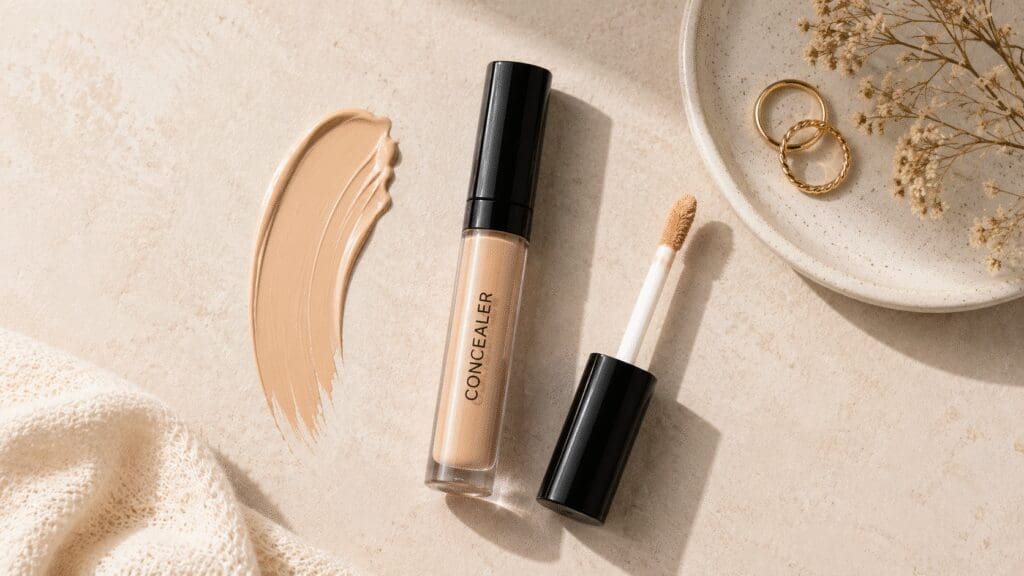
Common uses include:
- Brightening under-eye circles
- Covering blemishes
- Hiding acne marks
- Softening redness
- Hiding uneven color
- Highlighting some face areas
Because concealer is more concentrated, it gives stronger coverage in smaller spots.
The Most Common Recommendation: Foundation First
For most people, foundation comes first.
Why? Because foundation may already cover a lot of redness and uneven color. That means you often need less concealer afterward.
Benefits of foundation first:
- Creates an even base
- Uses less concealer
- Helps makeup look lighter
- Makes blending easier
- Gives a more natural finish
For many everyday looks, this is the best answer to foundation or concealer on first.
When Concealer First Can Make Sense
There are times when concealer should go first.
This can help if you have:
- Very dark under-eye circles
- Strong uneven color
- Stubborn acne spots
- Birthmarks
- Intense redness
Putting concealer on first gives those spots focused coverage before foundation goes on.
Use a light hand with foundation after that. You do not want to move the concealer under the skin.
Comparing Both Methods
Foundation First
Best if you want:
- Natural-looking coverage
- Light makeup
- Faster application
- Less product use
- Everyday makeup
Concealer First
Best if you need:
- Extra correction
- Strong spot coverage
- Bright under-eyes
- Color correction before foundation
- Full glam makeup
So, foundation or concealer on first depends more on your skin and your goal than on one fixed rule.
Factors That Influence the Best Order
Your Skin Concerns
If your main issue is mild redness or a little uneven tone, foundation may be enough on its own.
If you have:
- Large blemishes
- Dark marks
- Deep acne scars
- Very dark under-eye circles
you may want concealer earlier in the process.
Coverage Level
Coverage matters more than many people think.
Light Coverage Foundation
Usually works best with foundation first and concealer after.
Full Coverage Foundation
May cut down the need for concealer at all.
Makeup Style
Different looks need different steps.
Natural Makeup
For a fresh daily look, many people use:
- Primer
- Foundation
- Concealer
- Powder, if needed
Glam Makeup
For a high-coverage look, some artists use color corrector, concealer, foundation, and then more concealer. Some full glam methods use concealer before and after foundation on purpose to build more coverage.
A Better Way to Think About It
Instead of asking which product wins, think about how the two products work together.
Foundation builds the base.
Concealer fixes the details.
When you use them with care, they support each other and help your skin look even without looking heavy.
Knowing when each one works best lets you build a routine that fits your skin, not a rule that fits everyone.
Step-by-Step Makeup Routine for the Best Results
Now that you know the difference, here is how to apply both products in a simple way.
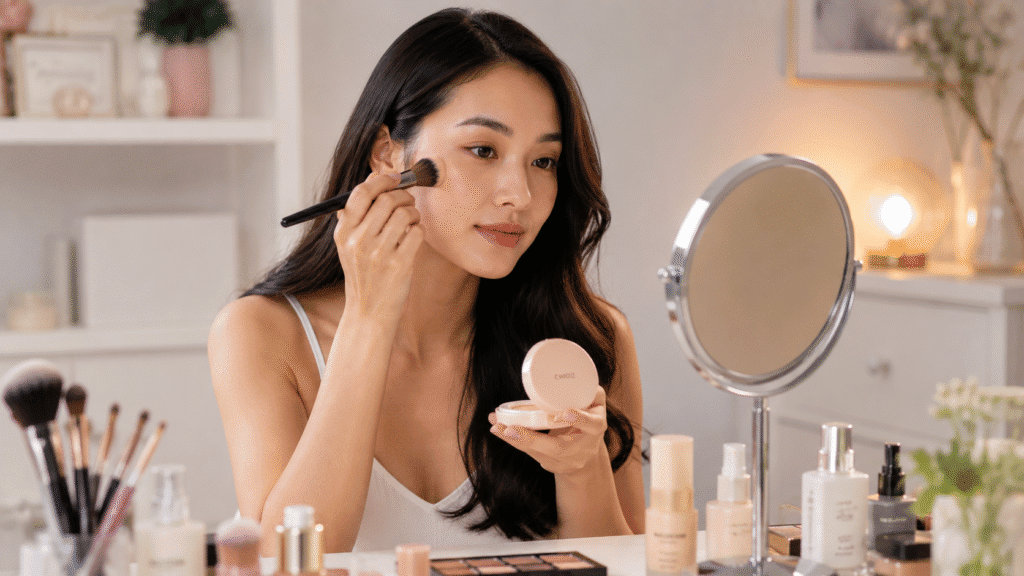
Everyday Makeup Routine
For a clean daily look:
Step 1: Prep Your Skin
Start with:
- Gentle cleanser
- Light moisturizer
- Sunscreen during the day
- Makeup primer
Well-prepped skin helps makeup go on smoothly and last longer. Before applying foundation or concealer, follow a proper skincare routine to create a hydrated, even base. Read our Skin Care Prep for Makeup: Guide to a Smooth, Lasting Finish to learn the essential steps for priming your skin and helping your makeup stay fresh throughout the day.
Step 2: Apply Foundation
Choose a shade that fits your skin tone and undertone.
Use a small amount and blend outward with:
- Sponge
- Brush
- Clean fingertips
Focus on making the face look even. Do not try to cover every spot yet.
Step 3: Add Concealer Only Where Needed
Check your skin in natural light.
Put concealer on areas that still need help, such as:
- Under-eye circles
- Acne spots
- Redness around the nose
- Dark marks
- Small blemishes
Blend gently so you do not remove the foundation underneath.
Step 4: Set With Powder
If your skin gets shiny, dust a little translucent powder on the areas that need it.
Common spots include:
- Forehead
- Nose
- Chin
- Under the eyes
Dry skin may only need powder in a few places.
Full-Coverage Makeup Routine
If you are getting ready for a wedding, photo shoot, or other big event, you may need more steps.
A full-coverage routine can look like this:
- Moisturizer
- Primer
- Color corrector, if needed
- Concealer on target spots
- Foundation
- More concealer
- Setting powder
- Setting spray
This is another reason foundation or concealer on first does not always have one fixed answer.
Choosing the Right Tools
The tools you use matter just as much as the products.
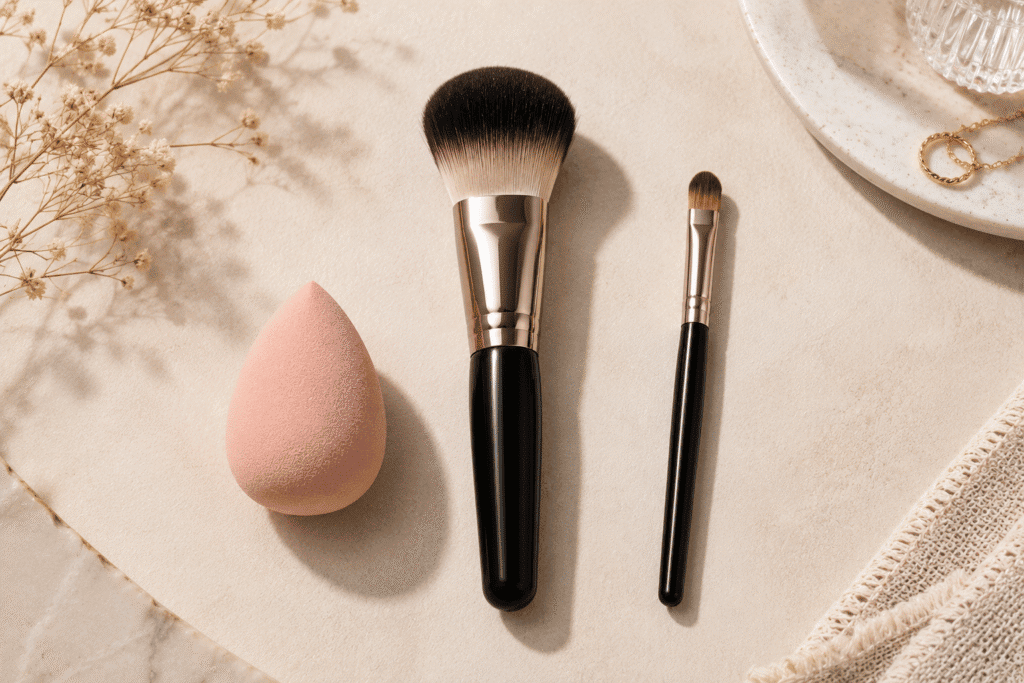
Makeup Sponge
Best for:
- Soft finish
- Sheer-to-medium coverage
- Smooth blending
A damp sponge helps keep foundation from looking heavy.
Foundation Brush
Best for:
- Medium to full coverage
- Faster application
- Smooth, even finish
Use circular motions to buff foundation into the skin.
Concealer Brush
Best for:
- Small blemishes
- Precise work
- Under-eye coverage
- Spot concealing
A small brush gives you more control when you only need to cover a few spots.
How Different Skin Concerns Affect the Order
Dark Under-Eye Circles
According to the American Academy of Ophthalmology, dark circles under the eyes can have multiple causes, including genetics, aging, allergies, and lack of sleep, which is why concealer often provides only cosmetic coverage rather than treating the underlying cause.
For dark under-eyes:
- Apply foundation first.
- See how much darkness is left.
- Add concealer where you still need brightness.
If the darkness is strong, use color corrector before foundation.
Acne and Blemishes
For acne:
- Apply foundation first.
- Spot conceal each blemish after.
- Build thin layers instead of one thick layer.
That often looks more natural.
Redness
If you have facial redness, foundation may cut down most of it.
Then you can cover the last red spots one by one.
Dark Marks and Pigment
For dark marks or old acne spots:
- Use foundation to make the skin tone even.
- Add concealer only where you need more coverage.
- Blend the edges with care.
Slow layering usually works better than one thick coat.
Foundation Formula Matters
Not all foundations act the same way.
Sheer Foundation
Provides:
- Light feel
- Natural finish
- Little coverage
You will probably need concealer afterward.
Medium Coverage Foundation
Provides:
- Balanced coverage
- Daily use
- Moderate tone-evening
This is a good pick for many day-to-day routines.
Full Coverage Foundation
Provides:
- Strong coverage
- Better redness control
- Less need for concealer
Some people only need a little concealer under the eyes after this type.
Concealer Formula Matters Too
The best concealer depends on your skin and your goal.
Liquid Concealer
Best for:
- Under the eyes
- Everyday makeup
- Dry skin
- Light coverage
Cream Concealer
Best for:
- Acne
- Dark marks
- More coverage
- Combination skin
Stick Concealer
Best for:
- Spot concealing
- Travel
- Quick touch-ups
Common Application Mistakes
Even good products can look bad if they are used the wrong way.
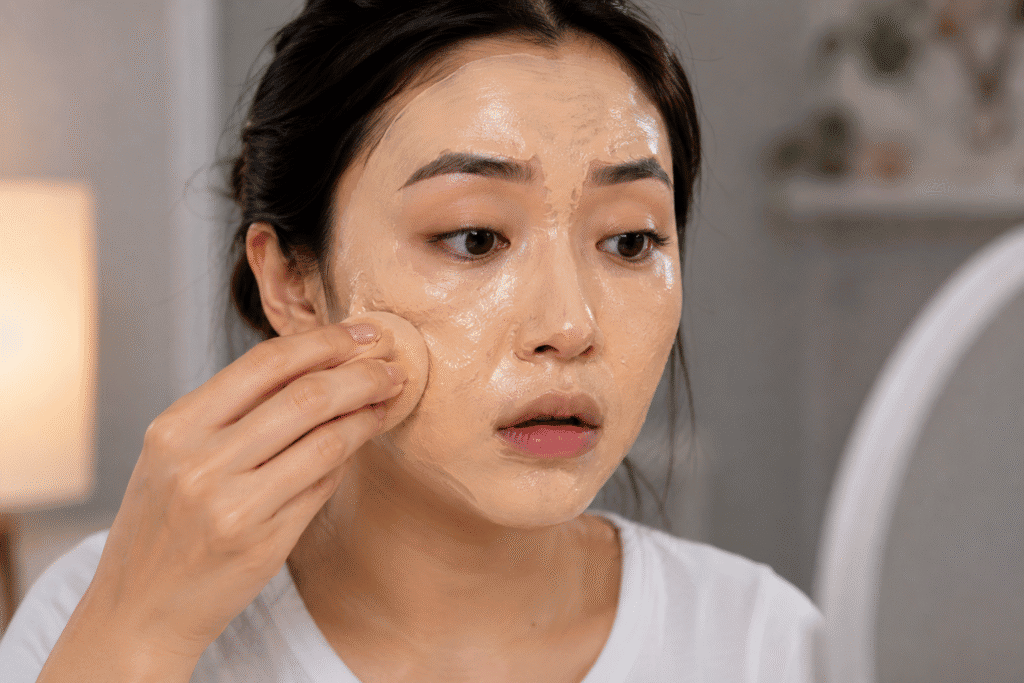
Avoid these mistakes:
Using Too Much Foundation
Heavy layers can:
- Look cakey
- Bring out texture
- Settle into fine lines
Start small and add more only where needed.
Putting Concealer Everywhere
Concealer is for target areas, not the whole face.
Using less keeps the skin looking natural.
Skipping Skin Prep
Foundation sticks better to moisturized skin.
Without prep, makeup can look rough or flaky.
Picking the Wrong Shade
Foundation should match your skin as closely as possible.
Under-eye concealer is often a little lighter to brighten the area without looking gray.
Quick Comparison Guide
- Everyday makeup: Foundation → Concealer
- Light coverage routine: Foundation → Concealer
- Full glam makeup: Concealer → Foundation → Concealer
- Dark under-eye circles: Foundation → Concealer, or color corrector first if needed
- Acne and blemishes: Foundation → Spot concealer
- Mild redness: Foundation → Concealer if needed
- Strong dark marks: Foundation → Concealer in thin layers
The Goal Is Balance
The goal is not to use the most makeup possible.
The goal is to create balance.
Foundation gives the face a base. Concealer adds detail where you need it most.
When you know your skin, your products, and your finish, it becomes much easier to answer foundation or concealer on first for your own routine.
Professional Makeup Artist Tips
Experienced artists often build makeup in layers.
- Start with a light layer of foundation.
- Check which spots still need help.
- Apply concealer only where needed.
- Blend each layer before adding more.
A few more helpful tips:
- Blend from the center of the face outward.
- Let foundation set for a moment before concealer.
- Use a shade that matches skin for blemishes.
- Use a slightly lighter shade under the eyes.
- Use color corrector only when you really need it.
Myths vs. Facts
Myth: Concealer Must Always Come First
Fact: For most daily looks, foundation first is the easier and better choice.
Myth: Foundation Makes Concealer Unneeded
Fact: Even strong foundation may not hide dark circles or dark marks fully.
Myth: More Product Means Better Coverage
Fact: Too much product can show texture and fine lines.
Myth: There Is Only One Correct Answer
Fact: The answer to foundation or concealer on first depends on your skin, your products, and your look.
Quick Decision Checklist
Choose Foundation First If You:
- Want a natural finish
- Have mild redness
- Prefer light makeup
- Use medium or full coverage foundation
- Want to use less product
Consider Concealer First If You:
- Have strong dark marks
- Need color correction
- Want a full glam look
- Need extra help on stubborn blemishes
- Plan to layer products on purpose
The Bottom Line
So, foundation or concealer on first?
For most everyday makeup, foundation first is the best choice. It evens out the face, uses less concealer, and gives a smoother look.
But concealer first can help with color correction, full coverage, or major dark marks. The best order is the one that fits your skin and your goal.
Think of foundation and concealer as partners. Foundation builds the base. Concealer perfects the details.
Final Thoughts
The debate over foundation or concealer on first has been around for years, but the answer is simple: it depends.
Try both methods and see which one works best for your skin type, makeup style, and finish.
The next time you ask yourself whether to put foundation or concealer first, you will know there is no single rule. There is only the best choice for your routine.
Frequently Asked Questions
Short answer: Prep your skin, apply foundation, then add concealer only where you still need coverage, and finish with a light dusting of powder where you get shine. That looks like: 1) Cleanser, moisturizer, sunscreen, primer; 2) Foundation; 3) Targeted concealer; 4) Powder if needed.
Short answer: Often less—sometimes just a touch under the eyes. Full-coverage foundation can handle most redness and uneven tone, but dark circles or stubborn marks may still benefit from a small amount of concealer after foundation.
Short answer: Use a damp makeup sponge for a soft, sheer-to-medium finish and seamless blending. Reach for a foundation brush when you want faster application and more coverage. For precise spot work and under-eyes, a small concealer brush gives control without overapplying.
Short answer: Prep well, start with thin layers, and add coverage only where needed. Let foundation set briefly before concealer, blend gently, and set with a small amount of translucent powder only on areas that crease or get shiny.
Short answer: For everyday looks, powder comes after concealer to set shiny areas like the T-zone and under-eyes. For full-coverage or event makeup, apply powder after concealer and use setting spray at the very end to lock everything in.