


A flaky patch around your nose can be hard to fix. You may moisturize in the morning, drink water, and still see peeling, tightness, roughness, or tiny flakes later in the day.
If your skin around nose is dry and red, the cause may be irritation, friction, or a skin problem, not just low moisture. The area beside the nostrils gets rubbed, washed, wiped, and exposed to products more than many people realize.
For that reason, dry skin around nose often improves more from a simple routine than from more products. Protect the skin barrier, cut back on harsh steps, and look for the real cause.
Why the Nose Gets Dry
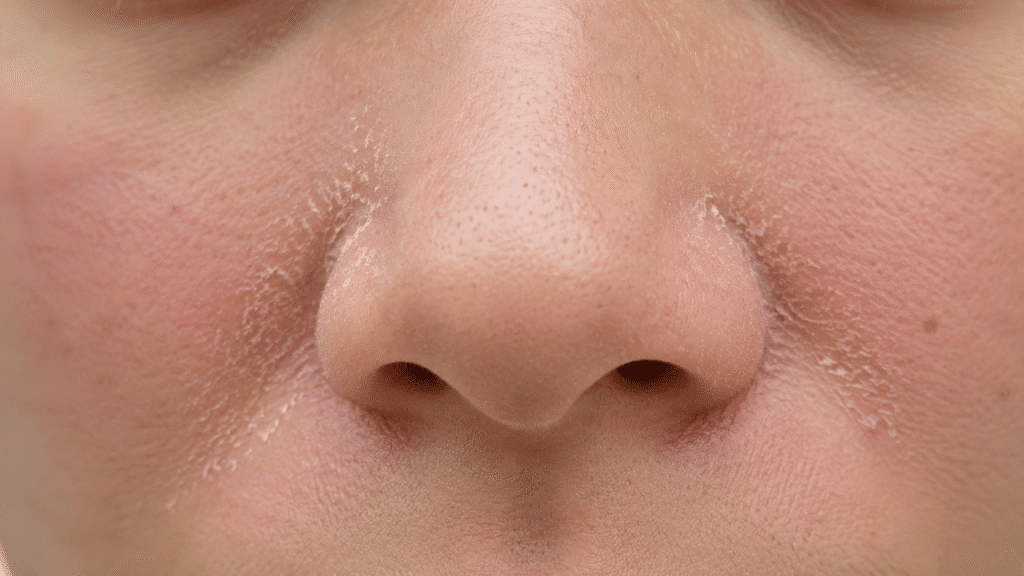
The nose sits in an exposed spot. It also gets touched often.
You wipe it when you have a cold. You wash it when you cleanse your face. You may also put on makeup, remove makeup, use acne treatments, or rub it with tissues and towels.
That adds up fast.
According to Cleveland Clinic, dry skin can cause roughness, flaking, itching, cracking, and in more severe cases, bleeding, which can happen when the skin does not retain enough moisture.
The skin barrier helps keep water in and irritants out. When that barrier is weak, the skin can become rough, flaky, tight, itchy, or cracked. In bad cases, cracks can bleed.
So dry skin around nose is not always a sign that you need a richer cream. It may be a sign of weather, irritation, too much product, or an underlying skin problem.
It May Not Be Simple Dryness
One of the biggest mistakes is treating every flaky patch the same way.
A little flaking after washing can mean the skin is too dry or the cleanser is too strong. But lasting scaling, redness, itching, burning, or a rash that keeps coming back can point to something else.
- Simple dryness: weather, indoor air, hot water, harsh cleansing, or not enough moisture.
- Irritation: acids, retinoids, fragrance, alcohol-heavy products, or too much cleansing.
- Contact dermatitis: a reaction to something touching the skin.
- Seborrheic dermatitis: often affects oily areas, including the sides of the nose.
- Eczema or another inflamed skin problem: ongoing dryness can be part of a larger issue.
That difference matters because a thick cream alone may not fix an inflamed skin problem.
Look Closely at Where the Flaking Is
The exact spot can give useful clues.
If the dryness is mainly beside the nostrils, friction and repeated wiping may be part of the problem. If it sits in the creases where the nose meets the cheeks and keeps coming back, seborrheic dermatitis is one reason to think about.
If the flaky area started after a new cleanser, sunscreen, makeup item, or fragrance product, irritation or contact dermatitis may be the cause. If the skin feels tight all over after cleansing, the issue may be broader dryness or a weak barrier.
The look of the skin matters too. Ordinary dryness often causes roughness and fine flakes. Contact dermatitis may also bring itching, burning, redness, swelling, scaling, or blisters.
In short, dry skin around nose is a symptom, not a diagnosis.
Start with the Skin Barrier
When skin is irritated, the instinct is often to scrub off the flakes.
That usually makes things worse.
Scrubs, acid peels, scrub brushes, and peeling products can add more irritation. Repeated scrubbing can keep the skin stuck in a dry, sore cycle. If you’ve already gone too far with exfoliation, this guide on How to Fix Over Exfoliated Skin and Repair the Barrier can help you understand how to calm irritated skin and support your skin barrier.
A better question is: What is making this area lose water or get irritated?
That small shift can change your whole routine.
A Better Way to Care for the Area
If you have dry skin around nose, simplify your routine for a while.
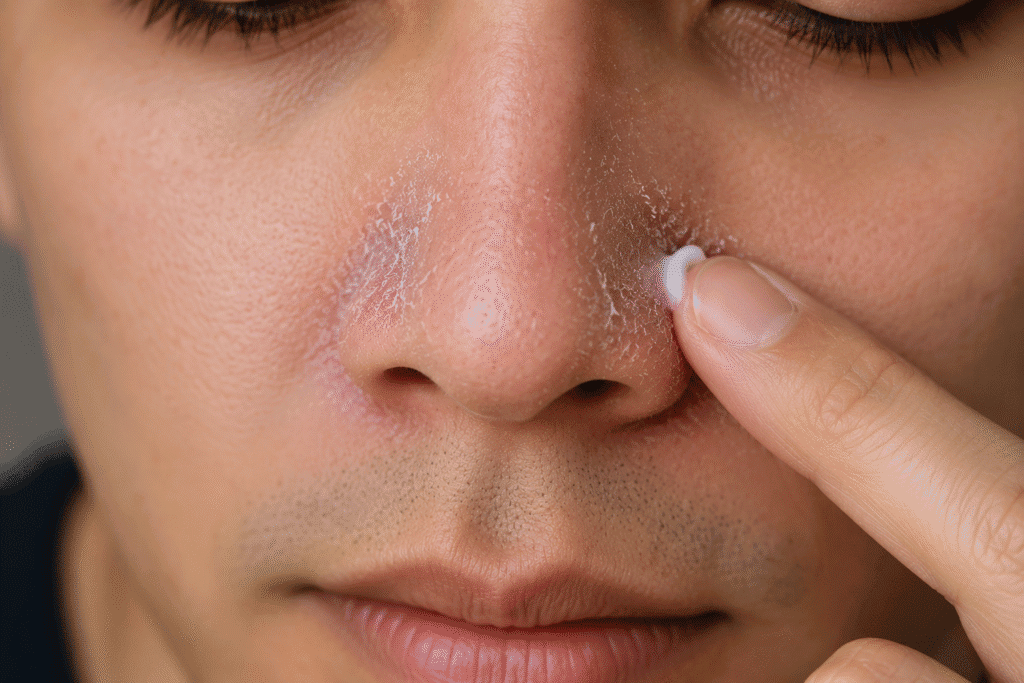
Morning
Start with a gentle cleanse if you need one. If your skin is very dry or sensitive, a water rinse may be enough for some people.
Use lukewarm water, not very hot water. Hot water can strip natural oils and make dryness worse.
Then apply a gentle moisturizer while the skin is still a bit damp. Finish with sunscreen during the day.
Evening
Cleanse gently to remove makeup, sunscreen, sweat, and daily buildup.
Do not keep rubbing the nose because you can see flakes.
Apply moisturizer again, with extra attention to the creases beside the nostrils.
If the area is very dry, a thicker barrier cream may help. Just do not add several new products at once.
Ingredients That Can Help
When you treat dry skin around nose, the ingredient list matters more than the length of the routine.
Look for formulas that support the barrier rather than promise fast resurfacing.
Humectants
Ingredients like glycerin help pull water into the outer skin layers.
Ceramides
These are lipids found in skin and are often used in barrier creams.
Fatty acids and emollients
These help soften rough skin and improve the feel of a weak barrier.
Occlusive ingredients
Petrolatum and similar ingredients can help slow water loss by forming a protective layer.
Simple, fragrance-free formulas
If irritation is part of the issue, a simple formula is easier to troubleshoot. Fragrance is a common trigger for contact allergy.
You do not need every helpful ingredient in one product. You need a comfortable cream that your skin can tolerate.
What About the Flakes
This is where patience helps.
Visible flakes can make you want to clean the area up fast, but that is not always the best move.
If the skin is already sore, acids, scrubs, scrub brushes, and peeling products can make it worse. So if dry skin around nose is peeling, burning, or raw, pause scrubbing for now.
Once the skin settles down, you can decide whether you still need any exfoliation at all.
Healthy skin does not need to feel squeaky clean after every wash.
Your Cleanser Could Be the Problem

Your moisturizer may not be the issue.
Sometimes the product that causes trouble is the one you rinse off.
Foaming cleansers, harsh soaps, frequent washing, hot water, and rough rubbing can all dry out the face. Mayo Clinic says gentle cleansing matters, and some people with sensitive skin may need to cleanse less often.
Watch how your skin feels right after washing.
If it feels tight, stretched, sore, burning, rough, or even flakier than before, your cleanser may be too strong for now.
That does not always mean the cleanser is bad. It may just be too drying for your skin at this time.
Do Not Forget What Touches Your Nose
Skincare gets most of the attention, but daily habits matter too.

Think about how often your nose touches:
- Tissues
- Towels
- Face masks
- Makeup sponges
- Makeup brushes
- Pillowcases
- Hands
- Facial hair
- Hair products
- Cleansing cloths
If you have allergies or a cold, repeated wiping can create a lot of friction.
Patting instead of rubbing can lower irritation.
The same idea applies after washing. Gently pat the face dry, then apply moisturizer while the skin still holds some moisture.
Could Your Routine Be Too Strong?
A long routine can look good on a shelf and still be hard on your skin.
You may use vitamin C in the morning, acids several nights a week, retinoids on other nights, acne treatments on certain spots, and more than one active serum during the week.
Each one may have a role. Together, they may be too much for a sensitive area.
If dry skin around nose started after you added more active products, the timing may matter.
You do not need to give up every active forever. Give the area time to recover, then bring products back one at a time.
A good routine should be steady, not a test of how much your skin can take.
When It Looks More Like Seborrheic Dermatitis
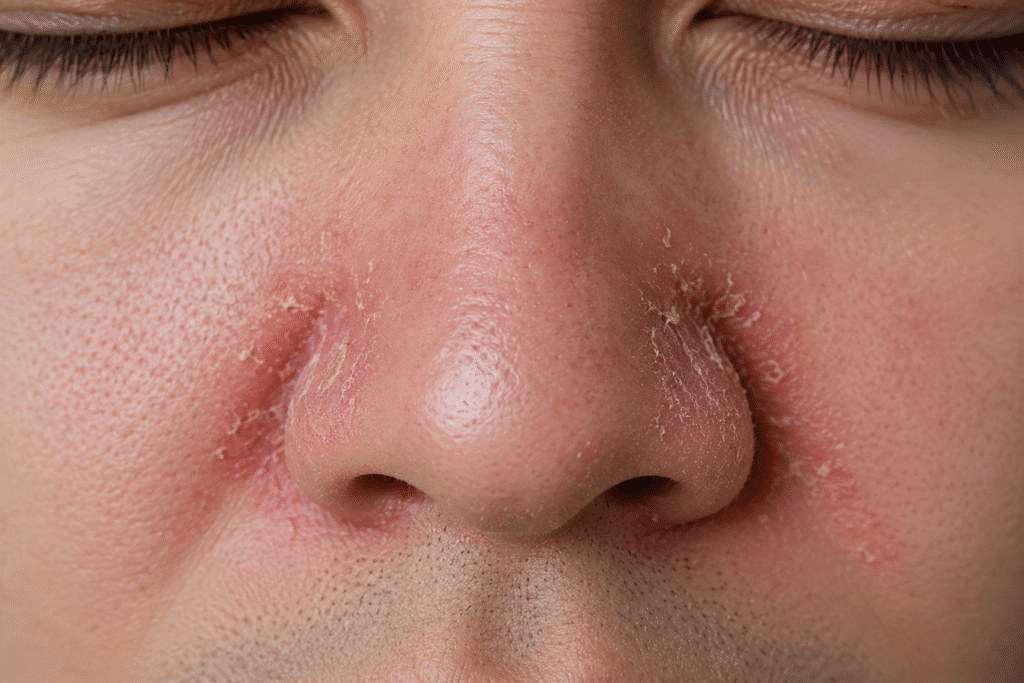
The sides of the nose are a classic spot for seborrheic dermatitis.
This can be confusing because the skin may look dry even when the problem is linked to oilier areas.
If you keep moisturizing the same spot and the flakes keep coming back, especially with dandruff or similar scaling around the eyebrows, ears, or hairline, talk with a skin doctor.
Some treatment plans use antifungal medicine. The right choice depends on the diagnosis.
Do not assume every flaky patch needs that kind of treatment, though. Diagnosis matters.
When a Product Might Be Causing the Problem
Another clue is timing.
Did the dryness begin after switching moisturizers, trying a new sunscreen, adding a retinol, using a new acid product, changing cleansers, starting a new makeup item, using a fragranced product, or applying a new hair product that touches your face?
Contact dermatitis can develop after exposure to an irritating or allergy-causing substance. The reaction may not happen right away, which can make the trigger hard to spot.
If you suspect a product, stop that product first. Adding more items rarely helps.
When you try something new later, patch test it on a small area and watch for several days.
A Simple Reset Routine
If you are not sure what caused dry skin around nose, a short reset can make things clearer.
- Cleanse gently.
- Avoid scrubbing and very hot water.
- Moisturize after washing while the skin is still a bit damp.
- Pause harsh scrubbing.
- Skip extra fragrance.
- Use sunscreen during the day.
- Reduce friction.
- Change only one thing at a time.
This may feel less exciting than adding another serum, but it often works better.
Your Environment Can Play a Role

Your surroundings also affect how your skin feels.
Cold, dry weather can pull moisture from the skin. Indoor heating and air conditioning can lower humidity too.
You may also notice seasonal changes.
Your skin may do fine in humid months and then get flaky in winter or in dry air. Travel can also change things, since hotel rooms, flights, and new climates can all affect the skin.
When Should You See a Skin Doctor?
Most mild dryness can improve with gentle care. But some signs need professional help.
See a healthcare professional if the area:
- Keeps peeling even with a gentle routine
- Gets more red or swollen
- Is very itchy or painful
- Develops cracks or bleeding
- Produces crusting or discharge
- Looks infected
- Develops blisters
- Keeps coming back in the same place
- Gets in the way of daily life
A skin doctor can help sort out ordinary dryness, irritation, contact dermatitis, seborrheic dermatitis, eczema, or another condition.
The Biggest Mistake Is Treating the Symptom, Not The Cause
It is easy to look at flakes and think, I need more moisture.
Sometimes you do.
But sometimes the problem is the cleanser. Sometimes it is friction from tissues. Sometimes it is an active ingredient. Sometimes it is a reaction to fragrance. And sometimes the recurring flakes point to a skin problem that needs a different plan.
That is why dry skin around nose is best handled like a small investigation, not a skin emergency.
Look at when it began.
Look at what changed.
Look at where the flakes show up.
Look at whether the skin feels tight or inflamed.
Look at whether the same pattern shows up elsewhere on your face.
Most of all, watch how your skin reacts when you simplify.
Q&A
The skin around the nose gets more rubbing, wiping, cleansing, and product contact than many other spots. Once the barrier weakens, moisture escapes more easily. That can lead to flaking, tightness, roughness, or irritation even if the rest of the face looks fine.
Not if the area is already sore, peeling, burning, or raw. Scrubbing may remove some flakes for a moment, but it can also keep the dry and irritated cycle going. Pause scrubs, acid peels, scrub brushes, and peeling products until the skin calms down.
Seborrheic dermatitis often shows up on oily areas, including the sides of the nose. It may cause recurring white or yellow flakes, itching, and redness. A clue is that the same area keeps coming back, especially if you also have dandruff or scaling near the scalp, eyebrows, beard, ears, or hairline. A skin doctor can help confirm it.
Stop the suspected product first. Dryness or irritation may start after a new cleanser, sunscreen, retinol, acid product, makeup item, fragrance, moisturizer, or hair product. A simple reset with gentle cleansing, moisture, sunscreen, less friction, and fragrance-free products can help you figure out what your skin can handle.
Get help if the area keeps peeling, gets more red or swollen, becomes very itchy or painful, cracks, bleeds, crusts, looks infected, forms blisters, keeps returning in the same place, or interferes with daily life. Those signs may point to something beyond ordinary dryness, such as contact dermatitis, seborrheic dermatitis, eczema, infection, or another skin problem.
Final Thoughts
Persistent dry skin around nose can be annoying, especially when the rest of your face looks fine. But the answer is rarely to scrub harder or pile on more products.
Start with the basics: gentle cleansing, steady moisture, less friction, fewer irritants, and protection from weather. Ceramides, glycerin, fatty acids, and occlusive creams can help support the barrier. Fragrance-free products may also be a better choice when irritation is likely.
If the dryness keeps coming back, becomes inflamed, or comes with strong itching, scaling, pain, or other unusual signs, do not assume it is only dryness. Contact dermatitis and seborrheic dermatitis can look similar at first but need different care.
This advice can help with dry skin on and around nose, not just one flaky patch. Sometimes skin needs fewer, gentler products and a little more time.