

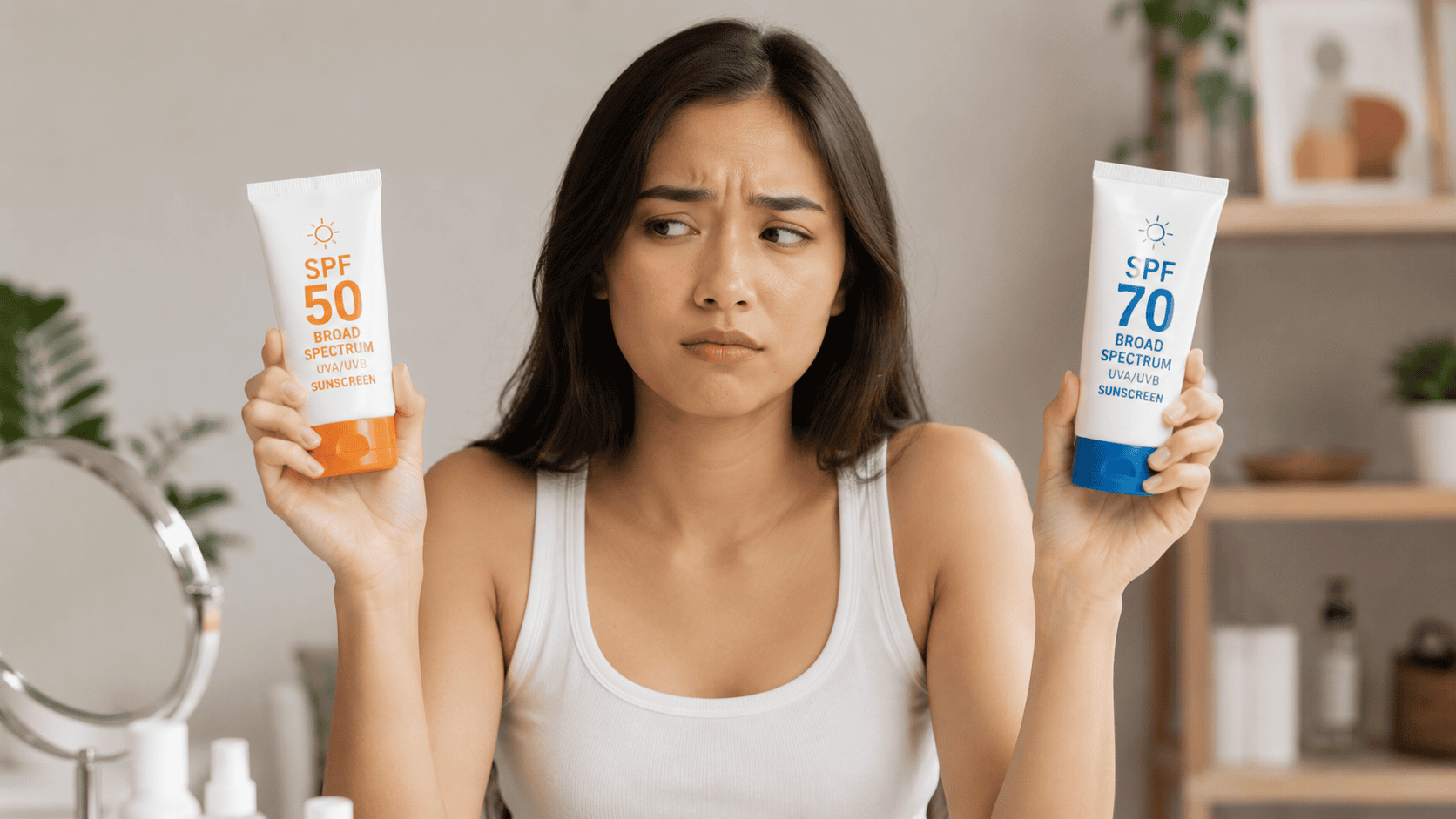
You are standing in front of a shelf of sunscreens.
One bottle says SPF 50. Another says SPF 70. You may even see SPF 100 sitting nearby.
It is easy to think the bigger number must be better. But when people compare spf 50 vs 70, the gap is smaller than it looks. The spf 70 vs 50 debate often sounds bigger than it is.
SPF is not a percent score. SPF 70 is not 40% better than SPF 50. It gives a bit more UVB protection in lab tests, but not a giant jump.
The real question is simple: which sunscreen gives you enough protection and feels easy enough to use every day?
First, what does SPF mean?
SPF means Sun Protection Factor.
It mainly measures how well a sunscreen protects your skin from UVB radiation, the type of UV radiation most tied to sunburn.
Sunlight also contains UVA. UVA goes deeper into the skin and helps cause early aging, like lines and age spots. Broad-spectrum sunscreen is made to protect against both UVA and UVB.
So when you pick a sunscreen, you are really asking a few things:
- How high is the SPF?
- Is it broad-spectrum?
- Is it water-resistant?
- Can I apply enough of it?
- Will I actually reapply it?
That last point matters more than many people think.
A sunscreen you hate wearing is not very useful if it stays in your bathroom.
SPF 50 vs 70: The numbers do not tell the whole story
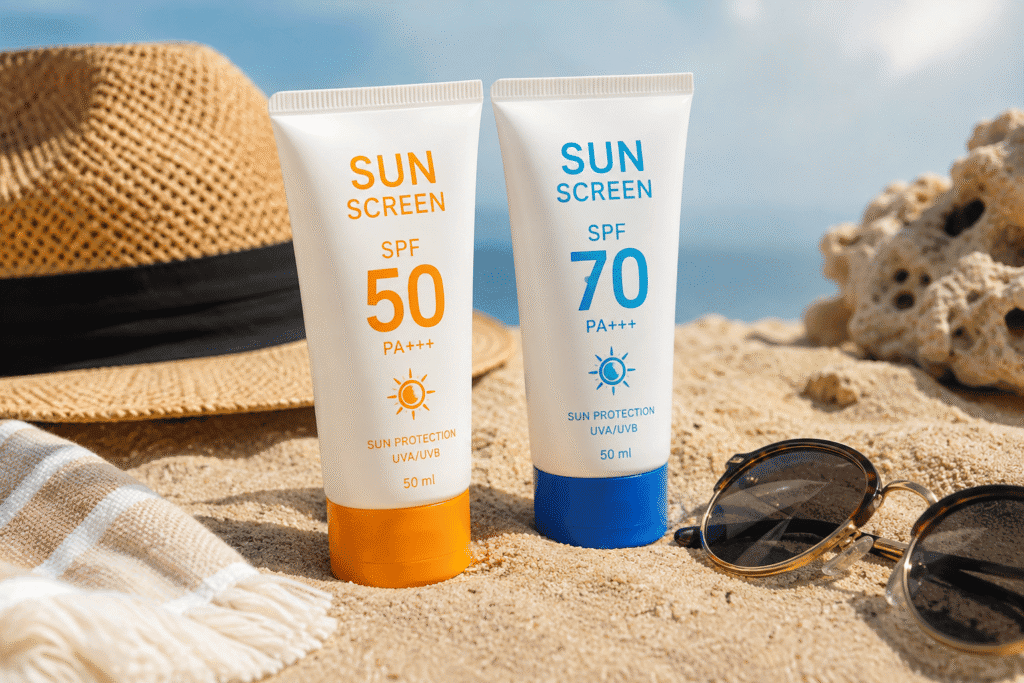
SPF 70 does offer more UVB protection than SPF 50 under standard tests. But the gain is smaller than the numbers suggest.
Cancer Council Australia says properly applied SPF 30 filters about 96.7% of UVB, while SPF 50 filters about 98%. Higher SPF products filter a little more UVB, but no sunscreen blocks all UVB.
Think of it like climbing a hill.
Going from a low SPF to SPF 30 can make a real difference. Going from SPF 30 to SPF 50 adds more. But once you are already at a high SPF, each step gives a smaller gain.
So the spf 50 vs spf 70 choice is not about one bottle being vastly stronger. It is about a small increase in lab-tested UVB protection.
The higher SPF = more time outside myth
This is where sunscreen shopping can get confusing.
You might see SPF 70 and think it will last longer.
Not quite.
A higher SPF does not mean you can stay in the sun longer without reapplying.
According to the American Academy of Dermatology, sunscreen should be reapplied approximately every two hours when outdoors and immediately after swimming or excessive sweating, regardless of the SPF number.
SPF is about protection, not time.
Real life also changes how sunscreen works. You sweat. You wipe your face. Your shirt rubs your shoulders. You swim. You touch your forehead. You towel off. You may miss a patch of skin.
All of that can reduce the layer on your skin.
What happens when you use too little?
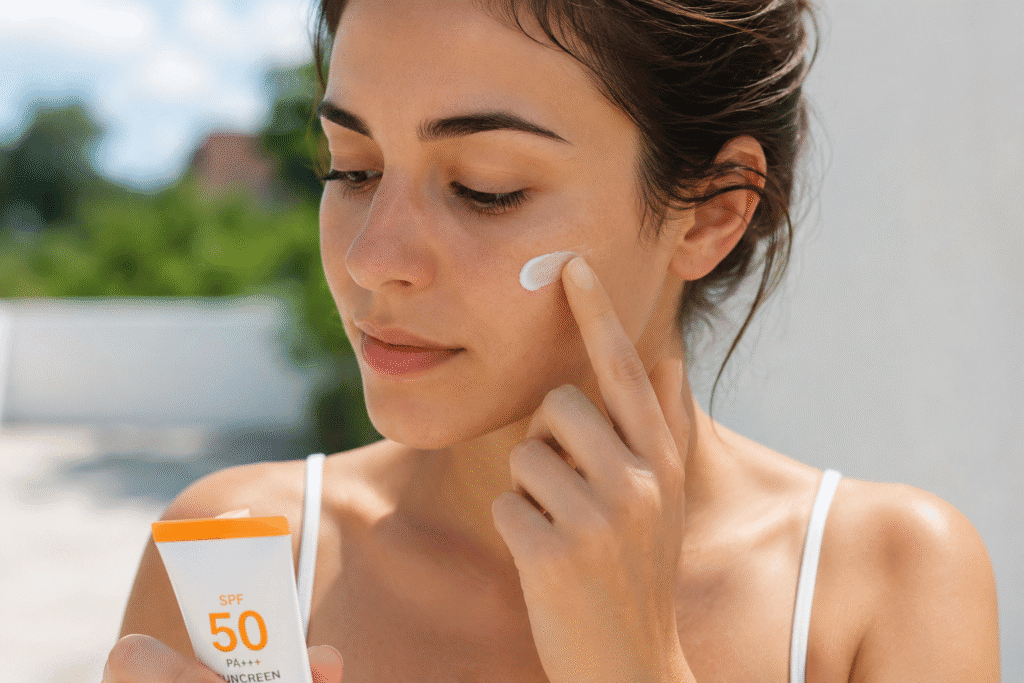
Here is the uncomfortable truth: most people use less sunscreen than they think.
The SPF on the bottle is based on standard testing with a set amount of product. Cancer Council Australia notes that about 2 mg of sunscreen per square centimetre is used when SPF is measured.
That means the label assumes you put on enough product to create the tested layer.
If you use only a small amount because you want a lighter feel, you may not get the protection you expect.
A higher SPF can give you a little extra margin. But it should never be a reason to apply less.
- More SPF + too little product = not ideal
- High SPF + generous application = much better
- High SPF + generous application + reapplication + shade and clothing = even better
Sunscreen works best as part of a full sun-protection plan, not as your only defense.
SPF 50 vs 70 for daily use
For everyday life, SPF 50 can already be a very strong choice.
Think about a normal day. You wake up, shower, do your skincare, get ready, drive somewhere, eat lunch, and walk outside for a few minutes.
You are probably not spending eight straight hours beside a pool.
In that situation, a comfortable broad-spectrum SPF 50 can be an excellent daily sunscreen.
The biggest win is consistency.
If you like the texture, it does not leave a heavy layer, it works under makeup, and you remember to use it each morning, that matters more than the number on the bottle.
A good everyday sunscreen should be:
- Broad-spectrum
- High SPF
- Comfortable on your skin
- A good match for your skin type
- Easy to spread evenly
- Good for your daily routine
- Easy to reapply when needed
There is no prize for buying the highest SPF if you only use it once in a while.
What if you spend a lot of time outside?
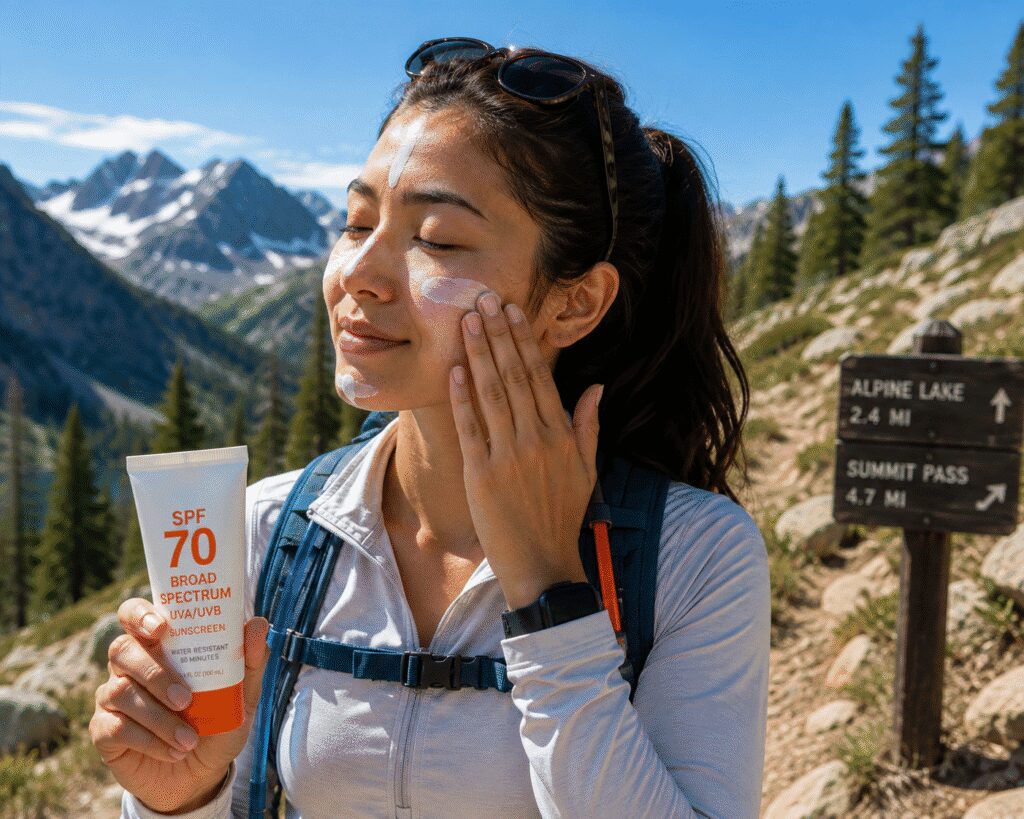
If you hike, run, cycle, garden, play sports, work outdoors, or spend long days at the beach, you may want the extra margin from a higher-SPF sunscreen.
That is where SPF 70 can be useful.
But do not stop there.
For long outdoor exposure, sunscreen should be part of a bigger plan.
Cancer Council Australia’s SunSmart advice recommends broad-spectrum SPF 50 or SPF 50+ sunscreen with protective clothing, a broad-brimmed hat, shade, and sunglasses when UV levels are high enough to matter.
Your outdoor setup might look like this:
Sunscreen: Broad-spectrum, high SPF
Clothing: Light, protective clothing when practical
Hat: Broad-brimmed or another style that shades your face, neck, and ears
Shade: Take breaks out of direct sun
Sunglasses: UV-protective eyewear
That mix matters more than switching from one high SPF number to another.
Is SPF 70 better for sensitive skin?
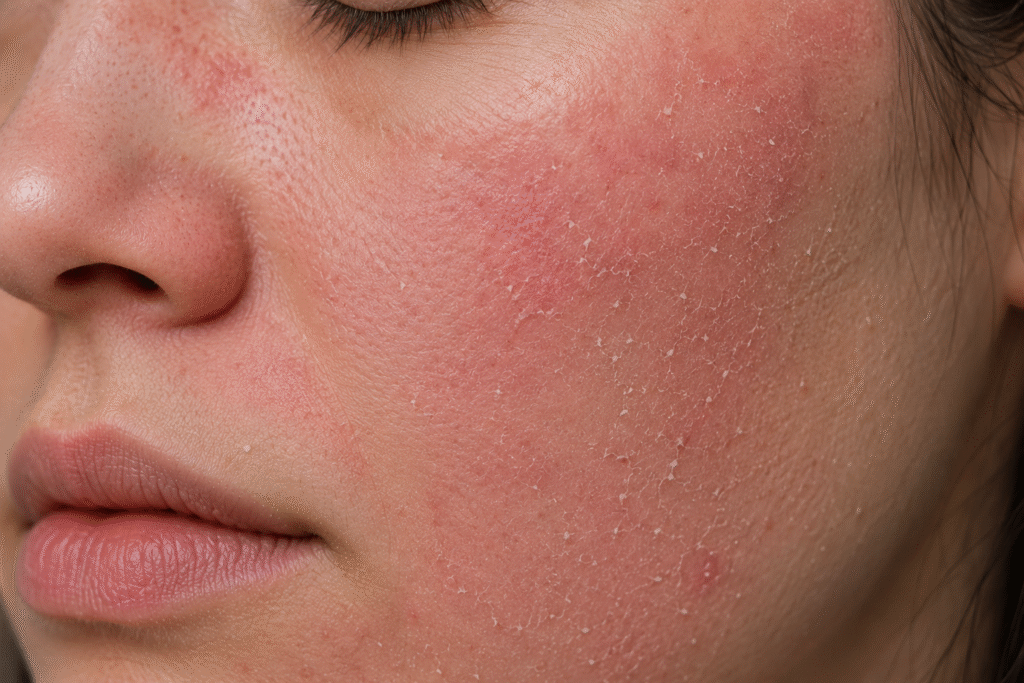
Not always.
SPF tells you the level of UVB protection. It does not tell you whether the product will suit your skin.
One person may find an SPF 70 formula calm and comfortable. Another may find the same formula heavy, fragrant, or irritating.
The formula matters.
If your skin is sensitive, look for a sunscreen made for sensitive skin and pay attention to ingredients your skin already handles well.
If a product causes burning, redness, or discomfort, do not force yourself to keep using it just because the SPF number is higher.
A sunscreen that makes you miserable is unlikely to become a daily habit.
What about oily, acne-prone, or dry skin?
If you have oily skin, texture may matter more than whether the bottle says 50 or 70.
A thick, greasy sunscreen can make your skin feel shiny fast. That may lead you to use less product or skip sunscreen altogether.
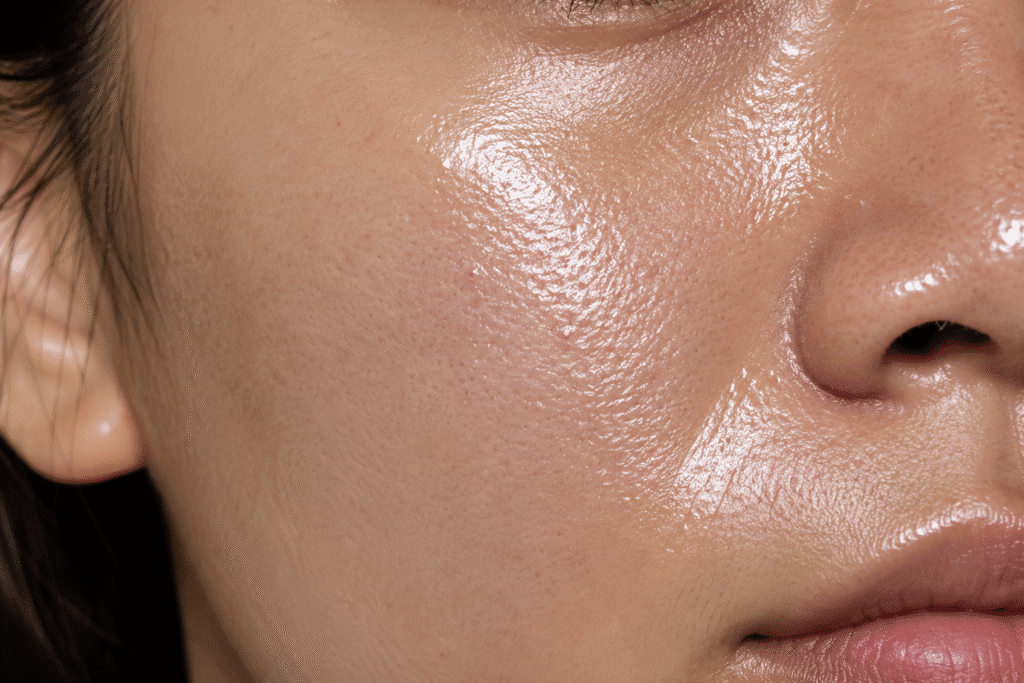
Look for formulas described as:
- Lightweight
- Gel or fluid
- Non-greasy
- Matte or soft-matte
- Suitable for oily skin
The goal is not to find a sunscreen that makes your skin feel dry. The goal is to find one that feels good enough that you use the amount you need.
That is a big part of the spf 50 vs spf 70 conversation. The better bottle on paper may not be the better bottle in your bathroom.
Dry skin can have the opposite problem.
Some high-SPF sunscreens can feel tight or dry, especially if your routine already uses cleansers, exfoliants, or other drying products.
A more moisturizing sunscreen may be easier to use.
You might try:
Cleanser → hydrating serum → moisturizer → sunscreen
Or, if your sunscreen is moisturizing enough:
Cleanser → serum → sunscreen
There is no single routine everyone needs.
The key is to apply sunscreen in an even layer over exposed skin instead of rubbing it away with too many steps.
What about dark spots?
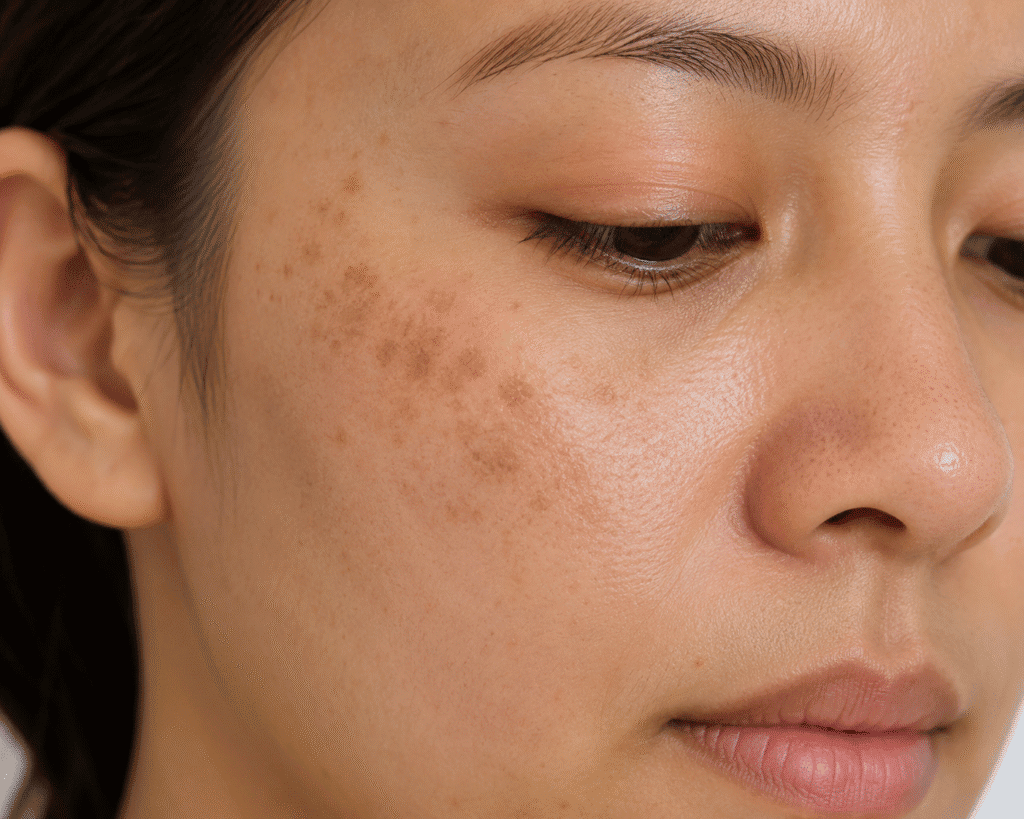
If you have dark spots, post-acne marks, or uneven skin tone, sunscreen matters even more.
UV exposure can add to pigment and make existing color change harder to manage.
There is another point worth knowing: visible light can also darken skin in some people, especially those prone to dark spots. The AAD notes that tinted sunscreens with iron oxides can give extra protection against visible light.
So if pigment is your main concern, do not only ask whether you should buy SPF 50 or SPF 70.
Ask what kind of protection your skin actually needs.
That may lead you to a broad-spectrum, high-SPF sunscreen with a tint, not just the biggest number on the shelf.
SPF 50 vs 70 for anti-aging
If your goal is smoother-looking skin, fewer sun spots, and less early visible aging, daily sunscreen is one of the best habits you can build.
UVA exposure is linked to early skin aging, including lines and age spots.
This is about long-term care, not just what happens today.
You may not see a difference after one week.
But steady sun protection can help lower total UV exposure over time.
Think long term.
You do not need a magic sunscreen.
You need one you can use well and use often.
You need enough of it.
You need broad-spectrum protection.
And if you are outside for long periods, you need to remember that sunscreen is only one part of sun protection.
That is more useful than chasing a bigger SPF number.
Myths vs reality
Myth: SPF 70 is much stronger than SPF 50.
Reality: SPF 70 gives a bit more UVB protection, but the difference is much smaller than the numbers suggest.
Myth: SPF 70 lasts longer.
Reality: A higher SPF does not remove the need to reapply.
Myth: SPF 50 is not enough for daily use.
Reality: SPF 50 is already high protection and is widely used for high sun safety.
Myth: You can use less SPF 70 because it is stronger.
Reality: You still need enough sunscreen to get the protection on the label.
Myth: Sunscreen is all you need.
Reality: Clothing, hats, shade, and sunglasses all help lower UV exposure.
Do not forget the spots people miss
You can have a great skincare routine and still miss some very common spots.
Think beyond your cheeks and forehead.
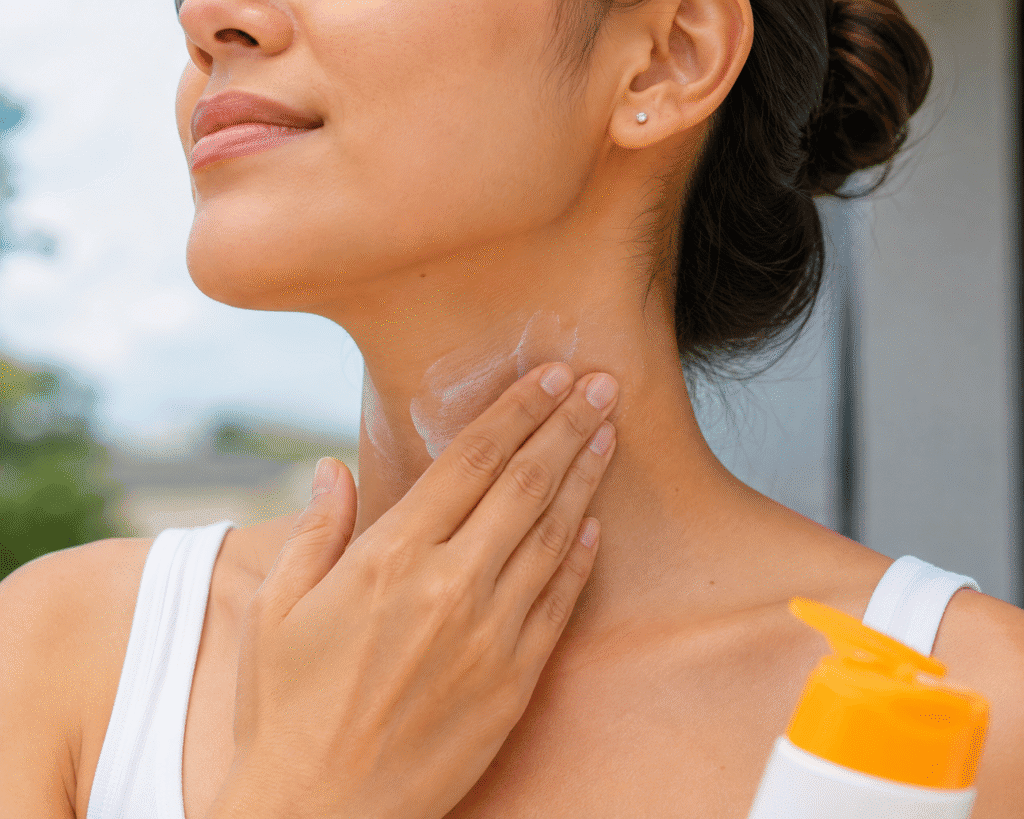
Commonly missed areas include:
- Ears
- Neck
- Hairline
- Tops of the feet
- Hands
- Around the jawline
- Upper chest
- Lips
The AAD specifically recommends sunscreen for the face, neck, ears, tops of the feet, and other skin not covered by clothing.
If you have thinning hair or a more exposed scalp, do not forget that area either. A hat can help.
The two-hour rule is not about perfection
Reapplying sunscreen every two hours can sound difficult when you are simply going about your day. You do not need to stare at the clock, but if you are outdoors for a long time, reapplication matters.
Cancer Council Australia recommends reapplying every two hours and after swimming, sweating, or towel-drying. If you want to understand more about how long sunscreen lasts and when you should reapply, read our guide: How Long Does Sunscreen Last? Everything You Need to Know
Make reapplication easier by connecting it to things you already do.
Going to the beach? Keep sunscreen in your beach bag.
Going for a long hike? Put it somewhere easy to reach.
Playing sports? Keep it in your gear.
Spending the afternoon in the garden? Leave it nearby.
The easier you make reapplication, the more likely you are to actually do it.
How much sunscreen do you need?
This is not the most exciting part of sunscreen advice, but it is one of the most important.
For full-body adult use, Cancer Council Australia recommends about 35 mL, or seven teaspoons, for exposed skin when applied correctly.
For the face, the AAD guidance describes about one teaspoon in its application instructions.
The exact amount can vary by body size, product form, and the areas you cover, so follow the product directions.
The main point is simple:
Do not stretch a tiny amount of sunscreen over a large area.
A thin, patchy layer is not what the SPF number was based on.
What should you look for on the bottle?
When you shop for sunscreen, do not go straight for the biggest number.
Read the label in this order:
1. SPF
Choose a high SPF for your needs.
2. Broad-spectrum
This means protection against both UVA and UVB.
3. Water resistance
Helpful if you swim or sweat, but water-resistant sunscreen still needs reapplication.
4. Skin match
Look at whether the texture and ingredients work for your skin type.
5. Directions
Follow the maker’s instructions for application and reapplication.
Do not skip the boring parts.
Check the expiration date and store the bottle as the label says. Cancer Council Australia notes that too much heat can affect sunscreen, so leaving it in a hot car is not a great idea.
SPF 50 vs 70: Which should you buy?
If you are stuck between the two, use this simple guide.
Choose SPF 50 if:
- You want a strong everyday sunscreen.
- You like a lighter or more comfortable formula.
- You apply sunscreen consistently.
- You are not spending long hours in strong direct sun.
- The SPF 50 formula is broad-spectrum and suits your skin.
Consider SPF 70 if:
- You want the extra margin of a higher SPF.
- You spend a lot of time outdoors.
- You burn easily.
- You found a high-SPF formula you like.
- You are willing to apply it generously and reapply as needed.
Neither choice gives you permission to ignore the rest of your sun-protection routine.
And neither one is a magic shield.
The most important part is not the number
This is the part that often gets lost when sunscreen brands compete for attention.
A person who applies SPF 50 well every morning and reapplies when needed is doing more useful work than someone who buys SPF 70 but uses a tiny amount once before leaving home.
That is why the spf 50 vs spf 70 question should really be reframed.
Instead of asking:
Which number is bigger?
Ask:
Which sunscreen will I actually use correctly?
That question fits your real life, not just the label.
If you hate sticky sunscreen, find a lighter one.
If you have dry skin, choose one that feels comfortable and hydrating.
If pigment is your concern, look at broad-spectrum and tinted options.
If you are outdoors all day, add clothing, shade, a hat, and sunglasses.
If you know you will forget to reapply, build sunscreen into your normal routine.
In the spf 50 vs spf 70 choice, the best bottle is the one you will use.
A better way to think about SPF
Sunscreen shopping gets much easier when you stop treating SPF like a race.
SPF 30, 50, 70, and higher are not separate groups where one number makes the others useless.
They are different levels of tested UVB protection.
Once you reach a high SPF, the practical gain from going even higher gets smaller.
That does not make SPF 70 pointless. It just means application, coverage, reapplication, and broad-spectrum protection matter just as much.
So if you are in the store wondering which bottle to buy, take a breath.
Look at the formula.
Look at the protection.
Look at the label.
Then ask whether you will actually enjoy using it.
Because the best sunscreen is not always the bottle with the biggest number.
It is the one that gives you strong protection and becomes a habit.
Frequently Asked Questions
Not by as much as the numbers suggest. SPF 70 gives slightly higher UVB protection, but SPF 50 already offers very high protection when used well.
No. A higher SPF does not cancel the need to reapply. Sunscreen can wear off from sweating, swimming, towel-drying, and rubbing, so reapply as directed, especially during long outdoor time.
For most people, yes. A broad-spectrum SPF 50 can give excellent daily protection when you use enough and reapply when needed.
You can, but SPF is not the only factor. Broad-spectrum protection matters, and a tinted sunscreen with iron oxides may help people who worry about pigment.
Both can be good choices. SPF 70 gives a bit more UVB protection, but SPF 50 may be enough for daily use. Choose the one that gives broad-spectrum protection and that you will use often.
Final takeaway
The answer to spf 50 vs 70 is not simply that 70 is better.
SPF 70 does give a higher level of UVB protection than SPF 50 under standard tests, but the gap is smaller than the numbers make it seem. SPF 50 is already strong protection, and both products still need to be applied well and reapplied when needed.
For everyday care, a broad-spectrum SPF 50 can be an excellent choice if you use enough of it and stay consistent. If SPF 70 fits your routine better or gives you extra peace of mind, that can be a fine choice too.
What matters most is not chasing the biggest number.
It is building a sun-protection routine you will actually follow.
Apply enough. Cover exposed skin. Reapply when needed. Seek shade. Wear protective clothing and a hat when appropriate. Do not forget your sunglasses.
Your skin will likely care more about the routine than the number on the bottle.