


If your morning routine feels crowded, you may wonder, should I wash my face in the morning or is a water rinse enough? That is a common skin care question, especially if your skin feels dry, tight, or uneasy after cleansing.
According to the American Academy of Dermatology (AAD), dermatologists generally recommend washing the face when you wake up, before bed, and after sweating, using a gentle cleanser rather than scrubbing the skin.
The answer is not the same for everyone. Skin type, night routine, weather, sweat, and the products you use can all change what makes sense. Some people do well with a morning cleanse. Others find that it leaves their skin too dry.
Rather than treating morning cleansing as a hard rule, it helps to look at what your skin does overnight and what it needs when you wake up.
What Happens to Your Skin Overnight?
Your skin does not switch off at night. It keeps making oil, shedding dead skin cells, and reacting to the products you put on before bed.

When you wake up, your face can still have a mix of things on it, such as:
- Natural oils from your skin
- Sweat from sleep
- Leftover night skin care
- Dead skin cells
- Small bits from your pillowcase and bedding
- Microbes that live on the skin
This does not mean your face is dirty. Healthy skin naturally has microbes and oils that help support its protective barrier.
So the goal of cleansing is not to make skin bare. It is to remove extra buildup without upsetting that balance.
So, Should I Wash My Face in the Morning?

For many people, yes. A gentle morning cleanse can be a helpful part of a skin care routine.
But the type of cleansing matters just as much as the fact that you cleanse at all.
If you wake up oily, sweaty, or with leftover product on your face, a gentle cleanser can freshen the skin before moisturizer, sunscreen, or makeup.
If your skin is dry and feels calm when you wake up, a full cleanse may not be needed. A simple rinse with lukewarm water may be enough.
When you ask should should i wash my face in the morning, think about what your skin is telling you instead of copying someone else’s routine.
A morning cleanse may help if:
- Your skin gets oily overnight.
- You sweat while sleeping.
- You live in a hot or humid place.
- You use heavy night products.
- You wake up with a greasy feel.
- You get clogged pores often.
- You like the clean feel before skin care and sunscreen.
A lighter approach may be better if:
- Your skin feels dry or tight after cleansing.
- Your skin is very dry or easy to irritate.
- Your night routine is already light and gentle.
- Your skin feels fine when you wake up.
- Cleansing twice a day leaves your skin feeling stripped.
There is no prize for using the strongest cleanser or washing the most often. A good routine should support your skin, not fight it.
Morning Cleansing by Skin Type
Oily skin
If your skin makes a lot of oil, morning cleansing can help. Oil can build up overnight and leave your face shiny.
Use a gentle cleanser that removes extra oil without leaving your skin tight or squeaky.
Do not scrub hard. Too much friction can make skin feel worse, not better.
Look for a cleanser that leaves skin:
- Clean, but not tight
- Fresh, but not squeaky
- Comfortable after rinsing
- Ready for moisturizer and sunscreen
Dry skin
Dry skin often needs a softer touch.
If your face already feels tight, flaky, or sore when you wake up, a strong cleanser may be too much. In many cases, a lukewarm water rinse is a better choice.
This is one reason there is no single answer to should I wash my face in the morning. What works for oily skin can feel harsh on dry skin.
If you do cleanse, choose a gentle formula that helps protect the skin barrier.
Combination skin
Combination skin can be harder to read. Your forehead, nose, and chin may be oily, while your cheeks feel normal or dry.
A mild cleanser is often enough. On some days, a water rinse may be all you need.
Sensitive skin
Sensitive skin often does best with less.
If cleansing makes your face red, sting, burn, or feel tight, look at the cleanser, the water temperature, the amount of rubbing, and how often you wash.
Morning cleansing should leave your skin calm, not irritated.
Does Washing Your Face in the Morning Help Acne?
This is where skin care advice can get messy.
Cleansing can remove oil, sweat, sunscreen residue, and other buildup. That can help if you get clogged pores.
But washing more often does not mean fewer breakouts.
Acne is affected by many things, including oil, dead skin cells, inflammation, hormones, and acne-causing bacteria. Washing harder or more often cannot fix all of that.
If you are acne-prone, keep your routine steady instead of trying to scrub away every possible flaw.

A simple morning routine might look like this:
- Gentle cleansing
- A treatment product, if needed
- Moisturizer
- Broad-spectrum sunscreen
Consistency matters more than using a long routine.
What If You Only Rinse With Water?

Water-only cleansing is not magic, but it is not useless either. Water can remove some sweat and loose surface residue, but it is not as effective as a cleanser at removing oil-based buildup.
If you used rich night products, a water rinse may not be enough. But if your skin is dry and your nighttime routine is light, a rinse may be all you need. For a more detailed look at when water alone may be enough, read our guide, Can You Wash Your Face With Just Water?.
This is another case where should I wash my face in the morning depends on your own skin, not a fixed rule.
Night Products, Sweat, and Pillowcases

What you put on before bed changes how your skin feels in the morning.
A light moisturizer may leave little behind. A thick cream, facial oil, sleeping mask, or other heavy product may leave more residue.
That does not make night products bad. Many people use them to support the skin while they sleep.
If you wake up sweaty, a morning cleanse may also make more sense. Sweat itself is not harmful, but sweat, oil, and product residue can feel uncomfortable on the skin.
Your pillowcase can matter too. It can collect oil, sweat, skin care, hair products, and other residue over time.
That does not mean your pillowcase is causing every skin issue. But clean bedding can support a simple skin care routine.
Should You Use the Same Cleanser Morning and Night?
You can, but you do not have to.
Your night cleanse often needs to remove sunscreen, makeup, pollution, oil, and daily buildup. Your morning routine may need less.
For some people, a gentle night cleanse and a lighter morning cleanse work well. For others, a water rinse in the morning is enough.
There is no rule that both routines must match.
Clean Skin vs Stripped Skin
One of the most helpful things to know is that clean skin and stripped skin are not the same.
Clean skin should feel fresh and comfortable.
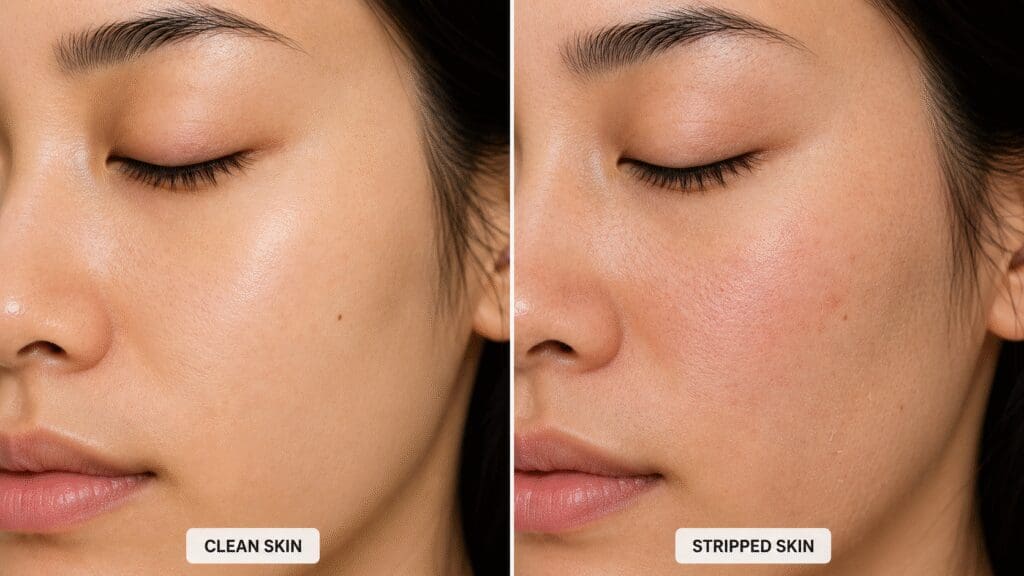
Stripped skin may feel:
- Tight
- Dry
- Rough
- Squeaky
- More sensitive than usual
- Irritated after skin care
If your face often feels stripped after morning cleansing, that is useful feedback.
You may need less washing, a gentler cleanser, cooler water, less rubbing, or a simpler routine.
When you wonder should I wash my face in the morning, how your skin feels after cleansing matters more than just checking a box.
How Long Should You Wash Your Face?

You do not need to spend a long time scrubbing.
Use a gentle cleanser on damp skin and move your fingertips lightly. Do not rub hard.
Then rinse well and pat your face dry. Try not to drag a towel across the skin.
Simple is usually enough.
What Water Temperature Should You Use?
Lukewarm water is the best choice for most people.
Very hot water can feel nice, but it may dry out or irritate skin.
Very cold water is not needed either.
You do not need extreme temperatures to clean your face well.
What Should You Put On After Washing?
After cleansing, keep your morning routine simple.
A basic routine can look like this:
Cleanse or rinse → Treat if needed → Moisturize → Sunscreen
Moisturizer
Moisturizer helps support water in the skin and can make your face feel more comfortable after washing.
Choose one that fits your skin rather than one that is just popular.
Dry skin may like a richer cream. Oily skin may prefer a light lotion or gel.
Sunscreen
Sunscreen is especially important during the day because your skin will be exposed to UV light.
Use a broad-spectrum sunscreen that fits your skin, and follow the directions for use and reapplication.
Do not skip sunscreen just because you stayed indoors. Your exposure can still change with windows, time outside, and daily habits.
What If You Wear Makeup?
If you wear makeup, morning cleansing can give you a cleaner base.
Still, your face does not need to feel dry or tight before makeup goes on.
In fact, too much cleansing can make makeup sit poorly on dry or irritated spots.
A better plan is to cleanse gently, use moisturizer as needed, let skin care settle, and then apply makeup.
If foundation looks patchy or uneven, the problem may not be that your skin is not clean enough. It may be dehydration, too much product, dead skin buildup, or clashing formulas.
When You Should Not Overthink It
Skin care can get too complicated when every small step becomes a rule.
You do not need to ask should I wash my face in the morning every day if you already know how your skin reacts.
A simple guide is often enough:
- Oily or greasy skin → gentle cleanser
- Sweaty skin → gentle cleanser
- Comfortable, balanced skin → water rinse or gentle cleanser
- Very dry skin → water rinse or gentle cleanser
- Tight skin after washing → rethink the cleanser or how often you wash
- Irritated or sensitive skin → simplify and use gentle products
- Heavy night products → gentle cleanser may help
Let your skin guide the routine.
Common Morning Cleansing Mistakes
The problem is often not whether you cleanse. It is how you do it.
Using very hot water
Hot water can feel nice, but it may be too harsh for dry or sensitive skin.
Scrubbing too hard
Your face does not need hard rubbing to get clean.
Using too much cleanser
More product does not always mean better cleaning. Use the amount the product says to use.
Washing again and again
Cleaning your face many times in a short period is usually not helpful.
Skipping moisturizer because your skin is oily
Oily skin still needs hydration. A light moisturizer may be a better choice than leaving skin dry.
Skipping sunscreen
A morning routine should not end with cleansing. If you go outside or sit in daylight, sunscreen matters.
A More Flexible Way to Build Your Morning Routine
Try thinking of your morning routine in three simple jobs:
Refresh. Protect. Support.
Refresh your skin with water or a gentle cleanser, depending on how it feels.
Protect it with sunscreen and other daytime products.
Support it with moisturizer and treatment products if your skin truly needs them.
This keeps skin care easier to follow.
For one person, that may mean cleanser, moisturizer, and sunscreen.
For another, it may mean water, moisturizer, and sunscreen.
Both can be right.
Should I Wash My Face in the Morning if My Skin Barrier Is Damaged?
If your skin barrier is irritated, your routine may need to get simpler.
Signs can include dry skin, stinging, flaking, sensitivity, or a tight feeling after washing.
In that case, do not assume that more cleansing will solve the issue.
Use gentle products, avoid extra scrubbing, skip extra exfoliation, and watch how your skin responds.
If symptoms are severe, last a long time, hurt, or get worse, consider talking with a skin doctor or another qualified healthcare professional.
Does Morning Washing Make Skin More Dry?
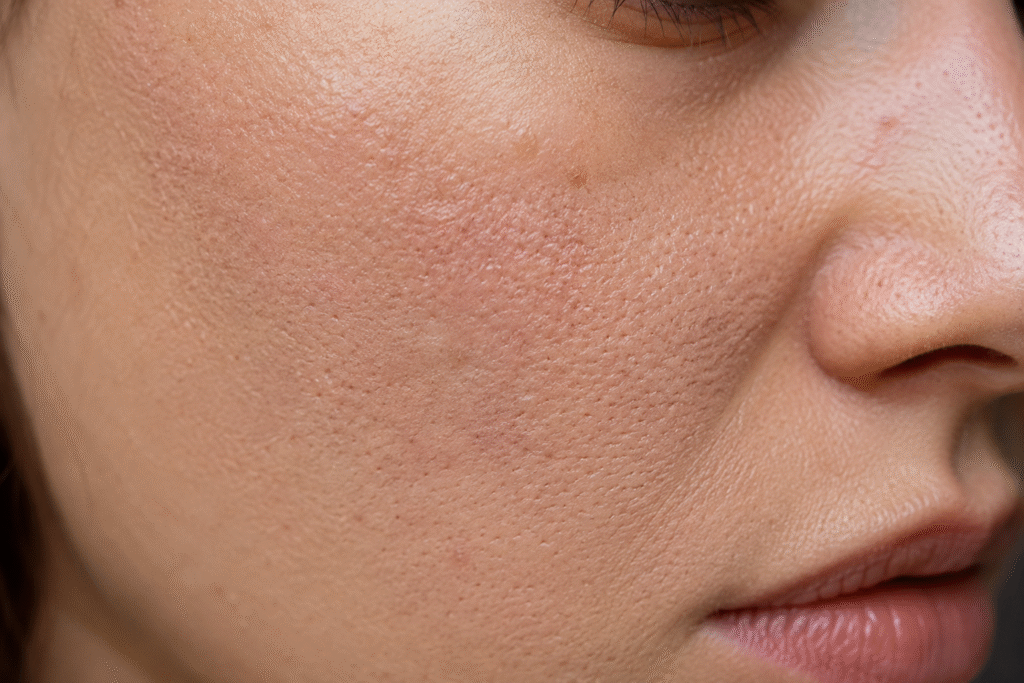
It can, depending on the cleanser, your skin type, and how often you wash.
A good cleanser should remove extra buildup without making your skin feel too dry or uncomfortable.
But a harsh cleanser or too much washing can dry skin out.
If your face feels tighter after your morning routine, try a gentler method instead of forcing your skin to put up with it.
A Simple Decision Guide
Still wondering should I wash my face in the morning?
Use the way your skin feels when you wake up:
- Oily and greasy → gentle cleanser
- Sweaty → gentle cleanser
- Comfortable and balanced → water rinse or gentle cleanser
- Very dry → water rinse or gentle cleanser
- Tight after cleansing → rethink the cleanser or how often you wash
- Irritated or sensitive → simplify and use gentle products
- Heavy night products → gentle cleanser may help
This is not a medical rulebook. It is just a simple way to choose.
Q&A
Not always. If your skin feels dry, calm, and balanced when you wake up, a lukewarm water rinse may be enough. But if you wake up oily, sweaty, or with heavy night product on your skin, a gentle cleanser may work better because water alone does not remove oil-based buildup as well.
Oily skin often does well with a morning cleanse because oil can build up overnight. Still, the cleanser should be gentle and non-stripping. The goal is to remove extra oil without making skin tight or squeaky.
Yes. Too much washing or a harsh cleanser can leave skin dry, rough, tight, or more sensitive. If that happens, wash less often, use a gentler formula, choose lukewarm water, and cut back on rubbing.
It can. A gentle cleanse can give you a fresher surface if your skin has oil, sweat, or residue on it. But over-cleansing can make makeup look patchy or feel uncomfortable by drying or irritating the skin.
A basic routine can be: cleanse or rinse, apply treatment if needed, moisturize, and finish with broad-spectrum sunscreen. It does not need many steps. It just needs to refresh, protect, and support your skin for the day.
The Bottom Line
So, should you wash your face in the morning?
For many people, a gentle morning cleanse is a good choice. It can remove oil, sweat, and leftover night product.
But cleansing is not always needed. If your skin is dry, sensitive, or easy to irritate, a water rinse may be enough.
The better question is not just whether you should wash. It is whether your current routine leaves your skin clean, comfortable, and ready for the day.
If your face is oily when you wake up, cleanse gently. If you are sweaty, washing can help. If your skin is dry and calm, a rinse may be fine.
Do not turn skin care into a contest. Healthy-looking skin does not need the longest routine or the most products. A steady, gentle routine that fits your skin is usually more useful than a strict morning rule.
Your skin can change with the seasons, weather, age, products, and lifestyle, so your routine can change too.