

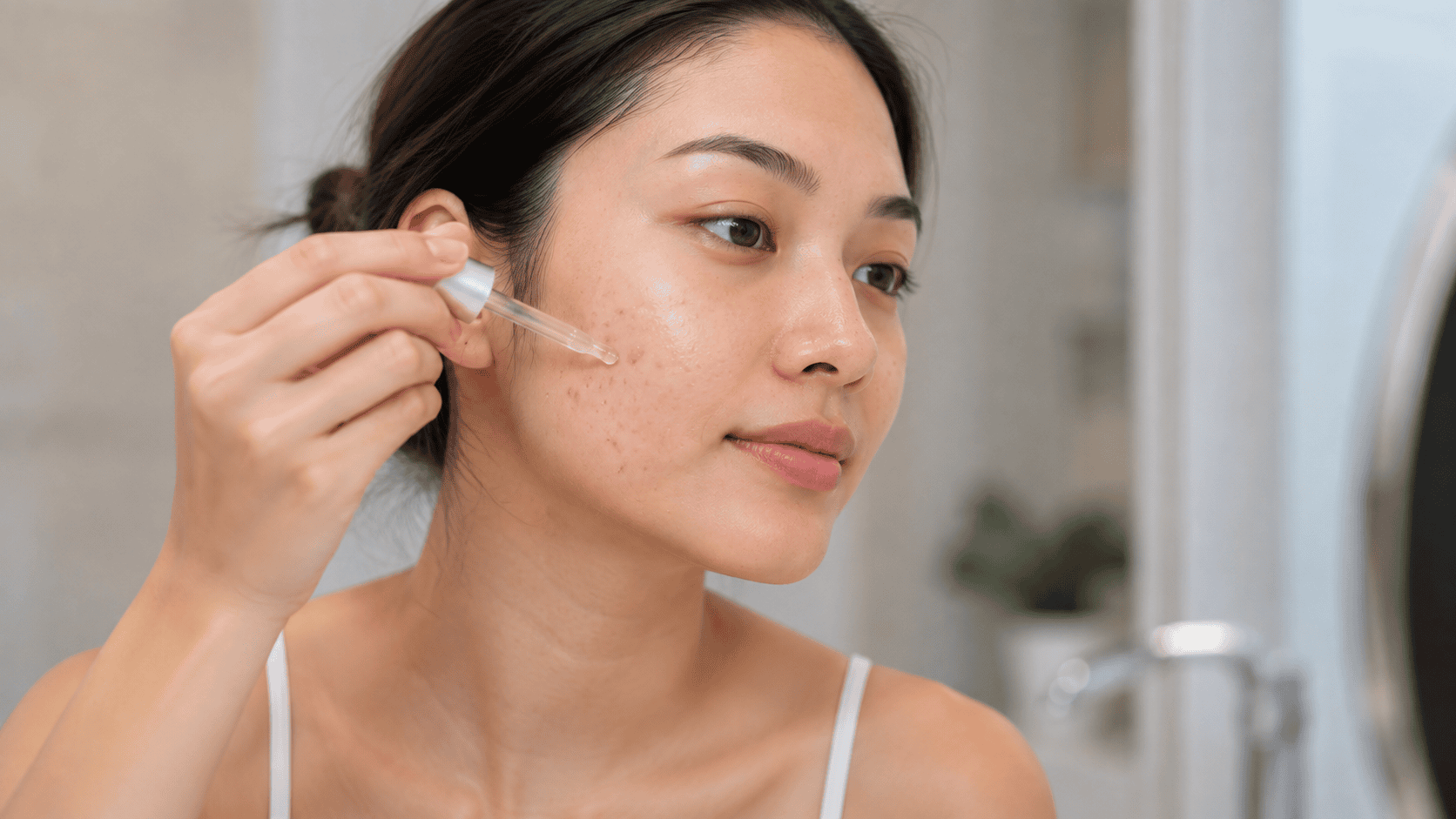
Acne may clear, but the marks can stay. Many people search for salicylic acid scars acne advice and ask, does salicylic acid help with acne scars? The short answer is yes for some marks, and no for deep scars.
Salicylic acid is a well-known acne ingredient. It can clear pores, smooth rough skin, and fade some dark marks left after breakouts. But it does not rebuild lost collagen. That means it cannot erase deep ice pick, boxcar, or rolling scars on its own.
If you are looking for salicylic acid for acne scars, this guide explains what it can do, what it cannot do, and how to use it safely.
What Salicylic Acid Does
Salicylic acid is a beta hydroxy acid, or BHA. It is common in cleansers, serums, toners, spot treatments, and peel products for acne-prone skin.
It is oil-soluble, so it can move into pores and break up the mix of oil and dead skin that causes clogging. Water-based peel acids stay closer to the surface.
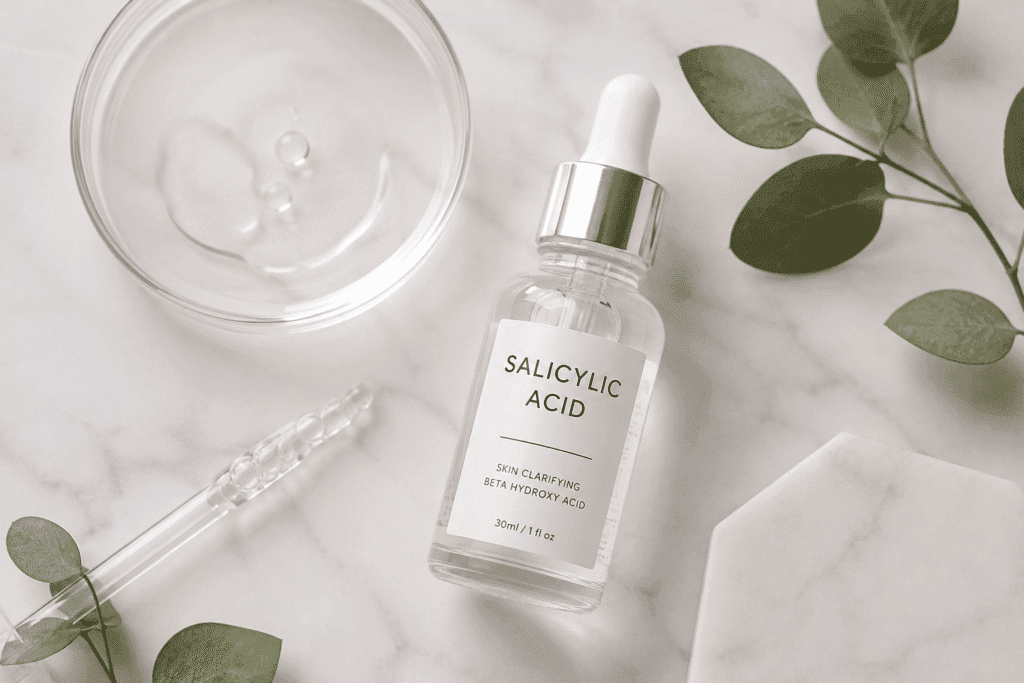
Salicylic acid helps by:
- breaking down excess oil in pores
- helping the skin shed dead cells
- keeping pores clear
- calming acne swelling
- supporting faster skin renewal
- helping fade post-acne marks over time
This is why many people use it for active acne and for marks that follow it.
The Main Types of Acne Marks
Not every mark after acne is a true scar. Skin doctors usually separate them into a few groups.
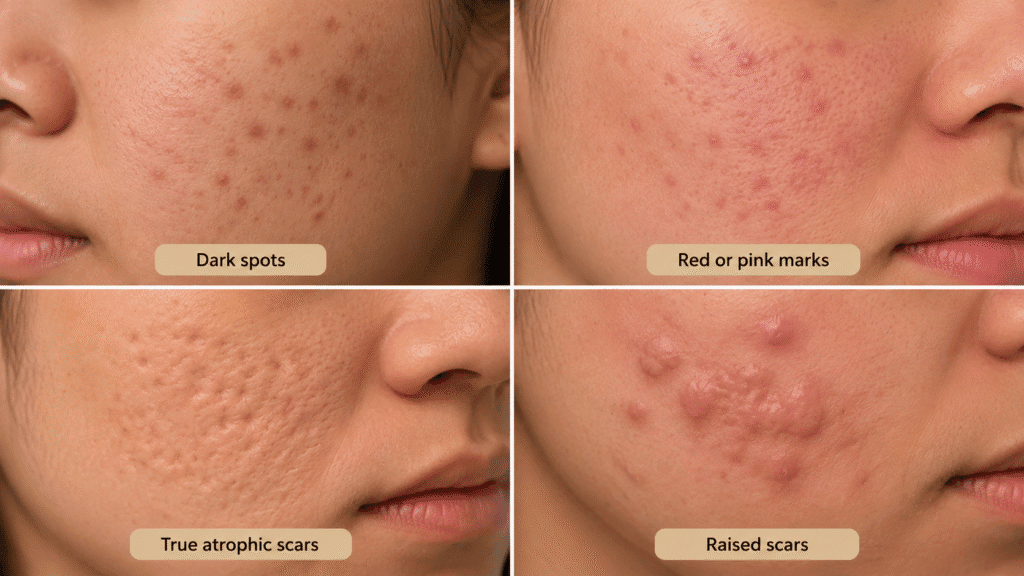
Dark spots
These are flat brown, gray, or dark marks that stay after a pimple heals. They are often called post-inflammatory hyperpigmentation, but in simple terms they are dark spots, not scars.
Red or pink marks
These happen when the skin stays inflamed after acne. They are called post-inflammatory erythema. They often look like redness, not deep damage.
True atrophic scars
These are the indented scars that form when the skin loses collagen. Common types include:
- ice pick scars
- boxcar scars
- rolling scars
Raised scars
These form when the body makes too much collagen. They are less common but can be harder to treat.
Does Salicylic Acid Help With Acne Scars?
Yes, but only for some of them.
According to the American Academy of Dermatology, topical exfoliating ingredients like salicylic acid may improve post-inflammatory hyperpigmentation and skin texture, but deeper acne scars often require in-office dermatologic procedures.
Salicylic acid may help with:
- dark spots
- mild redness
- rough texture after breakouts
- small surface changes in skin tone
It can make skin look smoother and more even. It may also help fade old marks a little at a time.
It does not fix deep scars. If a scar is indented, salicylic acid cannot fill it in or rebuild lost collagen. For that, you usually need an in-office treatment.
So if you are asking, does salicylic acid help with acne scars, the best answer is:
- Yes for marks and mild texture
- Limited for shallow surface changes
- No for deep indented scars
Why It Can Fade Marks
Salicylic acid helps the skin renew itself. As old cells shed, fresh skin can come to the surface more easily.
That can lead to:
- less visible dark spots
- a smoother skin feel
- a brighter tone
- fewer clogged pores
- fewer new breakouts
This is one reason people think scars are fading when the real change is better cell turnover and fewer new spots.
How It Works Under the Skin

Salicylic acid gets into oil-filled pores. Once there, it helps:
- dissolve trapped oil
- clear dead skin
- reduce clogging
- calm inflamed breakouts
- lower the chance of new blemishes
That matters because fewer breakouts often means fewer new marks. In that way, salicylic acid can help with acne scars by helping prevent more acne in the first place.
Signs It May Help Most
Salicylic acid tends to work best on:
- fresh dark spots
- recent red marks
- mild uneven texture
- skin that still breaks out often
- marks that have not been there for years
It helps less with:
- very old marks
- mild shallow scars
- long-term rough texture
It helps very little with:
- ice pick scars
- boxcar scars
- rolling scars
- raised scars
- keloids
How Long It Takes
Salicylic acid is not a quick fix. Results build slowly.
A common timeline looks like this:
- 2 to 4 weeks: skin may feel smoother
- 4 to 8 weeks: mild marks may start to fade
- 2 to 3 months: tone may look more even
- several months: steady use may bring clearer changes
Results depend on your skin type, how strong the product is, how often you use it, and how much sun you get.
How to Use It Well
The key is steady use, not overuse.
If you use too much, you may dry out your skin, damage the barrier, and slow healing. A simple routine usually works better than stacking too many actives.
Morning routine
- Use a gentle cleanser
- Apply a light hydrating serum
- Moisturize
- Finish with sunscreen
Good hydrating ingredients include:
- HA
- glycerin
- panthenol
- beta-glucan
- gotu kola
Evening routine
- Cleanse gently
- Apply salicylic acid on the nights you use it
- Follow with hydration
- Seal it in with moisturizer
Do not layer several strong peel products in the same routine unless a skin doctor tells you to.
How Often to Use It
Start slow and increase only if your skin stays calm.
- Beginners: 2 to 3 times a week
- Normal or oily skin: every other day, or daily if tolerated
- Sensitive skin: once or twice a week at first
More is not always better.
Best Strengths
Most over-the-counter products use 0.5% to 2% salicylic acid.
- 0.5%: good for sensitive skin and beginners
- 1%: good for mild acne and upkeep
- 2%: good for oily, acne-prone skin and clogged pores
A higher strength may irritate your skin without giving better results.
Ingredients That Pair Well
Some ingredients can help support the skin while salicylic acid does its work.
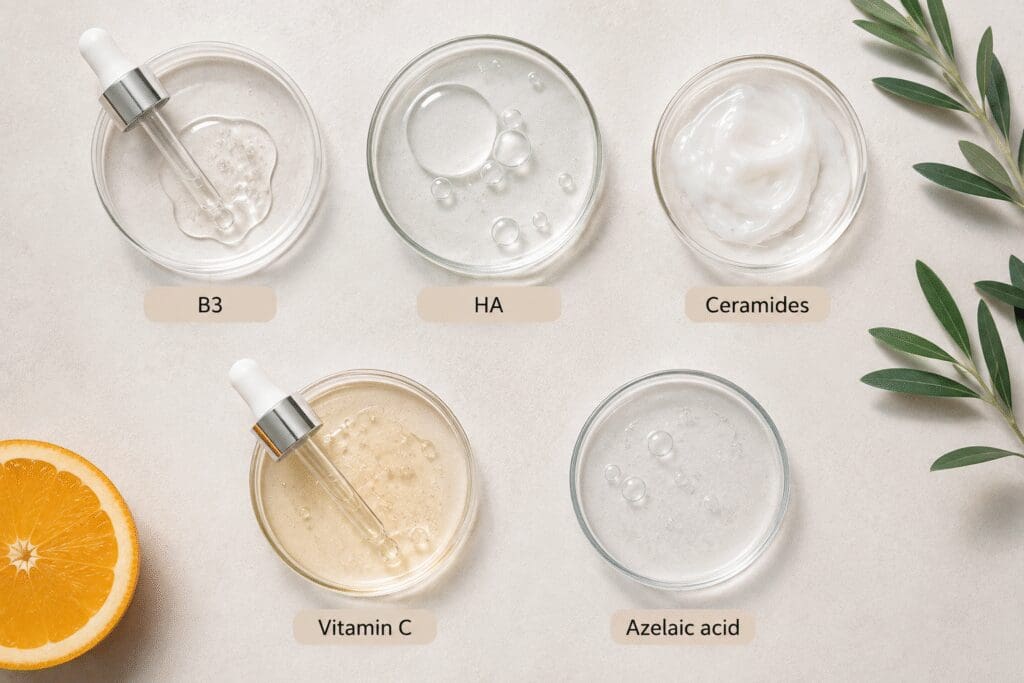
B3
B3 may help calm redness, support the skin barrier, balance oil, and brighten tone.
HA
HA helps pull water into the skin and can reduce dryness from exfoliating products.
Ceramides
Ceramides help protect the skin barrier and limit moisture loss.
Vitamin C
Vitamin C may help fade dark marks and even out tone. Many people use it in the morning and salicylic acid at night.
Azelaic acid
Azelaic acid can help with redness, dark spots, mild acne, and uneven tone. Some people alternate it with salicylic acid.
Ingredients to Use With Care
Too many strong actives can irritate skin.
Be careful with:
- strong retinoids
- glycolic acid
- lactic acid
- chemical peels
- scrubs
If you use more than one active, try using them on different nights.
Common Mistakes
Even if salicylic acid helps with acne scars, some habits can slow progress.
Using too much
A thick layer does not work better than a thin one.
Using it too often
Too much use can:
- dry the skin
- increase peeling
- irritate the barrier
- make redness worse
Skipping moisturizer
Dry skin can get more irritated and may even make more oil later.
Skipping sunscreen
Sun can darken marks and make them last longer.
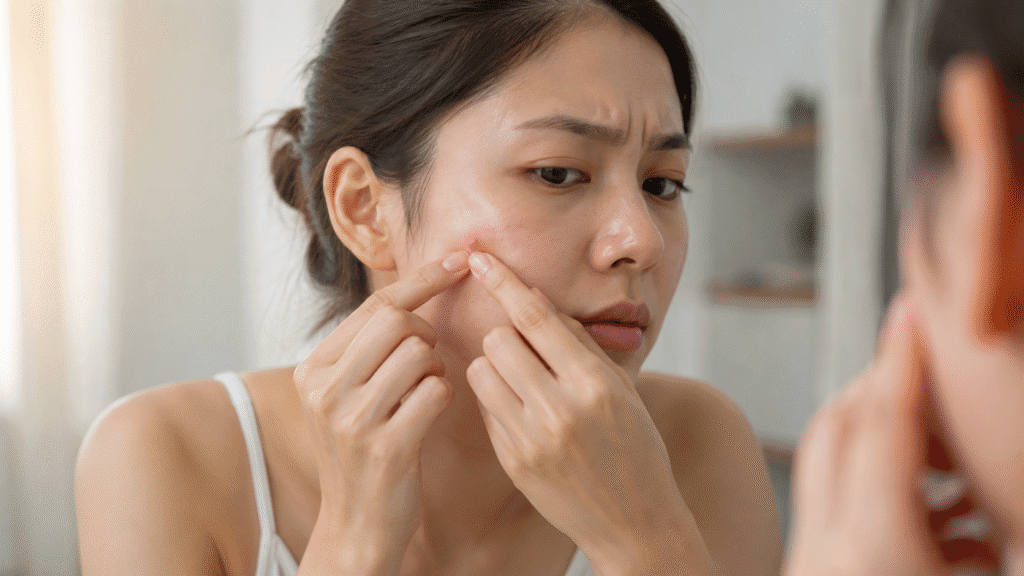
Picking pimples
Picking can cause:
- more swelling
- more dark spots
- a higher risk of true scars
Can It Help Prevent New Scars?
Yes. This is one of its biggest strengths.
By keeping pores clear and reducing new breakouts, salicylic acid may lower the chance of future marks and scars. Fewer inflamed pimples means less chance of lasting damage.
Who Should Be Careful
Salicylic acid may not be the best choice if you have:
- very dry skin
- active eczema
- a damaged skin barrier
- salicylate sensitivity
- strong irritation from peel products
If you are not sure, a skin doctor can help you decide.
Other Treatments for Deep Scars
Salicylic acid can help with acne marks, but deep scars often need more.
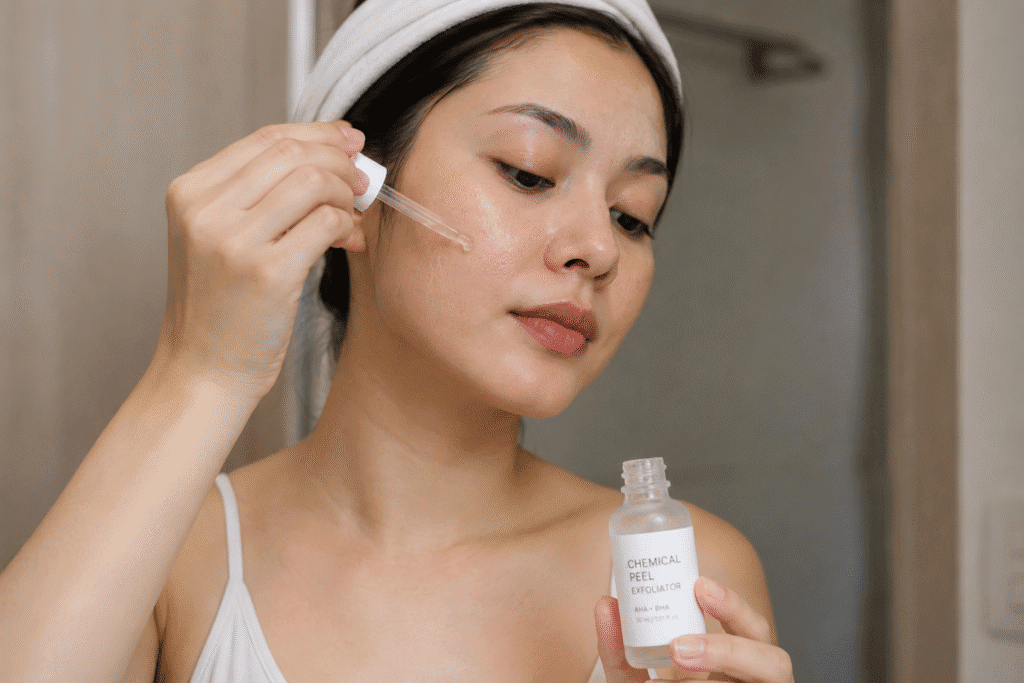
A skin doctor may suggest:
- microneedling
- chemical peels
- laser resurfacing
- subcision
- fillers
- TCA CROSS
TCA CROSS uses a high dose of TCA placed into the scar to help the skin make new collagen.
If you’re interested in learning more about chemical peels, especially if you have sensitive skin, read our guide: Gentle Chemical Peel for Sensitive Skin: Safe and Effective?
Myths About Salicylic Acid and Acne Scars
Myth: It removes every scar
Fact: It can help dark spots and mild texture, but not deep indented scars.
Myth: Stronger is always better
Fact: Stronger products can just cause more irritation.
Myth: Peeling means it is working well
Fact: Too much peeling can mean overuse.
Myth: It thins the skin
Fact: Used the right way, it supports healthy skin renewal.
Myth: Sunscreen is not needed after marks fade
Fact: Sunscreen still matters because UV light can darken marks again.
Tips for Better Results
- Start slow
- Use a gentle cleanser
- Moisturize every day
- Wear SPF 30 or higher
- Do not pick at acne
- Stay consistent
- Give the product time to work
Small steps often work better than harsh treatment.
Q&A
Yes. It may help both by clearing pores, calming swelling, and speeding skin renewal. These marks are not true scars, so they often respond better than deep scars.
No. It cannot rebuild lost collagen, so it cannot fully remove deep scars. Microneedling, laser, subcision, peels, fillers, or TCA CROSS may help more.
Start with 2 to 3 times a week. Increase only if your skin stays calm. Some people can use it daily, but sensitive skin usually needs less.
B3, HA, ceramides, vitamin C, and azelaic acid can work well. They support hydration, tone, and barrier repair.
Overuse, skipping moisturizer, skipping sunscreen, and picking pimples. These can irritate skin, darken marks, and raise the risk of new scars.
Final Thoughts
So, does salicylic acid help with acne scars?
Yes, for dark spots, mild redness, and rough skin after acne. It can also help prevent new breakouts, which lowers the chance of more marks.
But it cannot fix deep scars on its own. If you have ice pick, boxcar, or rolling scars, you may need a skin doctor and an in-office treatment plan.
For many people, salicylic acid for acne scars is still a useful part of a routine. Used with gentle cleansing, moisture, daily sunscreen, and patience, it can make skin look smoother and more even over time.