
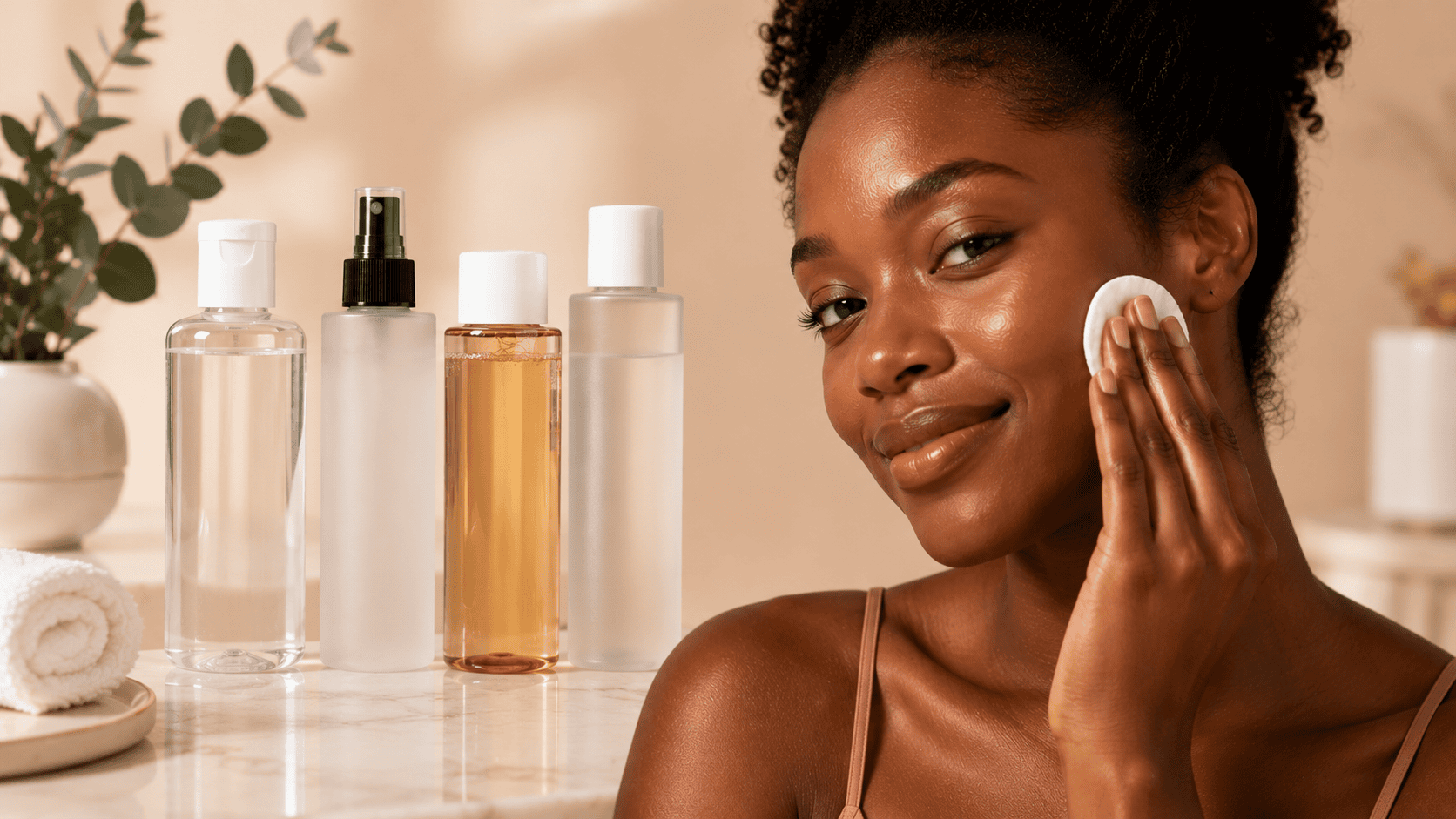
Melanin-rich skin is beautiful, resilient, and — like every skin type — happiest with a routine built for its specific needs. When it comes to toner, those needs are pretty clear: gentle, hydrating, and non-stripping, with ingredients that support the skin barrier rather than fight it. Get the toner right and it becomes a quiet workhorse in your routine, prepping skin and keeping your complexion looking fresh and even.
The short answer: a good toner for Black skin is a gentle, alcohol-free, hydrating formula that supports the skin barrier and helps maintain a smooth, even-looking tone. Look for ingredients like niacinamide, hyaluronic acid, glycerin, and aloe — and steer clear of harsh drying alcohols and heavy synthetic fragrances, which can irritate melanin-rich skin and leave marks behind.
Below, we’ll break down why those ingredients matter, what to avoid, and how to fit a toner into a routine that actually suits deeper skin tones.
What Makes Melanin-Rich Skin Unique

Deeper skin tones have more active melanin, which offers some natural protection against UV and is a big part of what gives Black skin its gorgeous depth and glow. That same responsiveness has a flip side worth understanding: dermatologists widely note that melanin-rich skin is more prone to post-inflammatory hyperpigmentation — the dark marks that can linger after a breakout, a shaving nick, a bug bite, or even irritation from a too-harsh product.
The practical takeaway is simple and it shapes every product choice: gentleness is everything. Anything that irritates the skin can trigger the very marks you’re trying to avoid. A good toner works with this, not against it — soothing and hydrating rather than stripping.
Ingredients to Look For in a Toner for Black Skin
The best toners for melanin-rich skin lean on ingredients that hydrate, calm, and support an even-looking complexion:
- Niacinamide (vitamin B3): One of the most versatile ingredients for deeper skin tones. It’s widely studied for helping with the look of uneven tone while calming the skin and reinforcing the moisture barrier — and it’s gentle enough for everyday use.
- Hyaluronic acid: A hydration powerhouse that draws moisture into the skin and helps it stay plump and comfortable, without heaviness.
- Glycerin: A humectant that pulls in moisture and keeps skin soft and balanced — a staple in gentle, well-formulated toners.
- Aloe vera: Soothing and cooling, aloe helps calm the skin, which is exactly what melanin-rich skin wants to prevent irritation-related marks.
- Panthenol (pro-vitamin B5): Helps hydrate and support the skin barrier so skin stays resilient.
- Gentle exfoliating acids (used sparingly): Mild PHAs or a low level of lactic acid can help smooth and brighten the look of skin — but frequency matters. Overdoing exfoliation is a common cause of irritation on deeper skin tones, so ease in slowly.
What to Avoid
Just as important as what’s in your toner is what’s left out:
- Drying alcohols (like high levels of alcohol denat.): Old-school astringent toners relied on these, and they can strip and dehydrate the skin. On melanin-rich skin, that dryness and irritation can lead to more marks — the opposite of what you want.
- Heavy synthetic fragrance: A leading cause of irritation, especially on reactive or sensitive skin. Fragrance-free or gently, naturally scented formulas are the safer bet.
- Harsh, undiluted astringents: Strong witch hazel and similar ingredients can be over-drying for daily use.
- Over-exfoliation: Even good exfoliating ingredients become a problem when used too often. If your skin ever stings, tightens, or looks red, that’s your cue to scale back.
Hydrating Toner vs. Treatment Toner: Know the Difference
Here’s a distinction that saves a lot of confusion (and money). Not all toners do the same job:
A hydrating toner is the gentle, everyday foundation of a routine — it removes any last traces of residue after cleansing, rehydrates, balances the skin, and preps it to absorb whatever comes next. This is the type most people should build their routine around, and it’s especially well-suited to melanin-rich skin because gentle daily hydration keeps the barrier strong.
A treatment toner is a more targeted, active-driven step — think dedicated dark-spot or exfoliating formulas built around specific actives. These can have their place, but they’re not an everyday-for-everyone product, and they demand more caution on deeper skin tones.
For most people, the smartest routine is a gentle hydrating toner every day as your base, with any stronger targeted treatments (like a dedicated dark-spot serum) layered in thoughtfully and less often — not swapped in as your daily toner.
How to Use a Toner in a Melanin-Rich Skin Routine
- Cleanse first. Always apply toner to freshly cleansed skin.
- Apply gently. Press a hydrating toner into the skin with clean hands, or sweep it on with a cotton pad. Hands are lovely for hydrating formulas — less product waste and gentler on the skin.
- Let it absorb, then follow with serum and moisturizer while skin is still slightly damp to lock in hydration.
- Never skip sunscreen in the morning. This is non-negotiable for melanin-rich skin: dermatologists consistently stress that daily SPF is essential to protect an even-looking tone and keep dark marks from deepening. A gentle toner routine and daily sunscreen work as a team.
Where Mosheko Fits In
If you’re looking for that gentle, hydrating everyday base, the Mosheko Enrich Cleansing Toner Milk was formulated with exactly this philosophy in mind. It’s a milky, non-stripping toner built on skin-loving ingredients — hyaluronic acid and glycerin for hydration, aloe and panthenol to soothe and support the barrier — designed to comfort and prep skin rather than strip it. In keeping with the Mosheko approach of formulating for real skin of every tone, it’s made to be a gentle daily step that leaves skin balanced, soft, and glowing.
Pair it with the rest of a considered routine — a gentle cleanse, hydration, and daily SPF — and explore the full Mosheko skincare collection to build out the steps that suit your skin.
A quick, honest note: a hydrating toner is a foundation, not a spot treatment. If persistent dark marks or hyperpigmentation are your main concern, the gentle daily routine above is a great base — but consider pairing it with a dedicated treatment and, for stubborn or long-standing pigmentation, checking in with a board-certified dermatologist who can tailor a plan to your skin.
Frequently Asked Questions
What kind of toner is best for Black skin?
A gentle, hydrating, alcohol-free toner is generally the best everyday choice for melanin-rich skin. Look for soothing, barrier-supporting ingredients like niacinamide, hyaluronic acid, glycerin, and aloe, and avoid harsh drying alcohols and heavy fragrance, which can irritate the skin and contribute to dark marks.
Is toner good for dark skin, or does it dry it out?
Modern hydrating toners are good for dark skin — the drying reputation comes from old-fashioned astringent formulas loaded with alcohol. Today’s gentle, humectant-rich toners actually add moisture and support the skin barrier, which is exactly what melanin-rich skin benefits from.
Can toner help with dark spots on Black skin?
A gentle toner supports an even, healthy-looking complexion mainly by keeping skin hydrated and calm, which helps prevent the irritation that can lead to new marks. Ingredients like niacinamide are known to help with the look of uneven tone. For existing or stubborn dark spots, a dedicated treatment step and a dermatologist’s guidance are the more effective route.
How often should I use toner on melanin-rich skin?
A gentle hydrating toner can typically be used twice daily, morning and night, after cleansing. If a toner contains exfoliating acids, use it less often — a few times a week — to avoid over-exfoliating, which can irritate deeper skin tones.
Should I use a cotton pad or my hands to apply toner?
For hydrating toners, applying with clean hands is a great option — it wastes less product and is gentle on the skin. A cotton pad is useful when you also want to sweep away any last traces of residue after cleansing. Either way, be gentle and avoid harsh rubbing.