
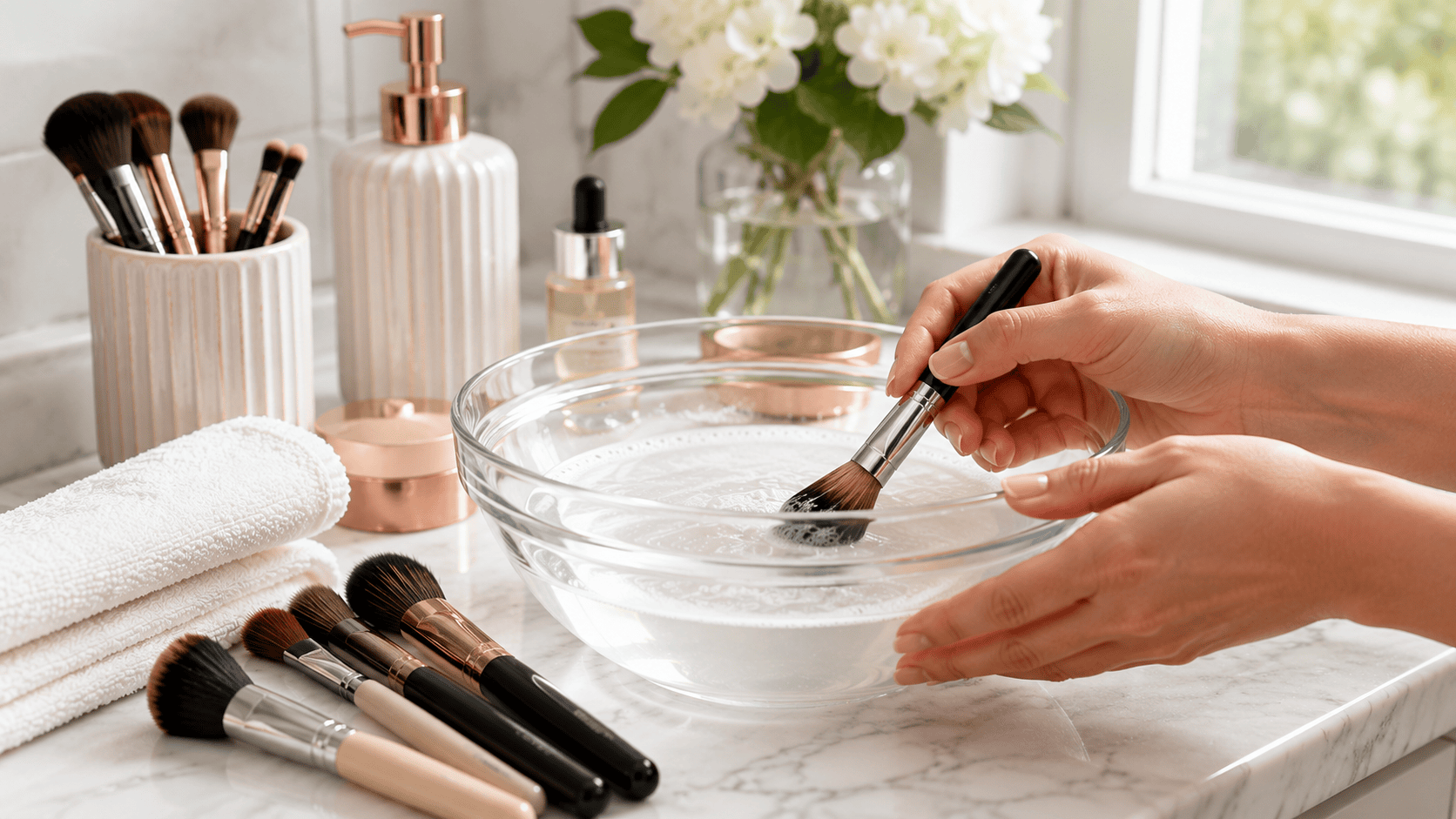
Your makeup brushes touch your face almost every day — and between washes, they quietly collect leftover product, facial oils, dead skin cells, and dust. That buildup doesn’t just risk clogged pores and irritation; it’s also why your foundation suddenly looks streaky and your eyeshadow blends muddy. If you’re wondering how to clean makeup brushes at home without fuss, the fix takes about ten minutes a week.
Here’s the short version: of how to clean makeup brushes: to clean a makeup brush, rinse the bristles under lukewarm water, swirl them in a small amount of gentle shampoo or makeup brush cleaner, rinse until the water runs completely clear, squeeze out the excess moisture, reshape the brush head, and lay it flat to dry with the bristles hanging off the edge of a counter.
Below, we’ll walk through each step in detail — plus what to use, how often to wash, and the drying mistake that quietly kills more brushes than anything else, including how to dry makeup brushes the right way.
Every time a brush sweeps across your skin, it picks up more than pigment. Oils, skin cells, and product residue accumulate deep in the bristles, and that damp, protein-rich environment is exactly where bacteria like to multiply. The American Academy of Dermatology warns that dirty brushes can contribute to breakouts, rashes, and — in more serious cases — skin infections.
There’s a performance cost, too. Product-caked bristles stiffen, splay, and stop picking up color evenly, which is why a “bad makeup day” is often really a dirty-brush day. Clean tools deposit truer color, blend more smoothly, and last years longer — a real consideration if you’ve invested in quality brushes.
If you’re wondering how often to clean makeup brushes, dermatologists recommend washing makeup brushes every 7 to 10 days as a baseline. Tools that touch liquid and cream products need it more often than powder tools, because creams cling to bristles and break down faster than powders.
| Tool | How Often to Deep Clean |
|---|---|
| Foundation & concealer brushes | Weekly (more often if you use them daily) |
| Cream eyeshadow & liner brushes | Weekly |
| Powder, blush & bronzer brushes | Every 7–10 days |
| Makeup sponges | Ideally after every use; deep clean 2–3 times per week |
One more rule that costs nothing: never share your brushes. Sharing tools means sharing whatever is living in them.
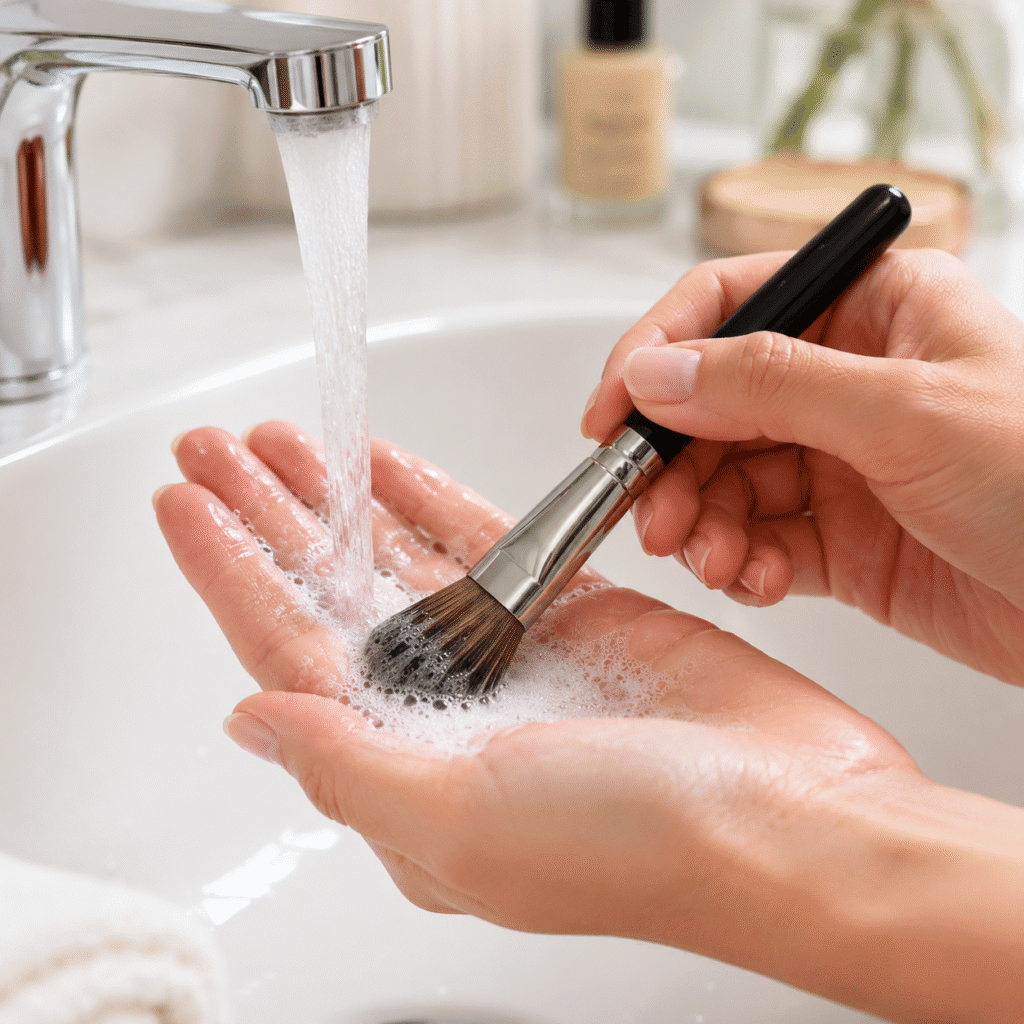
Hold the brush with the bristles pointing down and let lukewarm water run through the tips to loosen surface makeup. Two things to avoid here: hot water, which weakens bristles and the glue inside the brush, and soaking the ferrule — the metal band that connects the bristles to the handle. Water in the ferrule dissolves the adhesive over time, and that’s when brushes start shedding.
Squeeze a drop of makeup brush cleaner or baby shampoo into your palm (or onto a silicone cleaning mat) and swirl the damp brush through it in small circles. You’ll see makeup start lifting out immediately — foundation brushes often release far more product than you’d expect.
Keep massaging the lather gently through the bristles with your fingertips, focusing on the center of the brush head where product hides. Be thorough but not rough; aggressive scrubbing bends and breaks bristles.
Rinse under lukewarm water — bristles down again — until no suds or tinted water remain. Dense foundation and concealer brushes often need a second lather-and-rinse round, because the silicones in long-wear makeup cling stubbornly to bristles. If the water isn’t running clear, the brush isn’t clean yet.
Gently squeeze the excess water out of the bristles with your fingers or a clean towel, working from the ferrule toward the tip. Then reshape the brush head back to its original form — flat brushes flat, fluffy brushes fluffed. Bristles dry in whatever shape you leave them.
Lay each brush flat on a towel with the brush head hanging slightly over the edge of the counter so air circulates on all sides. Never stand wet brushes upright in a cup — gravity pulls water straight down into the ferrule, loosening the glue and guaranteeing shedding later. Skip the hair dryer and direct sunlight, too; heat frays bristles. Most brushes dry in several hours; dense ones may need overnight. This is essentially how to dry makeup brushes safely.
Once they’re fully dry, you can store them upright again.
If you’re asking what to use to clean makeup brushes, you have several options that are safe and effective. You don’t need a specialty product to do this well — though a good one makes it faster when you clean makeup brushes at home.
Baby shampoo is the classic all-rounder: gentle enough for natural bristles, effective on most makeup, and easy to rinse out.
A dedicated brush cleanser is formulated to break down long-wear pigments and silicones quickly, and many condition the bristles as they clean — worth it if you wash brushes weekly.
Mild bar or castile soap works well; rub the damp bristles directly across the bar, then lather and rinse as usual.
Dish soap is a special-cases tool: it cuts through the oils and silicones in stubborn foundation better than almost anything, but it’s too stripping for natural-hair brushes. Reserve it for dense synthetic brushes with heavy buildup.
What to skip: hot water, soaking the entire brush, and washing with alcohol-based products as your routine — alcohol dries out bristles and degrades the ferrule glue with repeated use. Alcohol-based sprays are fine for quick sanitizing between deep cleans, which brings us to…
A deep clean is a weekly job, but a 30-second refresh keeps brushes workable in between. Spritz a quick-dry brush cleaning spray onto the bristles and sweep the brush back and forth on a clean tissue until no color transfers. This is also the trick for switching between eyeshadow shades mid-look without muddying colors, and it’s the travel-friendly option when you don’t have running water.
Sponges are even thirstier for bacteria than brushes because they stay damp at their core. Wet the sponge, massage a drop of gentle cleanser through it with a squeezing motion, and rinse while squeezing until the water runs clear. Let it air-dry somewhere open — never sealed in a makeup bag while damp. Even with good care, plan to replace sponges roughly every three months.
Cleaning extends a brush’s life dramatically, but nothing lasts forever. Retire a brush when it sheds constantly even after proper flat-drying, when the bristles splay and won’t hold their shape, when it feels scratchy against your skin, or when stains and odor survive a thorough wash. A well-made, well-kept brush should give you years — which is exactly why the drying step matters so much.
Freshly washed brushes deposit color the way it was designed to apply — but they perform best on a properly prepped canvas. Start with your skincare prep routine, smooth everything with a primer so makeup grips evenly, and lock the finished look in place with a setting spray. Clean tools, prepped skin, and the right formulas — that’s the whole formula for makeup that looks polished at hour one and hour ten.
Explore the full Mosheko makeup collection to see what your freshly cleaned brushes can really do.
Yes — for dense synthetic brushes with heavy foundation buildup, dish soap is excellent at cutting through oils and silicones. It’s too harsh for natural-hair bristles, though, which it dries out over time. For routine weekly washing, a gentler cleanser like baby shampoo or brush shampoo is the better habit.
They can contribute to them. Dirty brushes accumulate oil, dead skin, old makeup, and bacteria, and dermatologists note this buildup can lead to clogged pores, breakouts, and skin irritation. If your skin flares up unexpectedly, your brushes are one of the first things worth checking.
No — heat frays and warps bristles and can soften the glue inside the ferrule. Air-drying flat on a towel, with the brush heads hanging over the counter’s edge for airflow, is the safest method. Wash brushes in the evening and they’ll be ready by morning.
Small eye brushes usually dry in two to four hours, while dense foundation and powder brushes can take six hours or more — plan on overnight to be safe. Squeezing out excess water thoroughly and drying with airflow on all sides speeds things up considerably.
Water alone rinses away some surface powder, but it won’t break down the oils, silicones, and waxes in most makeup — the ingredients that actually trap bacteria in the bristles. You need some form of gentle soap or cleanser to genuinely clean a brush.
Question: How do I keep water out of the ferrule, and why does it matter?
Short answer: Always wash and rinse with the bristles pointing down under lukewarm (not hot) water, and never soak the brush. Water that seeps into the ferrule (the metal band) dissolves the glue that holds bristles in place, leading to shedding and shortened brush life.
Question: How often should I wash brushes that touch creams vs. powders, and what about sponges?
Short answer: Wash foundation, concealer, cream eyeshadow, and liner brushes about weekly (more often if used daily). Powder, blush, and bronzer brushes can go every 7–10 days. Makeup sponges are higher risk: ideally clean after every use, deep clean 2–3 times a week, and replace roughly every three months.
Question: What cleansers are safe to use on makeup brushes, and which should I skip?
Short answer: Baby shampoo, dedicated brush cleanser, and mild bar or castile soap are safe and effective. Dish soap can tackle heavy foundation on dense synthetic brushes but is too stripping for natural bristles. Skip hot water, soaking the whole brush, and routine cleaning with alcohol-based products (quick-dry alcohol sprays are fine for in-between sanitizing).
Question: What’s the quickest way to switch eyeshadow shades without muddying colors?
Short answer: Use a quick-dry brush cleaning spray: spritz the bristles and sweep the brush back and forth on a clean tissue until no color transfers. It refreshes the brush in about 30 seconds and works when you don’t have running water.
Question: When should I replace a makeup brush?
Short answer: Retire it if it keeps shedding after proper flat-drying, the bristles splay and won’t hold shape, it feels scratchy on skin, or stains/odor remain after a thorough wash. With good care, quality brushes should last for years.