


If you’ve ever wondered, can you wash your face with just water, you’re certainly not alone. Many people are simplifying their skincare routines in hopes of reducing irritation, saving time, or avoiding unnecessary products. But does rinsing your face with water alone actually keep your skin clean?
You might also wonder, can you just wash your face with water or can you wash your face with only water? The considerations are the same, and the guidance below applies to all of these questions.
The short answer is: sometimes—but not always.
Water can remove sweat and some loose debris from the surface of your skin, but it isn’t designed to dissolve oil, sunscreen, makeup, or many of the impurities that accumulate throughout the day. That’s why most dermatologists recommend using a gentle facial cleanser at least once daily, especially if you wear sunscreen or makeup or have oily or acne-prone skin.
Understanding can you wash your face with just water requires looking at your skin type, daily activities, skincare products, and overall routine. For some people, a water-only rinse in the morning may work well, while others benefit from cleansing twice a day with a gentle cleanser.
In this guide, you’ll learn when washing with water alone may be appropriate, when it’s not enough, and how to build a cleansing routine that supports healthy, balanced skin.
The Short Answer: Is Water Alone Enough?
When people ask can you wash your face with just water, the answer depends on what you’re trying to remove.
According to the American Academy of Dermatology (AAD), washing your face with a gentle cleanser helps remove dirt, excess oil, sunscreen, makeup, and other impurities that water alone may not effectively eliminate.

Water can help rinse away:
- Sweat
- Dust
- Some surface dirt
- Small amounts of loose debris
However, water alone does not effectively remove:
- Excess facial oil (sebum)
- Sunscreen
- Makeup
- Waterproof cosmetics
- Pollution particles
- Many skincare products
- Oil-based impurities
Because oil and water don’t naturally mix, simply splashing water on your face won’t completely cleanse your skin after a full day.
For most people, using a gentle cleanser provides a more thorough clean while still protecting the skin barrier.
What Happens When You Wash Your Face With Just Water?
If you choose to rinse with water only, your skin may feel refreshed immediately afterward.
Water can:
- Cool the skin
- Remove perspiration
- Help reduce the feeling of stickiness
- Wake you up in the morning
- Wash away some overnight sweat
However, many impurities remain attached to your skin because they bind to oils rather than water.
This is why understanding can you wash your face with just water is important. A water rinse may make your skin feel clean without actually removing everything sitting on the surface.
Why Cleansers Work Better Than Water Alone
Facial cleansers are specifically formulated to remove substances that water can’t.
Most cleansers contain gentle surfactants ingredients that help lift oil, dirt, sunscreen, and makeup away from the skin so they can be rinsed off with water.
Without these cleansing agents, residue may remain on your skin throughout the day or overnight.

A good cleanser can help remove:
- Excess oil
- Dead skin cells
- Environmental pollutants
- Sunscreen
- Makeup
- Bacteria
- Product buildup
That’s why the answer to can you wash your face with just water is often “not if you want a complete cleanse.”
Are There Benefits to Washing With Only Water?
Surprisingly, there are situations where a water-only rinse may be perfectly reasonable.
It May Help Prevent Over-Cleansing
Some people cleanse too aggressively.
Using harsh cleansers multiple times a day can strip natural oils and leave skin feeling tight or irritated.
A gentle water rinse in the morning may be enough if your skin isn’t particularly oily and you thoroughly cleansed it the night before.
It Can Be Gentle on Sensitive Skin
Individuals with very sensitive skin sometimes find that frequent cleansing worsens dryness or irritation.
In these cases, some dermatologists recommend simplifying the routine while focusing on hydration.
However, this doesn’t mean avoiding cleansers altogether.
Instead, it means choosing mild formulations and cleansing only when necessary.
It Saves Time
For busy mornings, rinsing with water may be a quick option before applying moisturizer and sunscreen.
Just remember that if your skin feels oily or you’re using heavy nighttime skincare products, a cleanser may still be the better choice.
The Limitations of Washing With Water Alone
Although there are benefits, there are also important drawbacks.
Water Doesn’t Remove Oil Effectively
Sebum is naturally oily.
Since oil and water don’t mix well, water struggles to lift excess oil from your skin.
People with oily skin often notice that their face becomes shiny shortly after rinsing with water alone.
Makeup Stays Behind
Foundation, concealer, mascara, and long-wearing cosmetics require proper cleansing.
Even if they appear gone, small amounts often remain on the skin.
Residual makeup may contribute to clogged pores and breakouts over time.
Sunscreen Can Remain on the Skin
Modern sunscreens are designed to stay in place.
Many are water-resistant or formulated to adhere to the skin for hours.
A facial cleanser helps break down these products more effectively than water alone.
Pollution Doesn’t Wash Away Easily
Throughout the day, your skin collects microscopic pollution particles.
These particles often bind to oils on your skin, making them difficult to remove with plain water.
If you live in a city or spend time outdoors, cleansing becomes even more important.
Understanding can you wash your face with just water also means recognizing that environmental exposure influences your skincare needs.
Can Water-Only Cleansing Cause Breakouts?
For some people, yes.
When oil, sunscreen, makeup, and dead skin cells remain on the surface, they can mix together and contribute to clogged pores.

Clogged pores may lead to:
- Blackheads
- Whiteheads
- Acne breakouts
- Congested skin
- Rough texture
This doesn’t mean water causes acne.
Rather, insufficient cleansing may allow pore-clogging substances to remain on the skin longer than necessary.
Does Your Skin Type Matter?
Absolutely.
The answer to can you wash your face with just water depends heavily on your skin type.
Oily Skin
People with oily skin usually benefit from using a gentle cleanser morning and evening.
Water alone often isn’t enough to remove excess sebum.
Dry Skin
Dry skin may tolerate a morning water rinse if the skin feels comfortable after nighttime cleansing.
Many people with dry skin prefer using a cleanser only in the evening.
Combination Skin
Combination skin may require flexibility.
Some people cleanse twice daily, while others rinse with water in the morning and use a cleanser at night.
Sensitive Skin
Sensitive skin often benefits from fragrance-free, gentle cleansers.
A water-only rinse may occasionally be appropriate, but completely avoiding cleansers isn’t always necessary.
Acne-Prone Skin
Acne-prone skin typically benefits from consistent cleansing using products formulated for blemish-prone skin.
Water alone usually won’t remove the excess oil that contributes to clogged pores.
Morning vs. Night: Does It Make a Difference?
Many people ask whether water alone is acceptable in the morning but not at night.
In many cases, yes.
Morning
If you thoroughly cleansed your face before bed and your skin isn’t oily upon waking, a simple water rinse may be sufficient before applying moisturizer and sunscreen.
Evening
Nighttime is different.
Throughout the day, your skin accumulates:
- Sweat
- Oil
- Dirt
- Pollution
- Sunscreen
- Makeup
- Bacteria
Using a cleanser at night helps remove these impurities before you sleep.
For this reason, even if you’re asking can you wash your face with just water, most skincare professionals agree that cleansing at night is especially important.
Water Temperature Matters Too
Whether you’re using water alone or pairing it with a cleanser, the temperature of the water can affect your skin.
Lukewarm Water Is Best
Lukewarm water helps cleanse comfortably without irritating the skin.
Avoid Very Hot Water
Hot water may:
- Strip natural oils
- Increase dryness
- Cause redness
- Irritate sensitive skin
Cold Water Isn’t Necessarily Better
Cold water feels refreshing, but it doesn’t clean your skin more effectively.
Comfortable, lukewarm water is generally the best choice for daily cleansing.
Who Can Wash Their Face With Just Water?
Although a facial cleanser is recommended for many people, there are situations where rinsing with water alone may be enough.
If you’re still asking can you wash your face with just water, consider whether any of these situations apply to you.
You Cleansed Thoroughly the Night Before
If you removed all makeup, sunscreen, and impurities before bed, your face may only have a small amount of oil or sweat the following morning.
A quick rinse with lukewarm water can help refresh your skin before applying moisturizer and sunscreen.
You Have Very Dry Skin
People with dry skin sometimes find that cleansing twice daily leaves their skin feeling tight or flaky.
In these cases, using water alone in the morning may help preserve natural oils while reducing unnecessary dryness.
You Have Sensitive Skin
If your skin is easily irritated, minimizing cleansing in the morning may reduce redness or discomfort.
However, it’s still important to cleanse properly at night to remove sunscreen, dirt, and daily buildup.
You Don’t Wear Makeup or Heavy Skincare Products
On days when you haven’t worn makeup or multiple skincare products, your skin may require less cleansing than usual.
Even so, regular use of a gentle cleanser remains beneficial for maintaining healthy skin over time.
When Should You Always Use a Facial Cleanser?
There are certain situations where water alone simply isn’t enough.
After Wearing Sunscreen
Sunscreen is formulated to stay on your skin for hours.
Many modern formulas are water-resistant, meaning plain water won’t remove them effectively.
After Wearing Makeup
Whether it’s foundation, concealer, mascara, or tinted moisturizer, makeup should always be properly removed before bed.
Leaving residue on your skin may contribute to clogged pores and dullness.
After Exercising
Sweat mixes with oil and bacteria during workouts.
Using a gentle cleanser afterward helps refresh your skin and remove impurities.
If You Have Oily or Acne-Prone Skin
Excess sebum can trap dead skin cells and debris.
A facial cleanser is far more effective than water alone at removing oil without leaving residue behind.
For people with oily skin, the answer to can you wash your face with just water is usually no, especially after a full day.
If you’re struggling with excess shine, enlarged pores, or frequent breakouts, read our guide on Oily Skin Solutions: Control Shine and Balance Naturally to learn practical tips for keeping oily skin balanced without over-drying it.
If You Live in a Polluted Environment
City air contains microscopic pollutants that settle on your skin throughout the day.
A cleanser helps remove these particles before they have a chance to accumulate overnight.
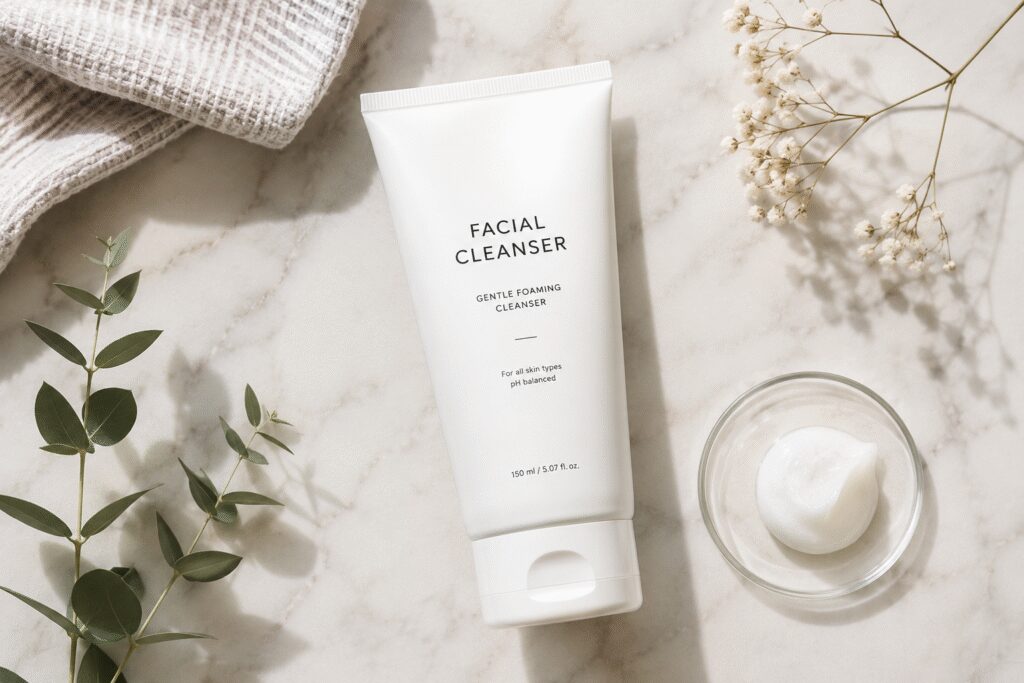
How to Choose the Right Facial Cleanser
Not all cleansers are the same.
Choosing the right formula depends on your skin’s unique needs.
For Dry Skin
Look for cleansers that contain hydrating ingredients such as:
- Glycerin
- Hyaluronic acid
- Ceramides
Avoid harsh sulfates that may strip natural moisture.
For Oily Skin
Gel or foaming cleansers often help remove excess oil without leaving the skin feeling greasy.
Ingredients such as niacinamide or salicylic acid may also be suitable for some skin types.
For Sensitive Skin
Choose fragrance-free, alcohol-free cleansers with simple ingredient lists.
Cream cleansers often provide a gentle cleansing experience.
For Combination Skin
A balanced cleanser that removes oil without over-drying works well for many people with combination skin.
A Simple Face-Washing Routine
If you’re unsure how often to cleanse, this routine works well for many skin types.
Morning
- Rinse with water or use a gentle cleanser, depending on your skin type
- Apply serum if desired
- Moisturize
- Finish with broad-spectrum sunscreen
Evening

- Remove makeup if needed
- Wash with a gentle facial cleanser
- Apply treatment products
- Moisturize
If you’ve been wondering can you wash your face with just water, remember that many people successfully rinse with water in the morning while reserving a proper cleanse for the evening.
Common Face-Washing Mistakes
Even with a good cleanser, certain habits can reduce the effectiveness of your skincare routine.
Washing Too Frequently
More isn’t always better.
Cleansing more than twice a day may remove too much natural oil and disrupt your skin barrier.
Using Harsh Soap
Regular bar soap often has a higher pH than facial cleansers and may leave skin feeling dry or tight.
Choose products specifically formulated for the face whenever possible.
Scrubbing Too Hard
Aggressive rubbing can irritate your skin.
Instead, massage your cleanser gently using your fingertips for about 30 to 60 seconds before rinsing.
Forgetting to Moisturize
Cleansing removes impurities, but moisturizing helps restore hydration and support the skin barrier.
Even oily skin benefits from an appropriate moisturizer.
Sleeping Without Cleansing
Going to bed with sunscreen, makeup, or accumulated dirt on your skin can contribute to clogged pores and dull-looking skin.
Nighttime cleansing is one of the most important skincare habits to maintain.
Q&A
A water-only rinse can work in the morning if you thoroughly cleansed the night before, your skin isn’t oily upon waking, and you didn’t wear makeup or heavy products. It’s often helpful for very dry or sensitive skin that doesn’t tolerate frequent cleansing. Even then, most people should still use a gentle cleanser at night to remove sunscreen, oil, and daily buildup.
If you notice any of the following, you likely need a cleanser:
- Skin looks shiny or feels oily again soon after rinsing
- You’ve worn sunscreen or makeup (especially long-wear or waterproof)
- You’re breaking out, seeing blackheads/whiteheads, or feeling congestion/rough texture
- You’ve exercised or spent time in a polluted environment
- Your skin just doesn’t feel fully clean after rinsing
For most people, yes. Throughout the day your skin collects sweat, oil, dirt, pollution, sunscreen, makeup, and bacteria. Cleansers contain gentle surfactants that lift these oil-based impurities so they rinse off, something water alone can’t do effectively. Nighttime cleansing helps keep pores clear and supports overall skin health.
Match the formula to your needs:
- Dry skin: Look for hydrating cleansers with glycerin, hyaluronic acid, and ceramides; avoid harsh sulfates.
- Oily skin: Try gel or foaming cleansers; options with niacinamide or salicylic acid may help.
- Sensitive skin: Choose fragrance-free, alcohol-free formulas with simple ingredient lists; cream cleansers are often gentler.
- Combination skin: Use a balanced cleanser that removes oil without over-drying.
Final Thoughts
So, can you wash your face with just water?
The answer is yes, but only in certain situations.
A water-only rinse can be a refreshing option in the morning for some people, particularly if you have dry or sensitive skin and cleansed thoroughly the night before. However, water alone isn’t capable of removing excess oil, sunscreen, makeup, and many of the impurities your skin encounters throughout the day.
For most people, the healthiest approach is a balanced routine: use water when it’s appropriate, but don’t skip a gentle facial cleanser when your skin needs a deeper clean. Consistent cleansing, followed by moisturizing and daily sunscreen, can help keep your complexion looking healthy, comfortable, and refreshed.